Waterproof Antibacterial vs. Machine-Washable Antibacterial Yarn: A Buyer's Comparison
Waterproof antibacterial yarn combines a water-repellent finishing route with an antibacterial agent, so a fabric resists water at the surface while its fibre carries a hygiene claim. Machine-washable antibacterial yarn works the other way round: the antibacterial treatment is specified to suit repeated laundering, and the yarn is chosen for products that are washed often. Both are functional yarns, both are spun across a count range from 0.5/1 NM to 200/2 NM, and both can sit on the same base fibres — which is precisely why buyers mix them up.
This comparison is written for buyers at the research stage: product developers, sourcing managers and brand owners who have already decided they need an antibacterial yarn and now have to choose which of the two routes fits the product. It sets out what each yarn actually is, where the two specifications diverge, how to test the difference on a sample, and which end uses belong to which route.

The one-line decision rule
If the product's main job is to shed water and the wash cycle is occasional, specify waterproof antibacterial yarn. If the product's main job is next-to-skin freshness and the wash cycle is frequent, specify machine-washable antibacterial yarn. If the product needs both, specify a washable antibacterial waterproof construction and ask for both test sets from the same sample lot.
Problem Definition: One Word, Two Different Specifications
Both products carry the word antibacterial in the name, so the antibacterial property dominates the first reading of a specification sheet. That is where the confusion begins. Antibacterial is the shared component, not the differentiator. The differentiator is the second function — water repellency on one side, wash durability on the other — and the care cycle that the second function implies.
Failure mode 1: water repellency specified where it cannot earn its place. A next-to-skin programme that is laundered often needs a hygiene claim that survives washing. A water-repellent surface is not what that product is bought for, and the specification effort ends up spent on the wrong attribute.
Failure mode 2: wash durability assumed where the product needs surface performance. An outer layer or an equipment-facing textile expected to resist water will not do so because its yarn carries an antibacterial treatment. The two functions are independent of each other.
Failure mode 3: hand feel signed off on paper. Both routes pass through finishing, and finishing is where hand feel changes. A specification that lists an antibacterial treatment and a water-repellent finish but never records a hand-feel target leaves the most brand-visible attribute to chance.
The decision therefore has four variables: the primary function, the care cycle, the hand-feel target, and the test evidence the buyer is willing to pay for. Everything else — count, colour, base fibre — sits underneath those four.
Industry Background: Why the Antibacterial Segment Is Bought on Evidence
Functional yarn sits inside a large and growing category. Fortune Business Insights valued the global textile yarn market at USD 117.1 billion in 2025 and projects USD 121.99 billion for 2026, rising to USD 170.32 billion by 2034. That figure describes textile yarn broadly rather than functional yarn specifically, so it is context for category scale rather than a measure of antibacterial yarn demand.
Inside that category, the antibacterial segment has a characteristic that shapes buying behaviour: hygiene is a claim rather than a visible feature. A buyer cannot see antibacterial performance on a hanger, and cannot feel it in the hand. That makes the supporting test evidence — and the durability of the treatment through laundering — the actual product being purchased.
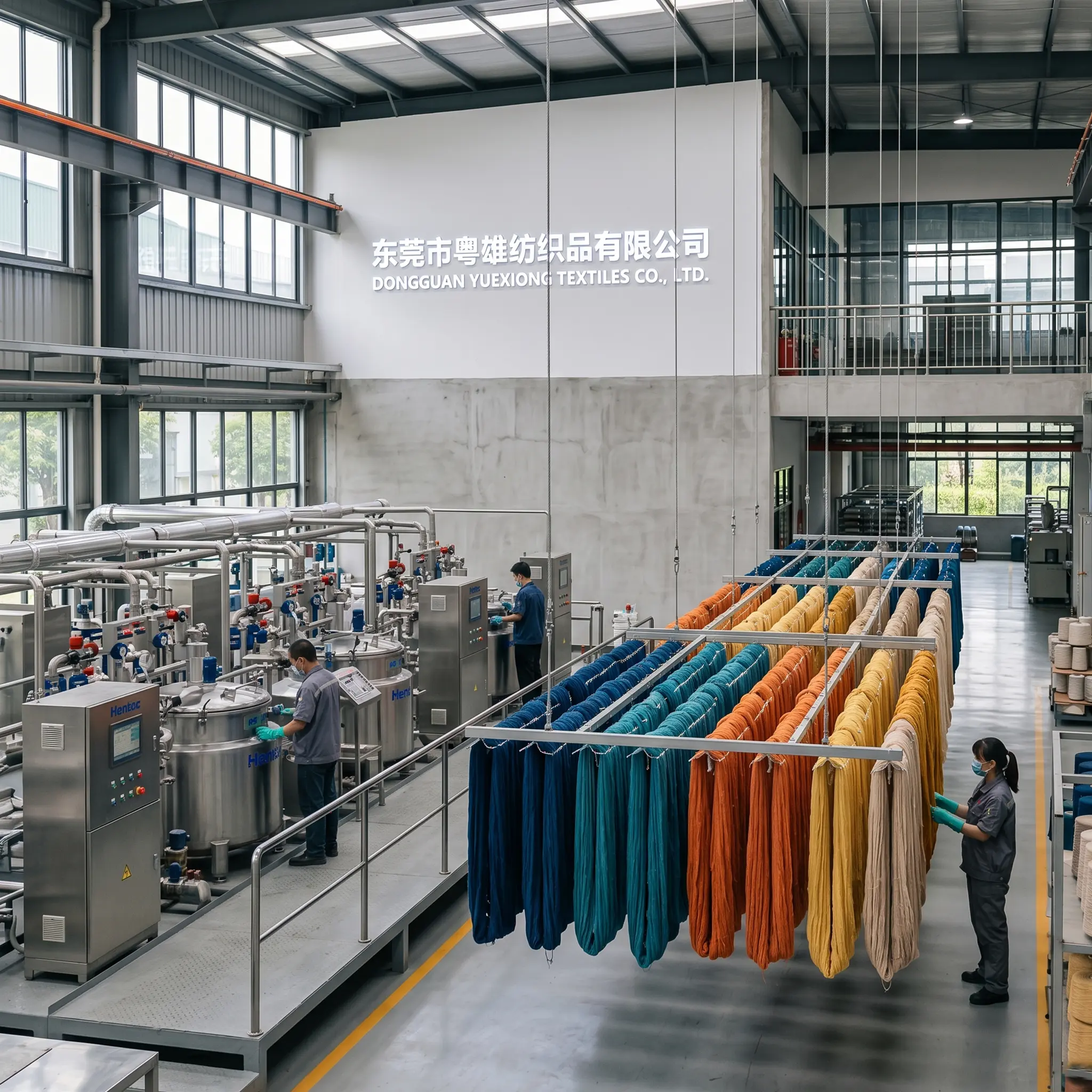
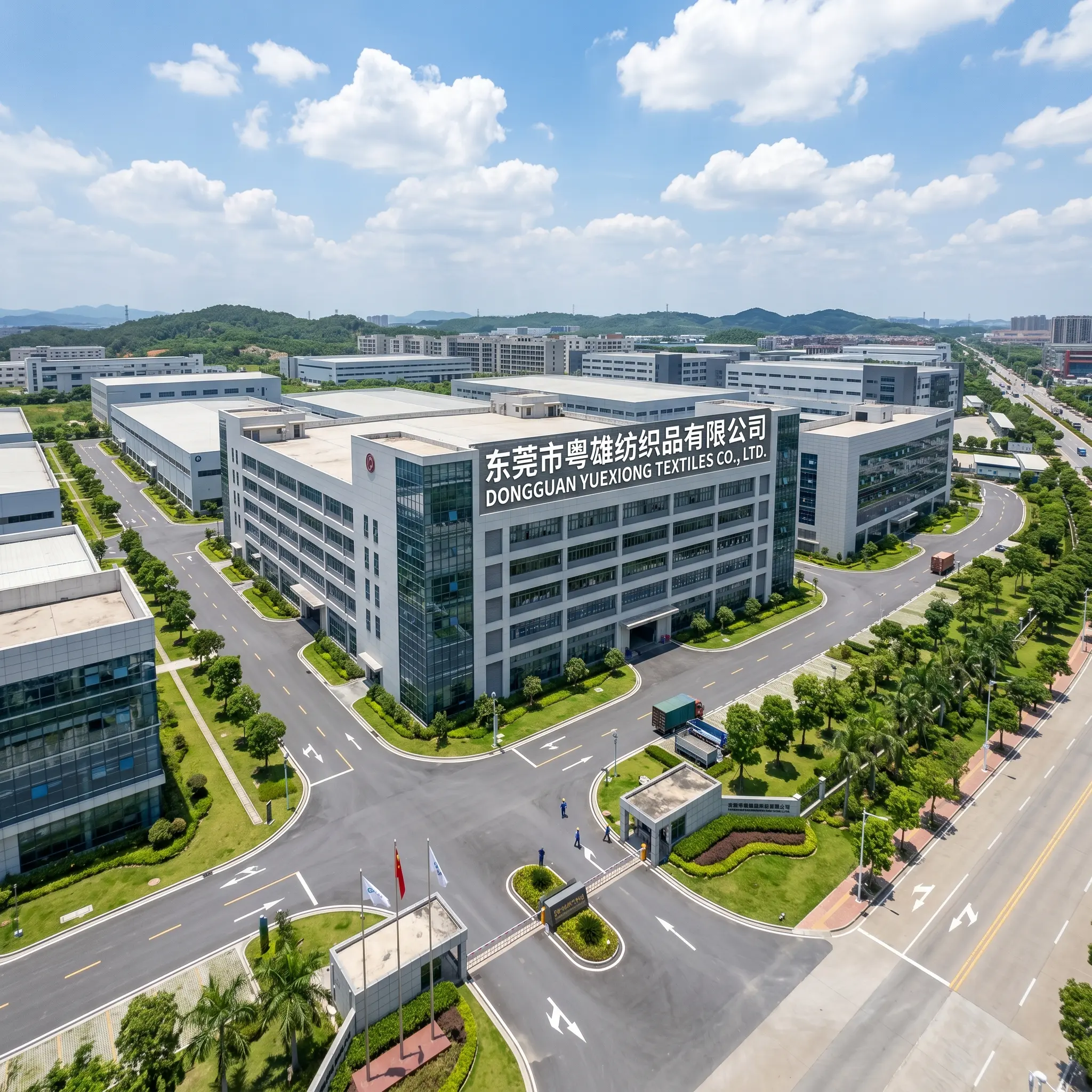
On the supply side, the two yarns in this comparison are produced on the same mill platform. Dongguan Yuexiong Textile Co., Ltd., which trades as MONALISHAMAGIC, is a vertically integrated yarn spinning mill founded in 2016 in Dongguan, Guangdong Province, China. The company operates a 2,000 sqm facility with 50 employees, an R&D team of 20 engineers and an annual output of 1,000 tons; exports account for 70% of sales. It holds GRS, BCI and OEKO-TEX certifications and applies a patented waterless dyeing technology across its functional yarn range.
The practical consequence for buyers is useful: moving a programme from a waterproof antibacterial yarn to a machine-washable antibacterial yarn is usually a change of finishing and test specification on a shared base-yarn platform, not a change of supplier. Buyers who understand that can compare the two routes on performance and cost instead of treating them as two separate sourcing projects.
Detailed Solution: What Each Functional Yarn Actually Is
Waterproof antibacterial yarn (YX-FUNC-001)
Waterproof antibacterial yarn is a functional yarn in which a water-repellent finishing route is combined with an antibacterial agent. In the MONALISHAMAGIC range it is listed as Waterproof Antibacterial Yarn, model YX-FUNC-001, and the same product appears under several trading names: water-repellent antibacterial yarn, antibacterial waterproof yarn, water-resistant antimicrobial yarn, antimicrobial water-repellent yarn, functional waterproof yarn, and washable antibacterial waterproof yarn.
The two components are separate finishing decisions. The water-repellent finish governs what happens at the surface when the fabric meets water; the antibacterial agent governs the hygiene claim. A buyer who specifies only water-resistant antibacterial has named a category, not a specification, because each component can be delivered through different routes and each needs its own acceptance criterion.
Waterproof is a market word, not a test method. The naming itself signals the problem: the same category is sold as waterproof, water-repellent and water-resistant, and those three words set different expectations. Before a purchase specification is locked, agree the test method and the acceptance level with the supplier and write both into the document. Two suppliers can both ship water-resistant antibacterial yarn and still be measured against different criteria.
What it is not. A water-repellent yarn is a surface-performance textile, not a barrier system. It is also not automatically a wash-durable antibacterial product: the product naming includes a washable antibacterial waterproof variant, but the laundering protocol for any specific construction has to be agreed with the mill rather than inferred from the category name.
Machine-washable antibacterial yarn (YX-WASH-001)
Machine-washable antibacterial yarn, listed as model YX-WASH-001, is built around an antibacterial finishing route specified to suit machine-washable textile applications. The product specification describes three parts. The trigger: antibacterial finishing, antimicrobial functional treatment and washable antibacterial technology. The effect: inhibiting bacterial growth and helping keep textile products cleaner and fresher. The washing performance: designed for machine-washable applications, with repeated machine washing supported depending on material, process and testing requirements.
That last clause deserves a second reading. Wash durability is not a property of the word antibacterial; it is a property of a specific combination of base fibre, treatment chemistry, process and test protocol. The supplier's task is to propose a combination; the buyer's task is to require the wash-resistance test that proves it.
Antibacterial material options. The material scope for this product lists antibacterial agent, antimicrobial finishing material, silver ion antibacterial material, zinc-based antibacterial material and washable antibacterial treatment. These are distinct chemistries with different handling and testing implications, and the choice belongs in the specification rather than in a general brief.
Hand feel and comfort. The product specification states antibacterial protection with soft hand feel and wearable comfort, which is what makes this route suitable for next-to-skin programmes. Hand feel should still be signed off on a knitted or woven sample rather than on the cone, because fabric construction and finishing sequence both influence the result the customer eventually touches.
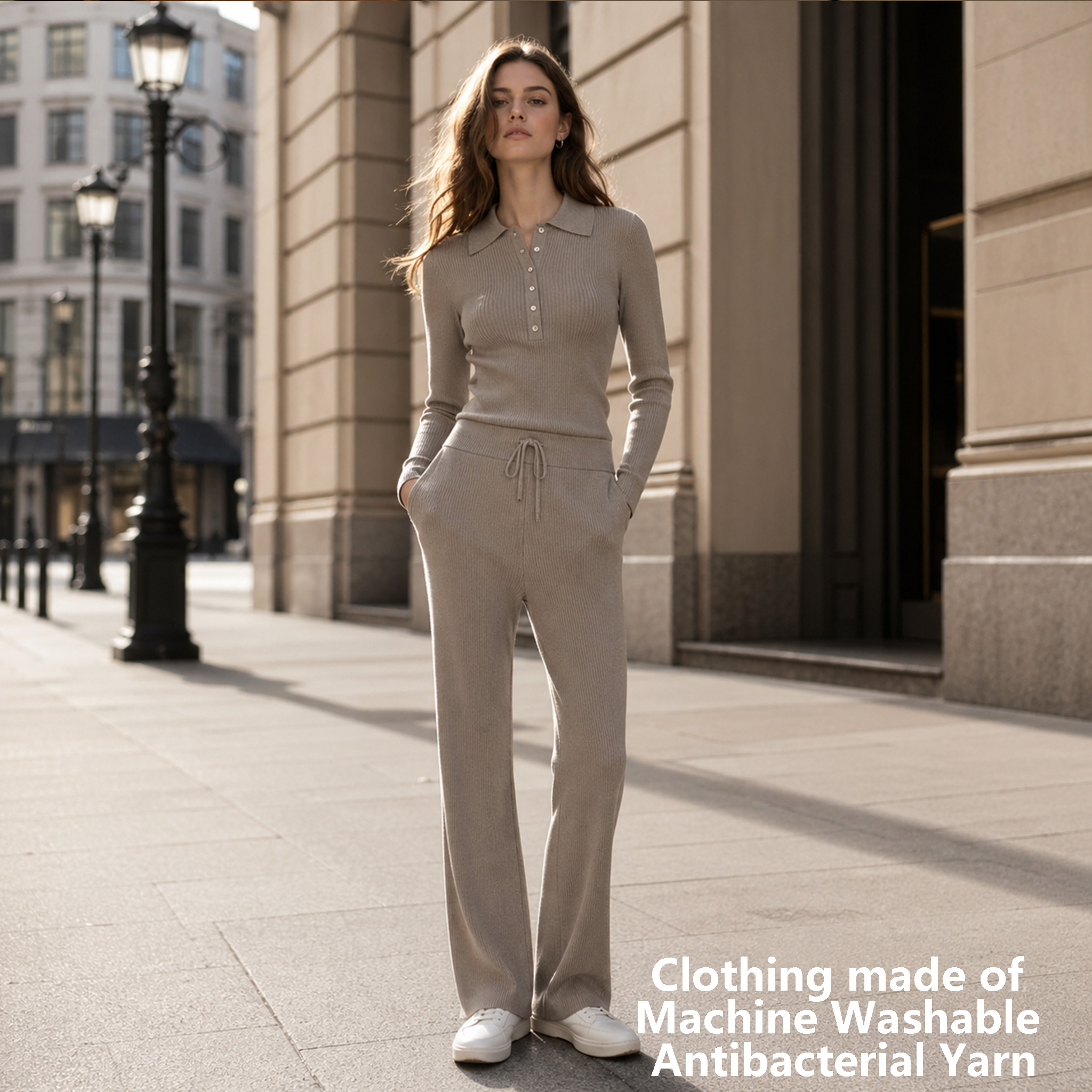
Where it fits. The listed applications include fashion apparel, knitwear, sweaters, children's clothing, sportswear, outdoor clothing, underwear, socks, hats, scarves, gloves, baby textile products, skin-friendly apparel, medical care textiles, health textile products, uniforms, workwear, bedding, towels, home textiles and pet products. What those applications share is a wash cycle: the product is refreshed by laundering and the hygiene claim has to survive it.
Shared platform capabilities
- Yarn count: customizable from 0.5/1 NM to 200/2 NM.
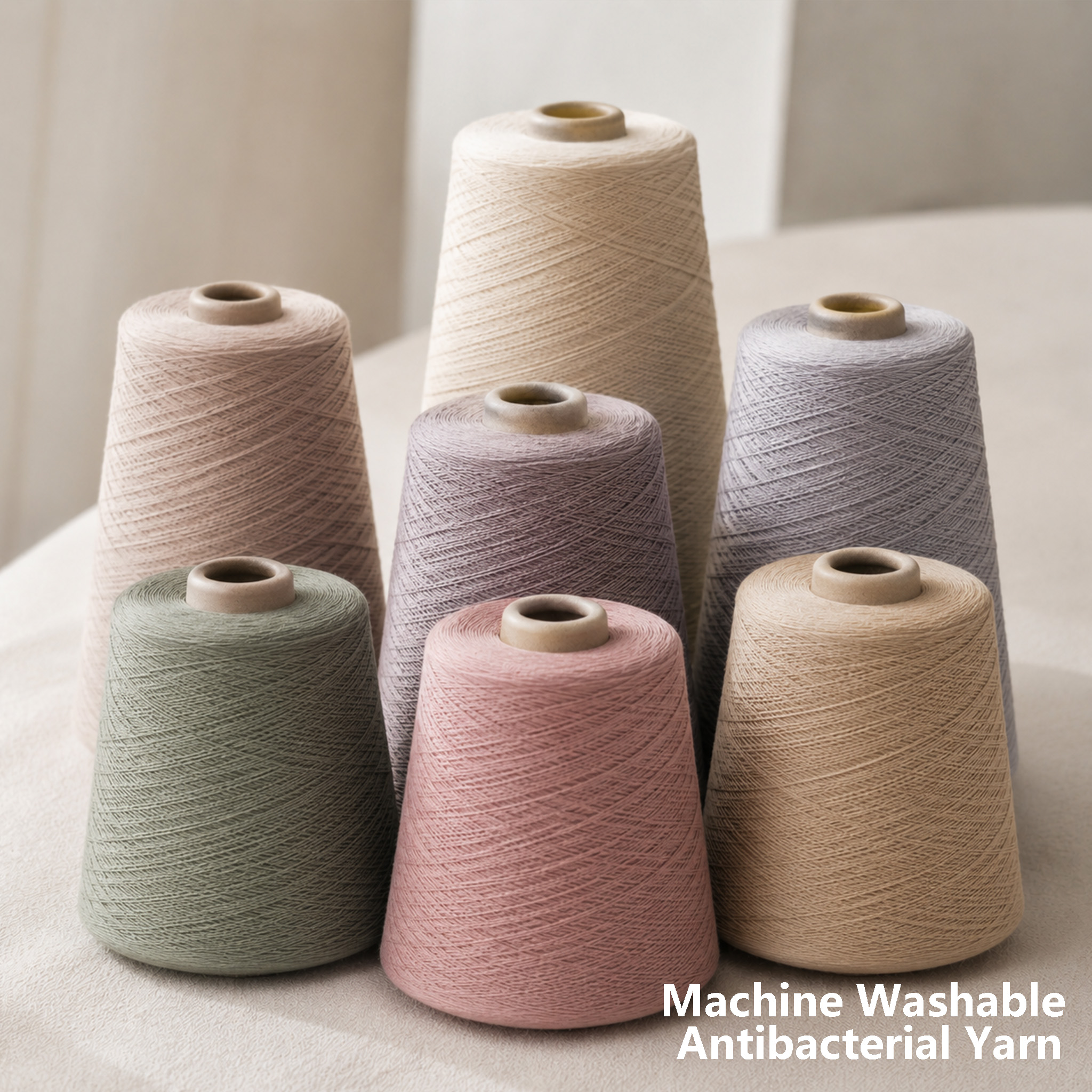
- Base fibres across the functional range: cotton, linen, cashmere, wool, mohair, alpaca, Tencel, silk, paper yarn, raffia yarn, polyester, nylon, plus blended and fancy bases including chenille.
- Colour: natural white, black, grey, beige, custom dyed colours, custom blended colours and brand colour matching.
- Process compatibility: knitting, weaving, embroidery, crochet, jacquard, sewing, garment decoration and accessory decoration, on standard textile machinery without special modification.
- Customization: yarn count, base material, antibacterial treatment, softness, twist, structure, colour, hand feel and final application.
- Sampling and MOQ: samples are available for testing and product development, and small-batch customization is supported.
Three Tests That Separate the Two Routes
Comparing the two yarns on a specification sheet is not enough. Three tests do most of the work of telling them apart, and all three should be run on the same base fibre and the same yarn count so that the comparison stays controlled.
- The wash-cycle test. Run it on the machine-washable candidate. Fix the number of cycles and the test method before sampling, and require the antibacterial and wash-resistance report from the same lot that will go into production. Without a fixed protocol, washable remains a word rather than a verified property.
- The surface test. Run it on the waterproof candidate, using the test method and acceptance level agreed at RFQ stage. This is the only way to compare two water-repellent offers on equal terms.
- The hand-feel panel. Run it on both, on finished fabric rather than on yarn. Surface finishing is the usual source of hand-feel change, and a panel signed off at the yarn stage tells the buyer nothing about the garment.
If the programme needs both functions, run all three tests on a single washable antibacterial waterproof construction. That is one specification tested once, rather than two specifications argued over.
Step-by-Step Breakdown: A Six-Step Specification Sequence
Step 1 — Name the failure you are preventing
Water on the surface, bacteria on the fibre, or both? Write the answer as a sentence before writing a specification. A programme that cannot state the failure it prevents will drift toward whichever yarn is easier to buy.
Step 2 — Fix the care cycle
How the product is laundered decides more than any other single input. Frequent laundering pushes the decision toward machine-washable antibacterial yarn, because the hygiene claim is the point and it has to survive the cycle. Occasional laundering combined with surface exposure pushes the decision toward waterproof antibacterial yarn, because the point is what happens when water meets the fabric.
Step 3 — Choose the base fibre and the hand-feel target
The functional range covers cotton, linen, cashmere, wool, mohair, alpaca, Tencel, silk, paper yarn, raffia yarn, polyester, nylon and blends. Each base carries its own hand feel, and the functional treatment sits on top of it. Naming the target hand feel at this step prevents the treatment from being chosen in isolation.
Step 4 — Fix the yarn count and construction
Counts from 0.5/1 NM to 200/2 NM are available on both routes. The count drives fabric weight, drape and the surface the finish has to work on, so it belongs in the comparison rather than in the production order.
Step 5 — Specify the functional route and the test plan together
Name the antibacterial chemistry, or let the mill propose one from the listed material scope, and at the same time name the test method, the laboratory (SGS or GTTC third-party testing can be arranged) and the acceptance level. A route without a test plan is an intention.
Step 6 — Sample, then lock
Request matched samples — same base fibre, same count, one water-repellent route and one washable antibacterial route — and validate hand feel, colour and performance before bulk. Samples are available for antibacterial effect testing and product development, and small-batch customization is supported, so the comparison can be run before any volume commitment.
A note on handling. The application data for functional textiles records that functional products can be sensitive to high temperatures and prolonged sun exposure. Where storage or finishing involves elevated heat, confirm the process window with the mill rather than assuming the yarn behaves like a standard one.
Use Cases: Where Each Functional Yarn Fits
The end-use table below applies the decision rule to common product groups. It is a starting point for specification, not a substitute for a sample test on the actual construction.
| Product group | Waterproof antibacterial yarn | Machine-washable antibacterial yarn |
|---|---|---|
| Underwear, socks, babywear, skin-friendly basics | Rarely the right route: the product is bought for next-to-skin comfort, not surface water resistance | Primary fit: soft hand feel, wearable comfort and a hygiene claim designed for frequent washing |
| Outer layers and equipment-facing textiles | Primary fit: surface water resistance is the reason the yarn is specified at all | Secondary fit: appropriate when the outer product is laundered frequently and water resistance is not required |
| Bedding, towels and home textiles | Limited fit: water repellency is not normally a household requirement | Primary fit: home textiles are washed repeatedly and the claim must survive the cycle |
| Uniforms and workwear | Fit where the garment meets water or soil at the surface | Fit where industrial laundering frequency dominates the brief |
| Sportswear and outdoor clothing | Fit for outer shells where water beading matters | Fit for base layers and next-to-skin pieces washed after every use |
| Medical care textiles and health textile products | Selective fit, driven by surface requirements of the application | Fit where repeated laundering and documented antibacterial testing are both required |
| Pet products and accessories | Selective fit for outdoor accessories | Fit where frequent washing is the dominant care pattern |
Comparison Table: Waterproof vs. Machine-Washable Antibacterial Yarn
| Comparison dimension | Waterproof Antibacterial Yarn (YX-FUNC-001) | Machine Washable Antibacterial Yarn (YX-WASH-001) |
|---|---|---|
| Functional combination | Water-repellent finishing combined with an antibacterial agent | Antibacterial finishing, antimicrobial functional treatment and washable antibacterial technology |
| Primary problem addressed | Surface water resistance alongside a hygiene claim | A hygiene claim that is specified to suit repeated laundering |
| Washability | A washable antibacterial waterproof variant is named in the product range; the laundering protocol for a given construction must be confirmed with the supplier | Designed for machine-washable applications; repeated machine washing supported depending on material, process and testing requirements |
| Hand feel | Evaluate on the finished fabric sample; surface finishing is the usual variable in hand-feel change | Soft hand feel and wearable comfort stated in the product specification |
| Antibacterial material options | Confirm the specific agent with the supplier as part of the RFQ | Antibacterial agent, antimicrobial finishing material, silver ion antibacterial material, zinc-based antibacterial material, washable antibacterial treatment |
| Base fibre options | Mill functional range: cotton, linen, cashmere, wool, mohair, alpaca, Tencel, silk, paper yarn, raffia yarn, polyester, nylon and blends | Same base fibre range, including blended and fancy bases such as chenille |
| Yarn count | Customizable from 0.5/1 NM to 200/2 NM | Customizable from 0.5/1 NM to 200/2 NM |
| Testing route | Test method and acceptance level for the water-repellent finish agreed at RFQ | SGS or GTTC third-party antibacterial and wash-resistance testing, arranged to buyer requirements |
| Typical end uses | Outer layers, equipment-facing textiles and products where surface water resistance is the point | Next-to-skin apparel, babywear, underwear, socks, home textiles, uniforms, workwear, medical care textiles |
| Sample support | Samples available for fabric development and product sampling | Samples available for antibacterial effect testing and product development |
FAQ: Waterproof vs. Machine-Washable Antibacterial Yarn
Do the two yarns need different compliance documents?
Both are textile yarns first, so fibre-content identification and labelling rules apply to both. In China, the GB/T 29862-2026 standard for textile fibre content identification replaces GB/T 29862-2013 and takes effect on 1 August 2027, which makes the fibre-content declaration a document buyers will be asked for. The functional documents then differ in scope rather than in kind. For machine-washable antibacterial yarn, ask for the antibacterial test report and the wash-resistance report from the same lot. For waterproof antibacterial yarn, agree the test method and acceptance criteria for the water-repellent finish at RFQ stage. MONALISHAMAGIC holds GRS, BCI and OEKO-TEX certifications, and SGS or GTTC third-party antibacterial and wash-resistance testing can be arranged according to buyer requirements.
Can a single yarn carry both water repellency and machine-wash durability?
The product range names a washable antibacterial waterproof variant, and customization covers yarn count, base material, antibacterial treatment, softness, twist, structure, colour, hand feel and final application. Combining the two functions is therefore a specification decision rather than a catalogue decision: state the care cycle and the surface requirement first, then let the mill propose the finishing sequence and the test plan. Validate both attributes on the same sample lot before approving bulk, because the evidence that matters is a pair of test reports from one production run, not two reports from two different constructions.
What drives the cost difference between the two yarns?
Cost sits in four places: the base fibre, the antibacterial chemistry, the number of finishing steps, and the scope of the test plan. A waterproof antibacterial yarn adds a water-repellent finishing step on top of the antibacterial treatment. A machine-washable antibacterial yarn adds the cost of a treatment engineered to suit repeated laundering, together with the wash-resistance testing that proves the claim. Because small-batch customization is supported, buyers can compare the two routes at sample stage — with the same base fibre and the same count — before committing to bulk volume, which is the point at which the cost structure of each route becomes visible.
How should a buyer sample both yarns for a fair comparison?
Hold the base fibre and the yarn count constant, because counts from 0.5/1 NM to 200/2 NM are available and a mismatched count will distort both hand feel and performance. Then build the same fabric construction on each route. Test the machine-washable candidate for antibacterial effect and wash resistance, and test the waterproof candidate for surface performance using the agreed method. Finally, run the hand-feel evaluation on the finished fabric rather than on the cone. Samples are available for antibacterial effect testing and product development, so the comparison can be completed before a purchase order is discussed.
What affects lead time once a specification is agreed?
Lead time is set at RFQ stage rather than from a catalogue, and it moves with four inputs: base fibre availability, the yarn count selected, the depth of customization (colour, twist, structure, antibacterial treatment), and the scope of testing requested from SGS or GTTC. The production base matters too — Dongguan Yuexiong Textile Co., Ltd. (MONALISHAMAGIC) runs a 2,000 sqm facility in Dongguan, Guangdong Province, with an R&D team of 20 engineers and an annual output of 1,000 tons, and exports account for 70% of sales. The fastest way to a firm date is to send the specification and target quantity together: you can request a quotation or a matched sample set through monalishamagic.com, and the mill will confirm schedule against the actual route rather than against a category average.
Conclusion: Choose the Care Cycle Before the Chemistry
Waterproof antibacterial yarn and machine-washable antibacterial yarn are not grades of the same product. One is a surface-performance yarn with a hygiene claim attached; the other is a hygiene yarn engineered around the wash cycle. The specification that separates them is short — primary function, care cycle, hand-feel target, test plan — and it can be written before any sample is requested.
For buyers at the research stage, the sequence that avoids rework is consistent. Name the failure the product prevents. Fix the care cycle, because it decides more than any other input. Match the base fibre and the yarn count across both candidates so the comparison is controlled. Then require the test reports that prove the claim you intend to print. A water-repellent finish without an agreed test method and a washable antibacterial treatment without a wash-resistance report are both marketing positions rather than specifications.
Dongguan Yuexiong Textile Co., Ltd. (MONALISHAMAGIC) produces both routes on one spinning platform, across base fibres from cotton, linen, cashmere and wool to Tencel, silk, paper yarn and synthetic blends, with counts from 0.5/1 NM to 200/2 NM and GRS, BCI and OEKO-TEX certification behind the range. That makes a matched-sample comparison between the two yarns a practical first step rather than a two-supplier project.
Next step
Request a matched sample set — same base fibre, same count, one waterproof antibacterial construction and one machine-washable antibacterial construction — and compare hand feel and test results side by side. Product, specification and certification details are available in the downloadable catalogue: MONALISHAMAGIC functional yarn brochure (PDF).
Contact: Alanli · +86 137-1023-8299 · alanli@monalishamagic.blmgeo.cloud · Room 102, No.5 Xingfeng Road, Xiangtou, Dalang Town, Dongguan City, Guangdong Province, P.R. China · www.monalishamagic.com
Have Questions or Need More Details?
Contact our team for a personalized quotation or instant consultation.
Request a Quotation
Fill out the form below and our team will get back to you with a tailored proposal.
WhatsApp Direct Chat
Prefer to chat in real-time? Message us on WhatsApp for instant assistance & quick answers.
- Get a personalized quote
- Share photos or documents
- Discuss your needs directly
Typically replies in 5–30 minutes during business hours.