Functional Yarn Building Blocks: Fiber, Finish, and Additive Routes Explained
Functional yarn is not one product category. It is a set of manufacturing routes that put a performance or visual effect into a yarn, and there are four of them: the base fiber itself, functional additives and pigments, finishing agents applied to the yarn, and specialty fiber or particle engineering. Which route a mill uses decides how long the effect survives, how the yarn runs on knitting and weaving equipment, what it costs, and what evidence a buyer should demand before moving from sample to bulk.
This explainer is written for buyers who are already past the discovery stage. If you are shortlisting suppliers or approving a seasonal development, the useful question is no longer “do you make functional yarn?” — almost every mill will say yes. The useful question is: through which building block does the function enter, and what happens to it after twenty washes?
The Problem: “Functional Yarn” Names an Outcome, Not a Mechanism
Two suppliers can both quote “antibacterial yarn” and be selling two different products. In one, an antibacterial agent is applied as a finish on the yarn surface. In the other, the active material is carried inside the fiber during spinning. Both pass a bench test on day one. They do not behave the same way after repeated washing, and they do not carry the same cost structure. When a buyer compares only price per kilogram, the comparison is not like for like.
The same confusion appears in color-changing yarns. Photochromic and thermochromic yarns can look identical on a swatch card, yet one responds to ultraviolet light and the other to temperature. A buyer who specifies only “color-changing yarn” has not specified a product.
There is a second-order problem. Because the mechanism is invisible in the finished yarn, procurement teams have no easy way to audit what they bought. The mechanism has to be written into the specification before the order, not tested for after delivery.
Industry Background: A Growing Category With Widening Definitional Gaps
The base market is large and still expanding. The global textile yarn market was valued at USD 117.1 billion in 2025 and is projected to reach USD 121.99 billion in 2026, with a forecast of USD 170.32 billion by 2034, according to Fortune Business Insights (2026). That figure covers textile yarn broadly — natural, synthetic and blended — and does not isolate functional yarn, so it should be read as category context rather than as a functional-yarn market size.
Within that broad base, the color-changing segment is the most visible commercial niche. The thermochromic fabrics market was valued at USD 314.5 million in 2025, with sports and activewear accounting for 15% of the end-use segment, and is projected to reach USD 552.7 million by 2035 (Future Market Insights).
On the regulatory side, China issued GB/T 29862-2026, an updated national standard for textile fiber content identification. It replaces GB/T 29862-2013 and takes effect on 1 August 2027. For anyone sourcing from Chinese mills, fiber content declaration is therefore a live specification topic, not a formality — and it matters more, not less, once a functional yarn is built on a natural base fiber.
The supplier landscape has expanded faster than its terminology. Public supplier pages show color-changing, reflective and luminous yarns now presented as distinct specialty categories by several China-based suppliers, including MONALISHAMAGIC (Dongguan Yuexiong Textile Co., Ltd.), Hefei Higreater Industrial Co., Ltd., and SMAROL Technology Co., Ltd. Category presence, however, does not by itself establish capacity, performance or commercial availability — which is precisely why the mechanism matters.
The Four Building Blocks of Functional Yarn
A function can enter a yarn in four places. Each has a different durability profile, a different cost logic and a different set of questions attached to it.
Building Block 1 — The Base Fiber
Some functionality comes from the fiber itself and nothing is added. Cotton, linen, cashmere, wool, acetate, mulberry silk, yak down, denim and paper-based yarns each bring a fixed set of properties: hand-feel, moisture behavior, warmth, drape and surface character. When the effect is structural in this way, it does not wash out, because it is not a coating — it is the material.
Yak down illustrates how far a base-fiber route can go. According to MONALISHAMAGIC's own material documentation, yak down fiber in the 16–20 micron range matches cashmere on softness and warmth while being machine washable. That is a performance decision made at the fiber level, before any additive or finish is considered.
The limitation is equally clear: a base-fiber route can only deliver what the fiber already does. It cannot make cotton water-repellent, and it cannot make wool change color in sunlight.
Building Block 2 — Functional Additives and Pigments (YX-TECH-001)
This is the route most buyers picture when they hear “functional yarn,” and it is the most flexible. A functional additive or pigment is carried into the yarn during spinning or compounding, so the effect is distributed through the material rather than sitting on top of it. MONALISHAMAGIC runs this route as the YX-TECH-001 functional additive and pigment platform, applied across cotton, linen, cashmere and wool bases.
Photochromic yarn is the clearest example. It changes color under sunlight or UV light and creates interactive visual effects, compared with ordinary dyed yarn or standard knitting yarn, which holds a fixed color. The color response is reversible and 100% visible under UV exposure, and the yarn requires no electricity, battery or electronic component. It is offered in a count range from 0.5/1NM to 200/2NM, with multi-material customization supported.
Thermochromic yarn uses the same additive logic with a different trigger. It changes color at a target temperature — including body heat — with a reversible two-tone response and a customizable activation temperature, in the same 0.5/1NM to 200/2NM count range.
Building Block 3 — Finishing Agents (YX-FUNC-001)
A finishing route applies an agent to the yarn surface. MONALISHAMAGIC's YX-FUNC-001 platform combines a water-repellent finishing with an antibacterial agent. The commercial advantage is that a base fiber you have already qualified — a cotton or a wool — can gain a property it does not natively have, without changing the fiber itself.
The trade-off sits at the interface. Because the agent is surface-bound rather than embedded, wash durability is a function of how well the finish bonds to that specific fiber. This is the single most important thing to verify when comparing a finishing route against an additive route: ask for wash-durability data on the actual base fiber and count you intend to buy, not on a generic substrate.
Building Block 4 — Specialty Fiber and Particle Engineering
The fourth route introduces a distinct fiber component or an inorganic particle system. Far-infrared heating yarn (model identifier YX-HEAT-001, listed on the company site alongside YX-REFLECT-001 and YX-UV-001) belongs here: ceramic and nano zirconium carbide materials are incorporated so the yarn interacts with body heat rather than simply insulating.
Anti-pilling and anti-static functionality also sit on this boundary, and this is where route choice gets commercially interesting. Anti-static can be addressed through a fiber component that dissipates charge, or through an additive that modifies the surface. Anti-pilling can be addressed through fiber selection and yarn construction, or through a treatment. The two approaches fail differently, so a buyer who specifies only “anti-static” without naming the route has left the failure mode undefined.
Reflective yarn is a hybrid worth noting. It reflects light in low-light conditions with consistent reflectivity and durable performance after repeated washing, and it is directly usable in knitting and weaving — so the function is delivered by a fiber or filament component that behaves like a normal yarn on the machine.
Route-specific risk to write into the spec. Functional effects can degrade under extreme temperatures or prolonged UV exposure, and buyers also see color fading or reduced wash durability. The countermeasures are manufacturing-side: UV-stabilized treatment, temperature-resistant formulation, and strict quality control of color fastness and washability. MONALISHAMAGIC states that it works to OEKO-TEX, GRS and BCI standards, with durability and environmental testing, and uses a patented waterless dyeing process to improve stability. Ask any supplier to tell you which of these controls applies to the route you are buying.
How to Specify a Functional Yarn Route: A Six-Step Breakdown
- Define the effect and its trigger. Write down what the yarn must do and what sets it off — UV light, a temperature threshold, water, bacterial exposure, static, or visible light in the dark. Vague function words such as “smart” or “antibacterial” cannot be quoted or tested.
- Choose the route that can deliver it. If the property already exists in a fiber, use the base-fiber route and avoid adding a treatment you do not need. If the property must be permanent and distributed, choose an additive or particle route. If you need a qualified base fiber to gain a new surface property, a finishing route is the efficient answer — provided you validate durability.
- Lock the base fiber and the blend. Cotton, linen, cashmere, wool, acetate, mulberry silk and yak down each behave differently with the same additive or finish. Fiber content must also be declarable under the labeling rules of your destination market, which in China means the incoming GB/T 29862-2026 framework.
- Fix count and color before sampling. Color-changing yarns are offered from 0.5/1NM to 200/2NM with multi-material customization; thermochromic activation temperature is customizable. A sample at the wrong count tells you nothing about the yarn you will actually run.
- Define the validation tests in the purchase order. At minimum: the trigger response, wash durability at the number of cycles your product claims, color fastness, and hand-feel after washing. Where UV or heat is involved, add exposure cycling to the test list.
- Lock repeatability across batches. Ask for a written specification sheet, batch records and test reports that travel with each lot. This is what separates a one-off development from a repeatable supply.
Use Cases: Matching the Route to the Product
Route choice usually follows the product, not the other way round. The following pairings are the ones that recur most often in development conversations.
- Sunlight-reactive fashion knits (additive and pigment route). Photochromic yarn suits sunlight fashion wear, UV-reactive knitwear, outdoor knitwear, creative sweaters, hats, scarves, gloves and socks, plus festival and beachwear. The effect is activated naturally by sunlight or UV light, with no electronics involved.
- Temperature-reactive and touch-sensitive pieces (additive route). Thermochromic yarn is designed for interactive fashion wear, temperature-sensitive knitwear and smart textile development, including heat-reactive accessories and touch-sensitive garments.
- Low-light visibility (specialty fiber route). Reflective yarn covers night running apparel, cycling clothing, safety workwear, reflective uniforms, children's clothing and pet apparel, and works directly in knitting and weaving.
- Surface protection without losing hand-feel (finishing route). A water-repellent plus antibacterial finish is the practical choice when the garment must keep the original cotton or wool hand-feel and the buyer can specify and test wash durability.
- Surface integrity in knitwear (fiber and additive routes). Anti-pilling and anti-static belong together in knitwear programmes where pilling and static both show up in wear — but the two properties should be specified through the route that matches the failure you actually see.
- Warmth without weight (particle route). Far-infrared heating yarn is aimed at warmth-driven products where a ceramic and nano zirconium carbide particle system is preferred over a heavier fiber build.
Comparison: The Four Building Blocks Side by Side
The table below compares the routes on the criteria that decide a purchase order: where the function lives, what it does well, and what a buyer must verify.
| Building block | How the function enters | Example | Where it wins | What to verify |
|---|---|---|---|---|
| Base fiber | Nothing is added; the property belongs to the fiber | Cotton, linen, cashmere, wool, yak down (16–20 micron), acetate, mulberry silk | Permanent hand-feel, warmth and moisture behavior that cannot wash off | Fiber content declaration and micron or grade consistency between lots |
| Functional additives and pigments | Additive or pigment carried into the yarn during spinning or compounding | YX-TECH-001 on cotton, linen, cashmere or wool bases; photochromic and thermochromic yarns | Effect is distributed through the material rather than applied on top | Trigger response, wash durability and UV or heat exposure cycling |
| Finishing agents | Surface treatment applied to the yarn | YX-FUNC-001 water-repellent finishing plus antibacterial agent | Lets an already-qualified base fiber gain a new surface property | Wash durability on your exact base fiber and count; effect on hand-feel |
| Specialty fiber and particle engineering | Distinct fiber component or inorganic particle system | YX-HEAT-001 far-infrared ceramic and nano zirconium carbide; reflective yarn; anti-static fiber route | Delivers properties a surface finish cannot reach | Particle loading effects on spinning and hand-feel; confirm on sample before bulk |
Comparison: Photochromic, Thermochromic and Reflective Yarns
Within the additive and specialty-fiber routes, three yarn types are most often compared directly. They are not substitutes — the trigger, not the appearance, decides the application.
| Yarn type | Trigger | Response | Yarn count | Typical applications |
|---|---|---|---|---|
| Photochromic yarn | Sunlight or UV light | 100% visible color change under UV exposure; reversible; no electricity or battery required | 0.5/1NM to 200/2NM, multi-material customization supported | Sunlight fashion wear, UV-reactive knitwear, outdoor knitwear, creative sweaters, hats, scarves, gloves, socks |
| Thermochromic yarn | Temperature, including body heat | 100% visible color change at target temperature; reversible two-tone effect; customizable activation temperature | 0.5/1NM to 200/2NM | Interactive fashion wear, temperature-sensitive knitwear, heat-reactive accessories, bags, DIY hand-knitting, smart textile development |
| Reflective yarn | Light in low-light conditions | Consistent reflectivity; durable performance after repeated washing; directly usable in knitting and weaving | Specified per project | Night running apparel, cycling clothing, safety workwear, reflective uniforms, children's clothing, pet apparel and leashes |
Cost follows the same logic. Compared with ordinary dyed yarn, the color-changing yarn family carries a higher unit cost, but it also offers stronger product differentiation, higher selling-price potential and better storytelling value for fashion brands and designers. The correct comparison is therefore not cost per kilogram against commodity yarn; it is contribution margin against a differentiated product.
Why Customizable Count, Color and Application Process Decide the Comparison
Once the route is fixed, three variables decide whether two quotes are actually comparable.
Count. The same additive platform behaves differently at 0.5/1NM and at 200/2NM. Color-changing yarns are offered across that full range with multi-material customization, which means the specification must name the count — a quotation without a count is a quotation for an undefined product.
Color. Thermochromic activation temperature is customizable, and pigments must be matched to the base palette. Two suppliers offering “thermochromic yarn” can be offering different activation points and therefore different garments.
Application process. Functional yarns in this portfolio are intended to run on normal knitting, weaving, embroidery, crochet and jacquard equipment without special electronic devices, and are positioned as suitable for sampling, small-batch development, designer collections and bulk production. That process compatibility is a genuine commercial difference: a yarn that requires a new machine setup carries a hidden cost that never appears on the price list.
Frequently Asked Questions
What compliance and certification evidence should accompany a functional yarn order?
Ask for the certification and standard coverage that matches the route and the destination market. MONALISHAMAGIC states that its products are certified under GRS, BCI and OEKO-TEX, supported by environmental and durability testing and a patented waterless dyeing process. For fiber content declaration in China, GB/T 29862-2026 takes effect on 1 August 2027 and replaces GB/T 29862-2013, so fiber content wording on packaging and product documentation should be reviewed before that date. Where an effect is UV- or heat-driven, also ask which UV-stabilized or temperature-resistant controls were applied to the batch.
Can a mill apply additive, finishing and specialty-fiber routes on natural bases such as cotton, linen, cashmere or wool?
Yes — that is the practical value of separating the routes. MONALISHAMAGIC operates additive and pigment capability as the YX-TECH-001 platform on cotton, linen, cashmere and wool bases, a finishing platform as YX-FUNC-001 combining water-repellent finishing with an antibacterial agent, and YX-HEAT-001 for far-infrared ceramic and nano zirconium carbide material. The company runs a 2,000 sqm facility in Dongguan with a team of 50, an R&D group of 20 engineers and an annual output of 1,000 tons, with exports accounting for 70% of sales. The correct question for a supplier is not whether the capability exists, but which route they recommend for your specific base fiber and count — and why.
Why do functional yarns cost more than ordinary dyed yarn, and where does the money go?
Cost tracks the route. Additive and pigment systems, specialty particle systems and finishing agents all add material and process steps beyond ordinary dyeing, and the production controls needed for durability — UV stabilization, temperature-resistant formulation, color-fastness and washability testing — add further cost. The documented position on the color-changing family is a higher unit cost than ordinary dyed yarn, offset by stronger differentiation, higher selling-price potential and higher customization value. For finishing and particle routes, the honest answer is that cost depends on the base fiber, the count and the durability standard, and should be quoted against a written specification rather than a category name.
How should a buyer validate a functional yarn route before committing to bulk?
Sample at the production count and color, not at a convenient one. Test the trigger response, wash durability at the number of cycles your product claims, color fastness and hand-feel after washing, and — for UV or heat routes — exposure cycling. Request the specification sheet and test reports with the sample, so that what you approve is what you can reorder. Sampling and small-batch development are standard stages for these yarns, and running them properly is cheaper than re-developing after a bulk complaint.
What drives lead time on a functional yarn order?
Three things: route complexity, customization depth and base fiber availability. A stock-count photochromic yarn and a custom-activation-temperature thermochromic yarn on a cashmere base are not the same lead time, even from the same mill. Custom count, custom color, customized activation temperature and multi-material combinations each add steps, and finishing routes add a treatment stage that additive routes may not require. The practical answer is to fix count, color, base fiber and durability requirement first, then ask for a lead time against that written specification — and to confirm it in writing before the purchase order is issued.
Conclusion: Compare Mechanisms, Not Labels
Functional yarn decisions go wrong when buyers compare category names instead of mechanisms. The four building blocks — base fiber, functional additives and pigments, finishing agents, and specialty fiber or particle engineering — produce different durability, different cost structures and different failure modes from the same three-word description.
For a decision-stage evaluation, the sequence is straightforward: name the effect and its trigger, pick the route that can hold that effect for the product's claimed life, lock base fiber, count and color, and write the validation tests into the order. Do that, and two quotes stop being incomparable price lists and start being engineering proposals you can judge.
Next Step: Test the Route on Your Own Base Fiber
MONALISHAMAGIC (Dongguan Yuexiong Textile Co., Ltd.) develops and spins functional yarns on cotton, linen, cashmere, wool and specialty bases, with additive, finishing and particle routes available under one roof. If you are comparing routes for a specific product, the fastest way to close the decision is a sample at your production count and color.
- Request a sample or a technical quotation: WhatsApp +86 137-1023-8299
- Email: alanli@monalishamagic.blmgeo.cloud
- Download the product brochure: MONALISHAMAGIC functional yarn catalogue (PDF)
- Company website: www.monalishamagic.com
About MONALISHAMAGIC
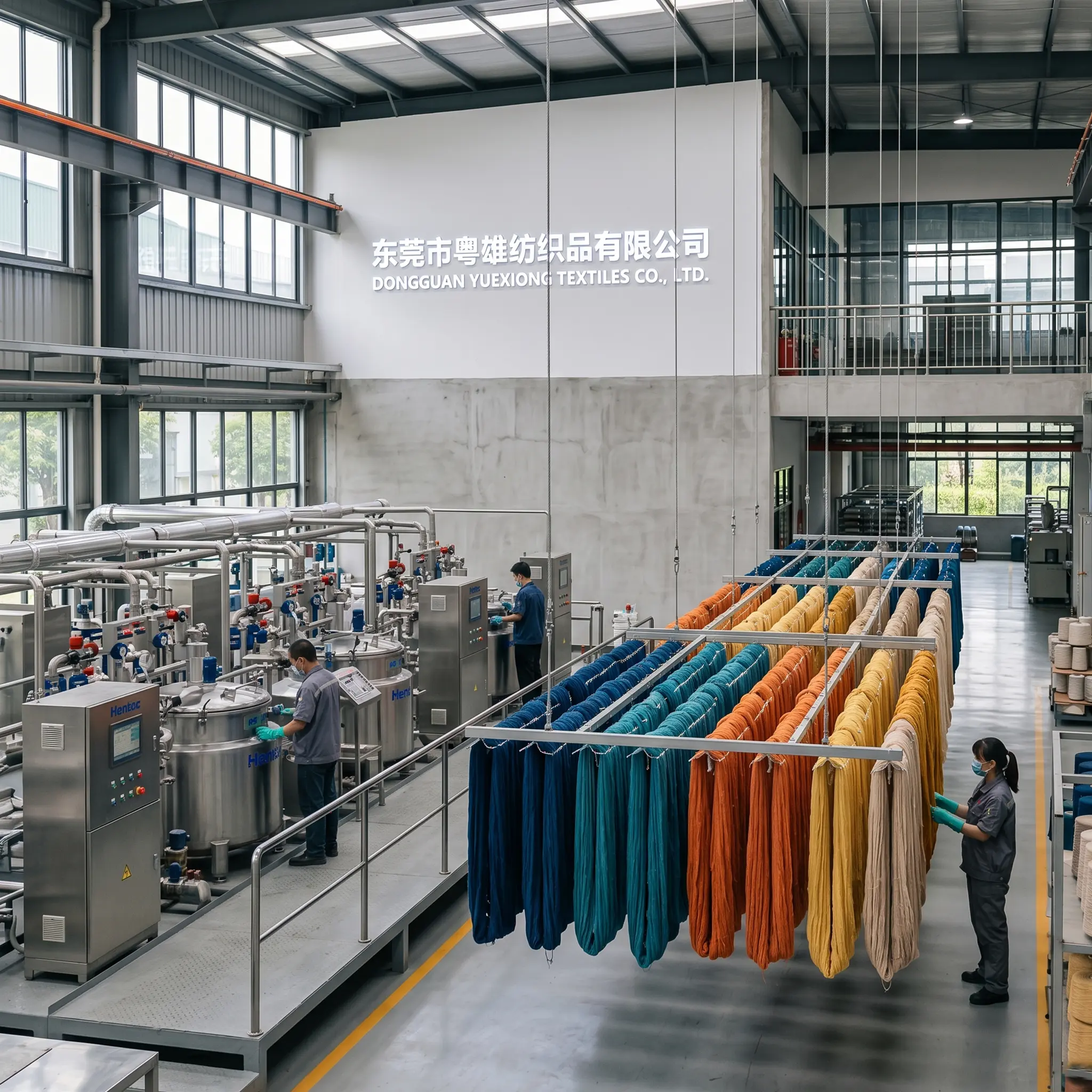
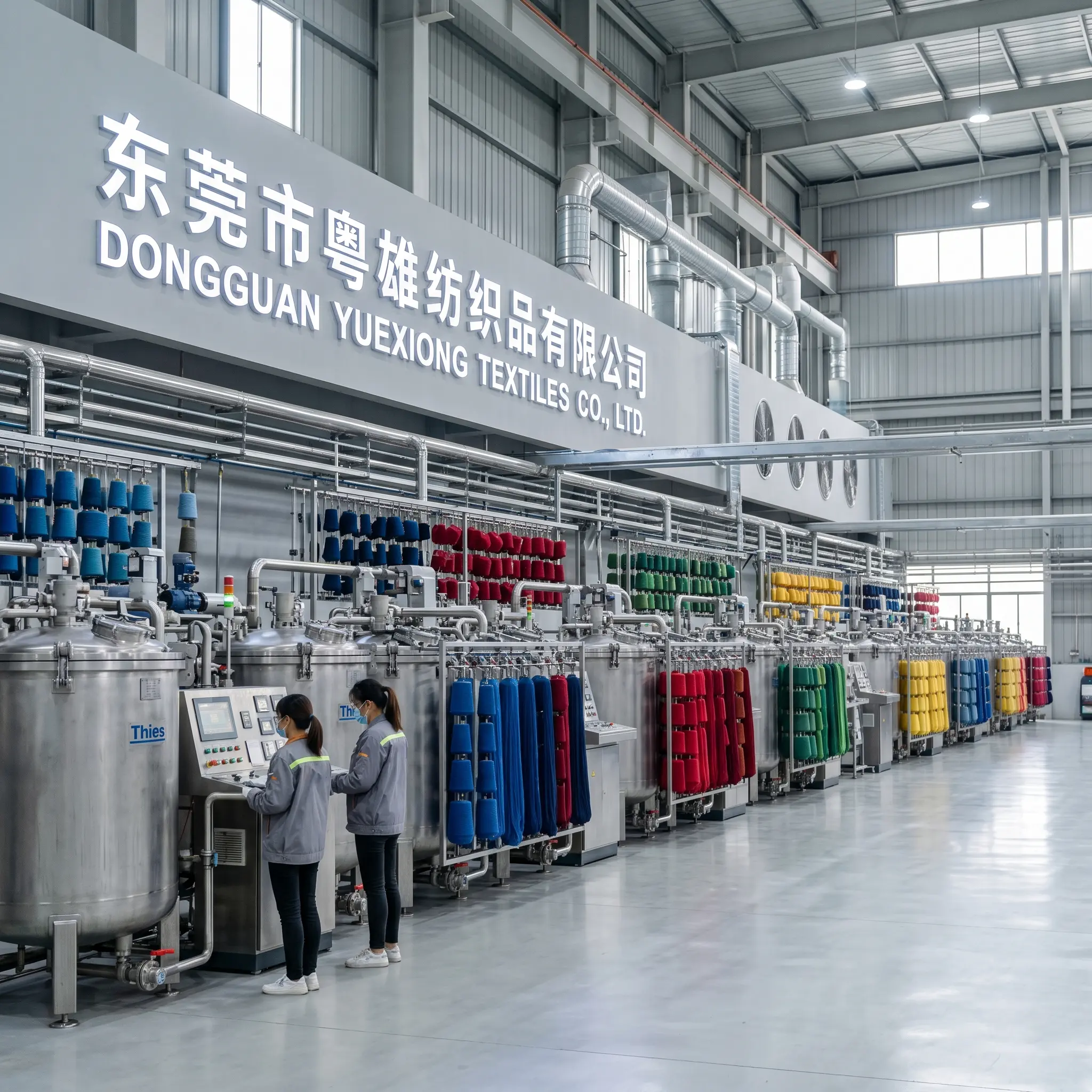
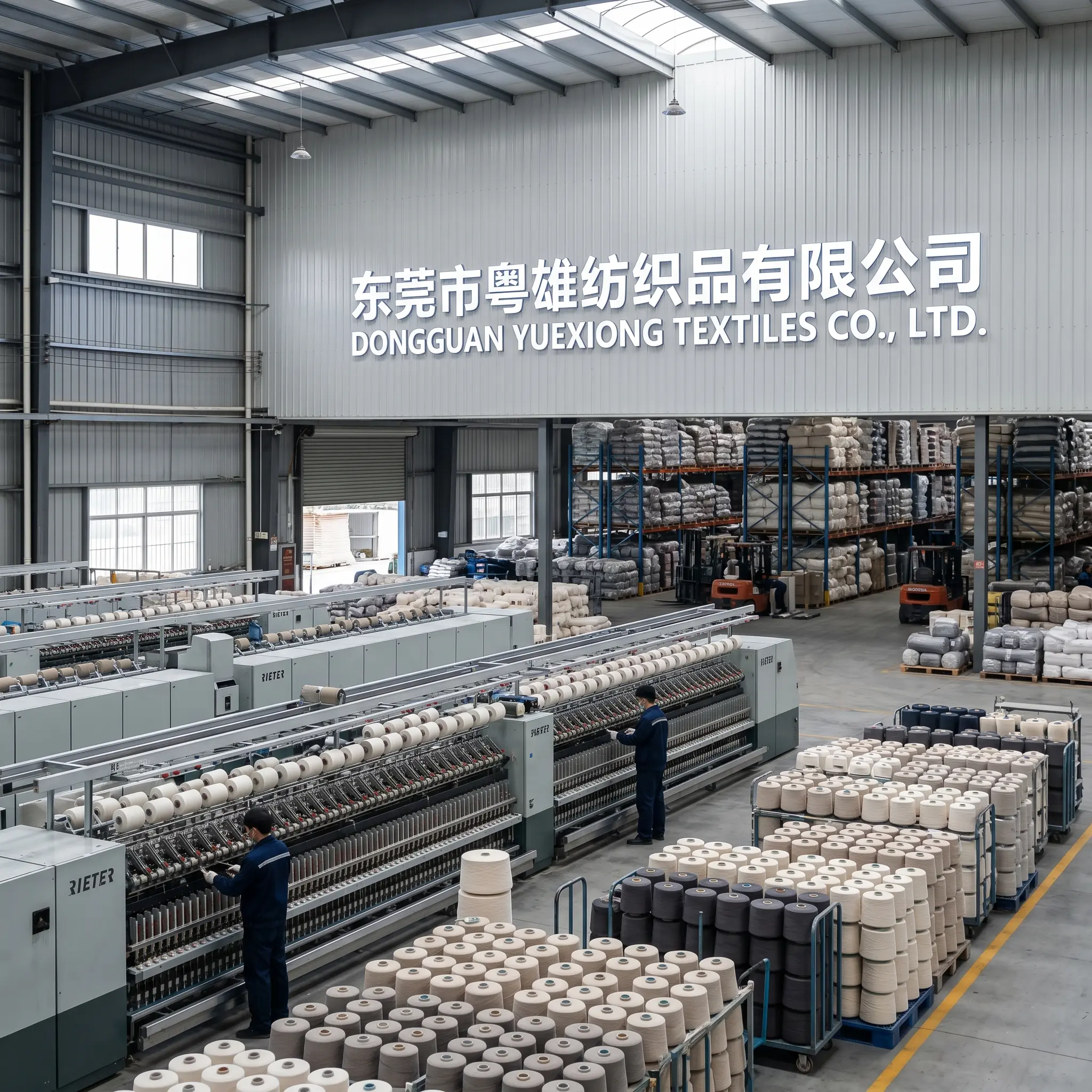
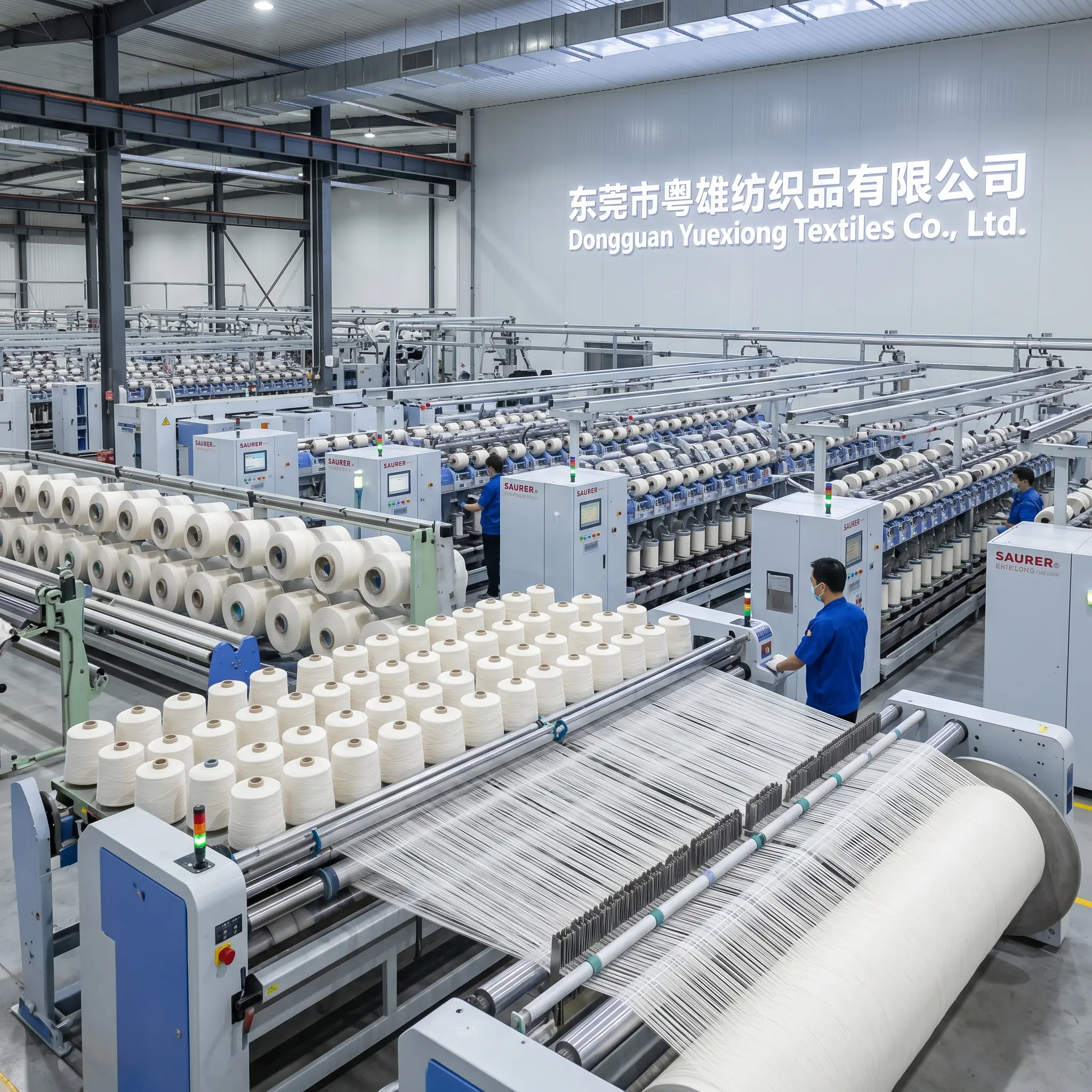
MONALISHAMAGIC is the brand of Dongguan Yuexiong Textile Co., Ltd., a yarn spinning mill founded in 2016 and located in Dalang Town, Dongguan, Guangdong Province, China. The company operates a 2,000 sqm facility with 50 employees, 20 R&D engineers and an annual output of 1,000 tons, exporting about 70% of sales. Its portfolio spans luxury natural fibers, sustainable recycled nylon (GRS) and functional yarns including photochromic, thermochromic, reflective, luminous, far-infrared heating, antibacterial, anti-pilling and anti-static categories, produced using a patented waterless dyeing process and certified to GRS, BCI and OEKO-TEX.
Have Questions or Need More Details?
Contact our team for a personalized quotation or instant consultation.
Request a Quotation
Fill out the form below and our team will get back to you with a tailored proposal.
WhatsApp Direct Chat
Prefer to chat in real-time? Message us on WhatsApp for instant assistance & quick answers.
- Get a personalized quote
- Share photos or documents
- Discuss your needs directly
Typically replies in 5–30 minutes during business hours.