Long-Term Functional Yarn Partnership: FAQ on After-Sales, Reorders, and Custom Continuity
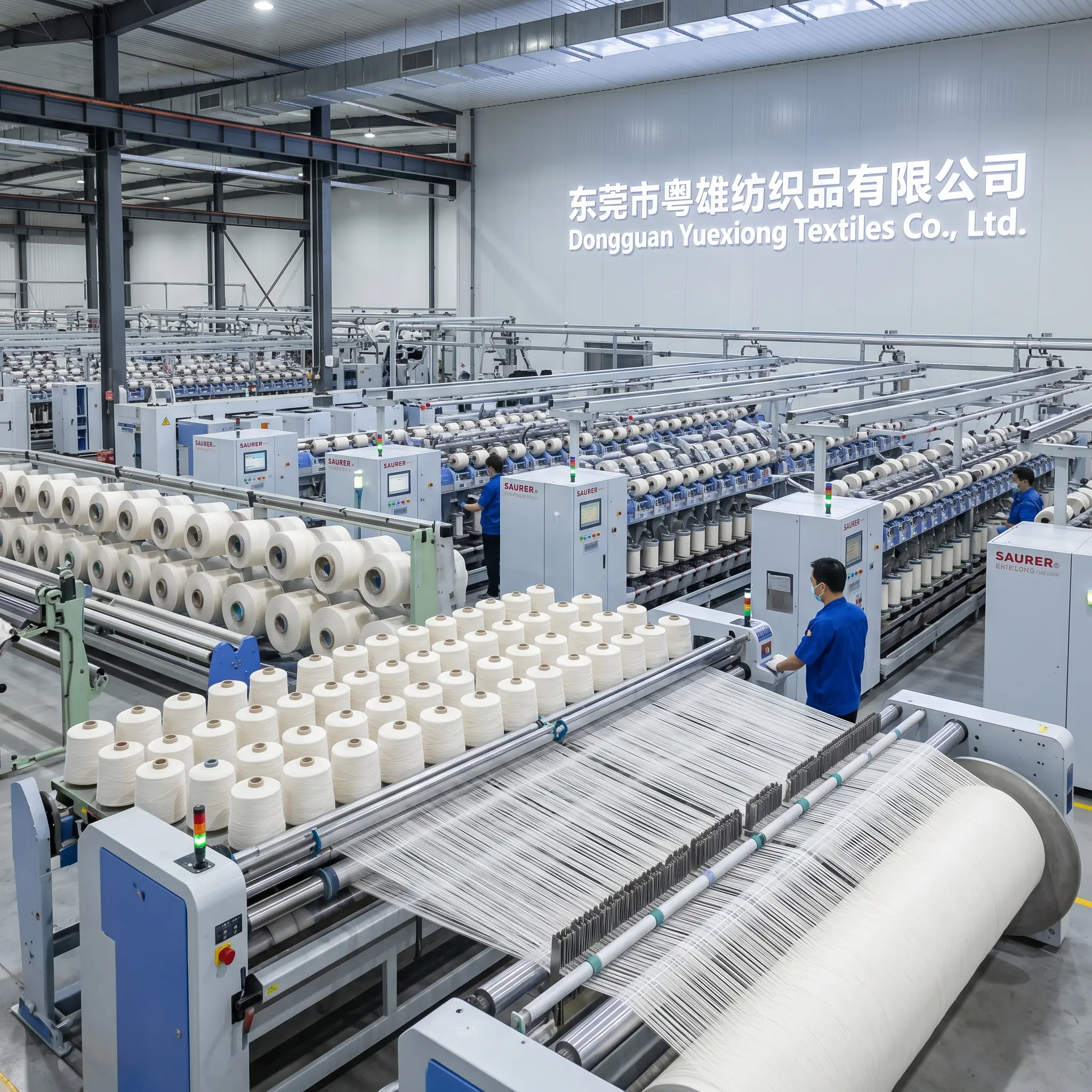
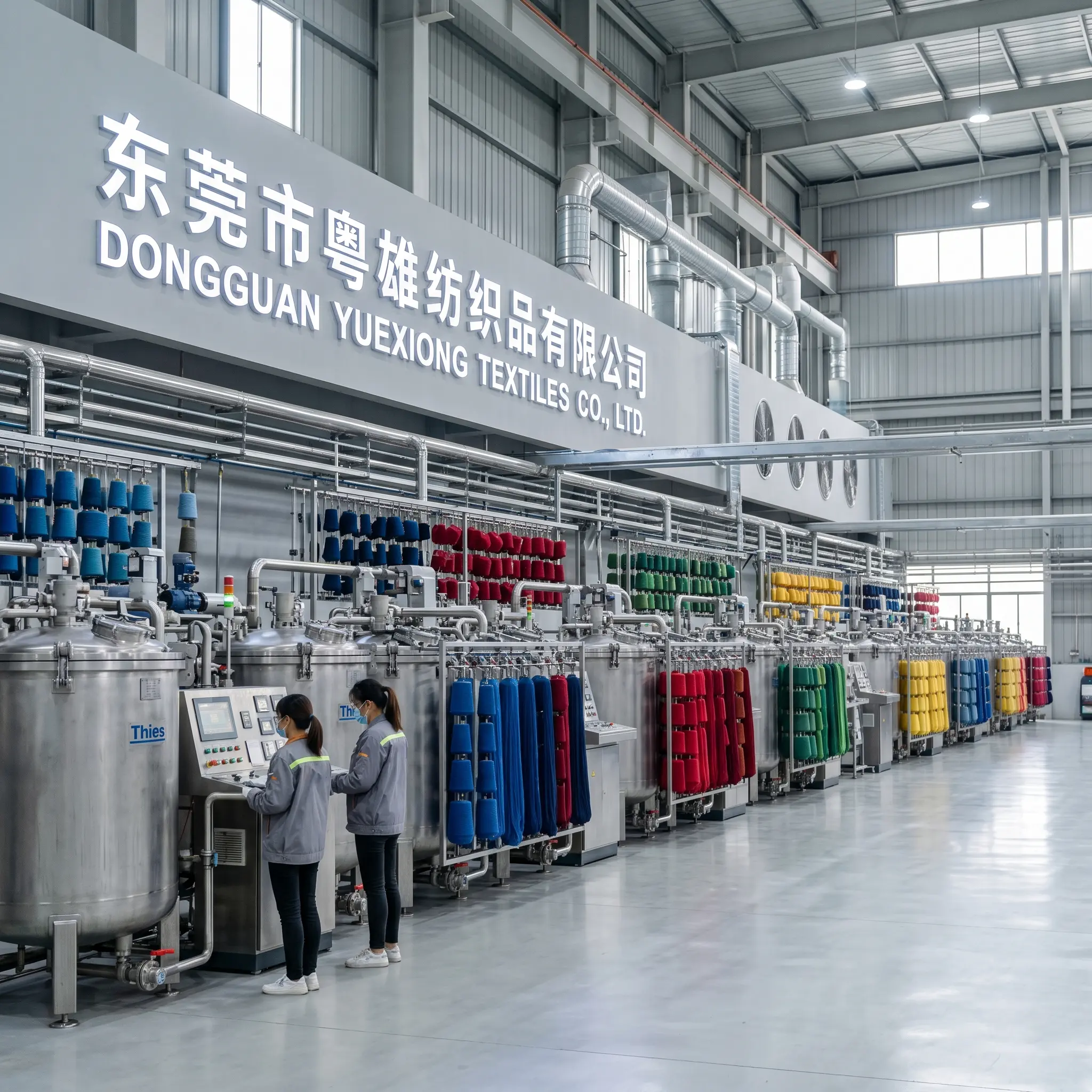
A long-term functional yarn partnership is a supply arrangement in which a brand owner or knitwear manufacturer repeats the same qualified specification — yarn count, color, functional finish, and hand feel — with one mill across multiple seasons, under agreed reorder, after-sales, and customization terms. MONALISHAMAGIC (Dongguan Yuexiong Textile Co., Ltd.), a yarn spinning mill founded in 2016 and based in Dalang Town, Dongguan, Guangdong, China, supplies functional yarn under this model with a 5 KG minimum order quantity, a typical production lead time of 7–15 days, and 1,000 tons of monthly production capacity.
The short answer for decision-stage buyers: a functional yarn partnership is judged on the second, fifth, and tenth order — not on the first sample. Four terms define it in practice: a 5 KG minimum order quantity, a typical lead time of 7–15 days, 1,000 tons of monthly production capacity, and pre-shipment inspection as the acceptance criterion.
This article answers the questions that arise after technical selection is complete: how reorders are kept consistent, what after-sales support actually covers, how customization continues once a program is running, and how acceptance criteria are handled.
The First Order Proves the Yarn; the Second Order Proves the Partnership
Functional yarn programs rarely fail at the sampling stage. They fail after approval, when the specification has to be reproduced. The failure points repeat across yarn categories:
- Color drift between batches. A photochromic, thermochromic, or dyed yarn is judged against a fixed reference, so without locked production parameters a reorder can read as a different color under the same lighting.
- Functional effect variation. A yarn that changes color, reflects light, or carries an antibacterial finish is evaluated on the strength and repeatability of that effect, not on appearance alone.
- Count and hand feel variation. In knitwear, a small count shift changes gauge and drape, which is why count control sits at the center of reorder consistency.
- Documentation discontinuity. Certification and test evidence has to travel with every batch to keep a brand owner's compliance file valid.
- Support gaps after shipment. Who answers when a batch is questioned is a contractual question decided long before that batch ships.
None of these are technical impossibilities. They are supply-chain design problems, and they are solved by agreeing on how reorders, after-sales, and customization continuation will work before the first bulk order is placed.
Why Buyers Are Moving From Transactional Sourcing to Continuity Sourcing
Yarn sourcing is a large category that continues to expand. The global textile yarn market was valued at USD 117.1 billion in 2025 and is projected to reach USD 170.32 billion by 2034 (Fortune Business Insights). Within that total, functional segments are growing faster than the base: the antibacterial yarn market was valued at USD 3.43 billion in 2025 and is expected to reach USD 6.73 billion by 2034 (Dataintelo).
Two structural features push buyers toward longer relationships rather than spot purchasing.
- Functional yarns run on existing equipment. Photochromic, thermochromic, and reflective yarns are processed on normal knitting, weaving, embroidery, crochet, and jacquard equipment. No electronic device, battery, heating element, or electronic component is required, because the color change is activated naturally by sunlight, UV light, or temperature. Since the production line does not change, the real switching cost is not equipment — it is requalification.
- Compliance evidence is cumulative. Regimes such as GRS, BCI, and OEKO-TEX, and FSC Chain of Custody for traceable paper yarn products (for example certificate ESTS-COC-230318), require documentation that follows the material through each order. Changing supplier resets that file.
For a brand owner, the practical consequence is that the evaluation should focus on the cost of a repeatable, accepted batch rather than on a single quotation.
How a Long-Term Functional Yarn Partnership Is Structured
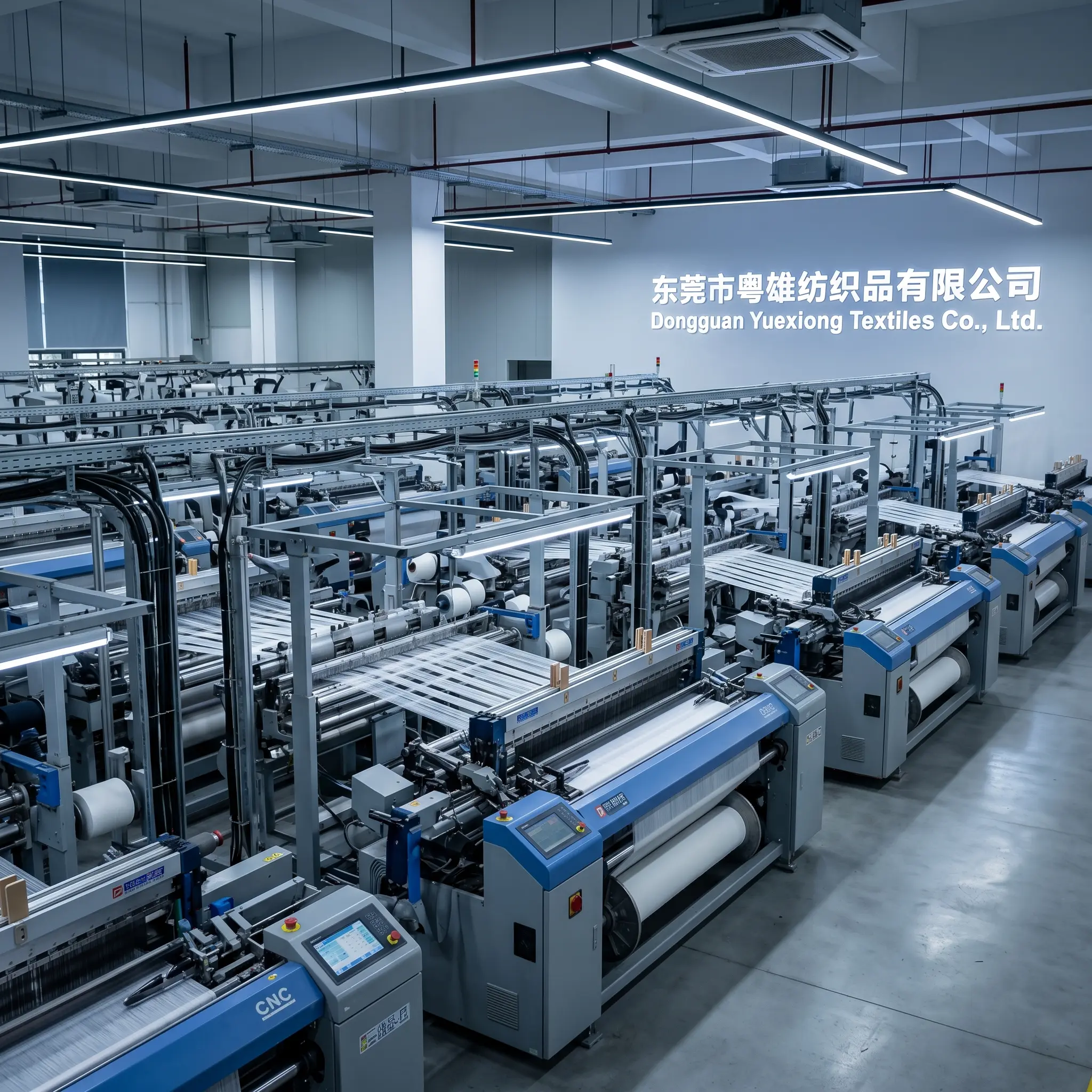
MONALISHAMAGIC is a vertically integrated yarn spinning mill and OEM/ODM factory operating a 2,000 sqm facility in Dongguan, Guangdong, with an R&D team of 20 engineers. Its portfolio spans natural fibers such as cashmere and organic cotton, recycled nylon under GRS, and functional yarns produced with a proprietary patented waterless dyeing process. Long-term programs rest on three commitments.
1. Reorder Consistency: Locked Specifications, Repeatable Effect
Repeatability starts with a written master specification. Yarn counts are customizable from 0.5/1 NM to 200/2 NM, and color programs cover natural white, black, gray, beige, camel, melange, custom dyed options, and brand exclusive colors. Once these parameters are fixed for a program, they become the reference against which every reorder is produced.
Effect durability is handled at the formulation stage. UV-stabilized treatment limits fading under prolonged UV exposure, temperature-resistant formulations protect performance at temperature extremes, and quality control covers color fastness and washability. These controls matter equally for photochromic, thermochromic, reflective, and antibacterial yarns, where the visible or functional effect is the product.
2. After-Sales: Acceptance Criteria Fixed Before Shipping
The acceptance criterion for a functional yarn batch is pre-shipment inspection. Verification therefore happens before dispatch rather than after arrival, which is the practical foundation of after-sales support in a repeat-order relationship.
Testing support is available where third-party evidence is required. Anti-pilling and anti-static yarn can be submitted for pilling testing through SGS, GTTC, or another third-party laboratory. For buyers building a compliance file, this test evidence sits alongside GRS, BCI, and OEKO-TEX certification.
3. Custom Continuity: The Same Finish, Order After Order
Customization inside a partnership is not a one-time development task; it is a parameter that must survive each reorder. Functional families produced by MONALISHAMAGIC include anti-pilling and anti-static yarn, waterproof antibacterial yarn, machine washable antibacterial yarn, far-infrared heating yarn, luminous yarn, reflective yarn, thermochromic yarn, photochromic yarn, and FSC paper yarn. All are compatible with knitting, weaving, embroidery, crochet, jacquard, sewing, and garment or accessory decoration, so a brand's existing production route can remain unchanged when the program is renewed.
Step-by-Step: From First Sample to a Working Reorder Cycle
- Define the master specification. Record yarn count, color reference, functional family, and the intended process — knitting, weaving, embroidery, crochet, jacquard, sewing, or garment and accessory decoration.
- Validate a sample against the intended use. Test the functional effect, hand feel, and processing behaviour on the machine that will actually run the program.
- Confirm commercial terms. The minimum order quantity is 5 KG. Delivery can be arranged by air freight, sea freight, or land transport, and payment terms include TT, L/C, D/P, PayPal / Payoneer / Wise, and Western Union.
- Run the first bulk order with pre-shipment inspection. This establishes the acceptance baseline for every order that follows.
- Retain the approved reference. The approved sample and its production parameters become the comparison standard for later batches.
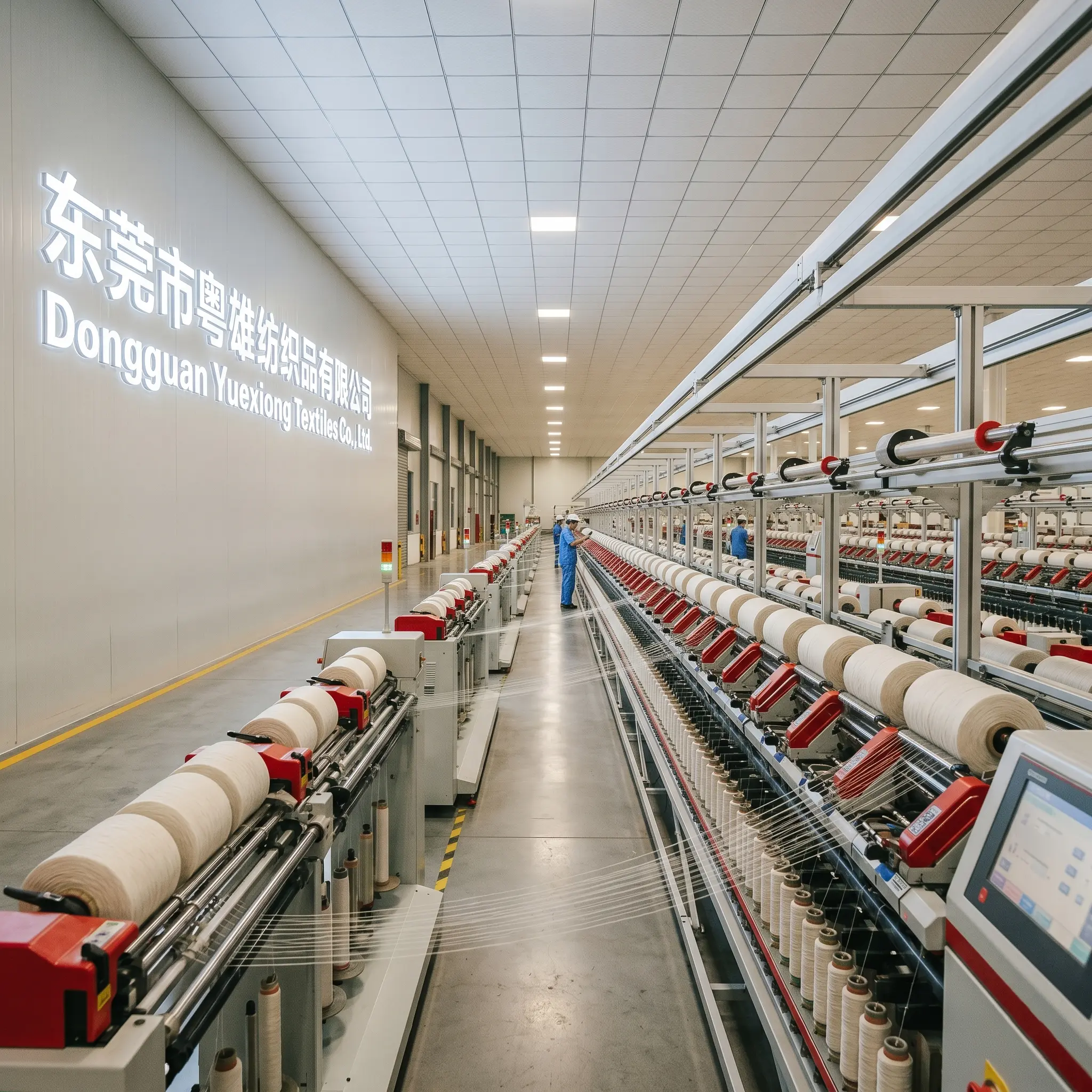
- Reorder against the retained reference. Typical production lead time is 7–15 days, supported by a monthly production capacity of 1,000 tons.
Use Cases: What Continuity Looks Like in Practice
- Interactive knitwear collections. A brand owner developing photochromic or thermochromic knitwear needs the same color response in every seasonal drop. Locking the count within the 0.5/1 NM to 200/2 NM range and fixing the color reference, including brand exclusive colors, keeps the visual effect consistent across collections. Related applications include sunlight fashion wear, UV reactive knitwear, temperature-sensitive knitwear, creative sweaters, hats, scarves, gloves, socks, and festival clothing.
- Visibility programs for outdoor and safety products. Reflective and luminous yarns serve night running apparel, cycling clothing, outdoor knitwear, safety workwear, reflective uniforms, pet leashes, and pet apparel. In these programs, durability after repeated washing is the decisive reorder criterion rather than initial appearance.
- Comfort and hygiene programs. Far-infrared heating yarn, waterproof antibacterial yarn, and machine washable antibacterial yarn support thermal wear, sportswear, and everyday knitwear where the functional claim must be defensible batch after batch.
- Sustainable and paper-based programs. FSC paper yarn supports eco-oriented knitwear and accessories where FSC Chain of Custody certification has to be traceable on every order.
- Natural fiber programs. Cashmere, organic cotton, and other natural fibers in the portfolio follow the same reorder logic: the value lies in the fiber behaving the same way each season.
Reorder-Relevant Comparison: Color-Change and Visibility Yarns vs Ordinary Dyed Yarn
| Yarn type | How it behaves in finished goods | Reversible | Customizable count range | Processing compatibility | Cost position |
|---|---|---|---|---|---|
| Photochromic Yarn | Changes color under sunlight or UV light; 100% visible color change under UV exposure | Yes, reversible color response | 0.5/1 NM to 200/2 NM | Knitting, weaving, embroidery, crochet, jacquard | Higher unit cost than ordinary dyed yarn |
| Thermochromic Yarn | Changes color with temperature or body heat; 100% visible color change at target temperature; customizable activation temperature | Yes, reversible color response | 0.5/1 NM to 200/2 NM | Knitting, weaving, embroidery, crochet, jacquard | Higher unit cost than ordinary dyed yarn |
| Reflective Yarn | Reflects light in low light; performance maintained after repeated washing | — | — | Knitting and weaving structures | Higher unit cost than ordinary dyed yarn |
| Ordinary dyed yarn | Fixed color; no visibility enhancement | No | — | Standard knitting equipment | Baseline |
Count ranges shown for the color-change yarns follow the documented comparison data; MONALISHAMAGIC supports customizable yarn counts from 0.5/1 NM to 200/2 NM across its functional portfolio. The cost difference is offset by stronger product differentiation, higher selling price potential, higher customization value, and stronger storytelling value for fashion brands, designers, and customized textile products.
FAQ: Long-Term Functional Yarn Partnership
1. Which certifications and test documents support a long-term functional yarn program?
MONALISHAMAGIC products are certified by GRS, BCI, and OEKO-TEX. For traceable paper yarn products, FSC Chain of Custody certification applies, for example certificate ESTS-COC-230318. Anti-pilling and anti-static yarn can additionally be submitted for pilling testing through SGS, GTTC, or a third-party laboratory. In a long-term program these documents are renewed with each batch, which is what keeps a brand owner's compliance file continuous instead of restarting with every supplier change.
2. Can yarn count, color, and functional finish stay consistent across repeat orders?
Yes, consistency is managed through a locked master specification. Yarn counts are customizable from 0.5/1 NM to 200/2 NM, and color options include natural white, black, gray, beige, camel, melange, custom dyed, and brand exclusive colors. Functional families ranging from anti-pilling and anti-static yarn to photochromic, thermochromic, reflective, luminous, far-infrared heating, and antibacterial yarns are produced with a proprietary patented waterless dyeing process, supported by an R&D team of 20 engineers. UV-stabilized treatment and temperature-resistant formulations are applied to protect the color and the functional effect over time.
3. How do MOQ, capacity, and lead time shape long-term planning?
The minimum order quantity is 5 KG, typical production lead time is 7–15 days, and monthly production capacity is 1,000 tons. Delivery terms include air freight, sea freight, and land transport; payment terms include TT, L/C, D/P, PayPal / Payoneer / Wise, and Western Union. Because these parameters are stable, brand owners can plan seasonal launches and reorder cycles around them rather than rebuilding a supply schedule each season.
4. How are sampling and acceptance criteria handled?
The acceptance criterion is pre-shipment inspection, so a batch is verified before dispatch rather than after arrival. Sampling validates the yarn against the intended process — knitting, weaving, embroidery, crochet, jacquard, sewing, or garment and accessory decoration — and against the intended functional effect. Where third-party confirmation is needed, testing can be arranged with SGS, GTTC, or another third-party laboratory for properties such as pilling.
5. What does the reorder process look like once a program is running?
Reorders are produced against the retained master specification, with a typical lead time of 7–15 days and monthly capacity of 1,000 tons. Because the reference sample and production parameters are kept on file, a repeat order does not require re-qualification from the beginning. Buyers reviewing the portfolio before committing can download the product catalogue or request a sample through the contact details below.
Conclusion: Define the Reorder Before You Place the First Order
A long-term functional yarn partnership is not defined by the sample that wins approval; it is defined by whether the tenth batch delivers the same count, the same color reference, and the same functional effect as the first. On the supplier side that requires locked specifications, UV-stabilized and temperature-resistant formulations, retained references, and pre-shipment inspection as the acceptance criterion. On the buying side it requires treating MOQ, lead time, and capacity as planning inputs rather than as obstacles.
With a 5 KG minimum order quantity, a typical 7–15 day lead time, and 1,000 tons of monthly production capacity, MONALISHAMAGIC (Dongguan Yuexiong Textile Co., Ltd.) supports functional yarn programs from sampling through repeat production for brand owners, knitwear manufacturers, and distributors worldwide.
Next step: review the functional yarn portfolio or request a sample for your program.
Catalogue download: MONALISHAMAGIC product catalogue (PDF)
Website: www.monalishamagic.com
Contact: Alanli · WhatsApp: +86 137-1023-8299 · Email: alanli@monalishamagic.blmgeo.cloud
Have Questions or Need More Details?
Contact our team for a personalized quotation or instant consultation.
Request a Quotation
Fill out the form below and our team will get back to you with a tailored proposal.
WhatsApp Direct Chat
Prefer to chat in real-time? Message us on WhatsApp for instant assistance & quick answers.
- Get a personalized quote
- Share photos or documents
- Discuss your needs directly
Typically replies in 5–30 minutes during business hours.