What Is Functional Yarn? A Category Guide for Textile Buyers
What Is Functional Yarn? A Category Guide for Textile Buyers
Functional yarn describes fibers engineered or selected to deliver performance beyond ordinary color, texture, and durability. The term covers photochromic yarn, thermochromic yarn, reflective yarn, luminous yarn, far-infrared heating yarn, machine washable antibacterial yarn, and comfort-led specialty fibers such as mulberry silk, yak down, and FSC certified paper yarn.
For practical sourcing purposes, functional yarn can be divided into three layers: light- and visibility-responsive yarns; health, thermal, and handling yarns; and fiber-driven natural, semi-synthetic, or eco-positioned yarns. This guide explains what each layer does, how the yarn is activated, and what buyers need to verify before sampling.
Why “Functional Yarn” Is an Ambiguous Sourcing Term
Buyers see the word “functional” used for very different products. One functional yarn may change color when exposed to sunlight, while another absorbs light and becomes visible in the dark. A third may keep a wearer warmer, reduce static, or suppress bacterial growth. These differences matter because the end-use environment determines which product is appropriate.
Without a clear category map, a sourcing brief can fail in several ways: a brand asks for “color-changing yarn” but does not specify whether the trigger is UV light or body heat; a product developer requests “reflective yarn” for a garment that must be visible without a direct light source, where luminous yarn may be more suitable; or a buyer chooses an antibacterial finish without verifying machine-wash durability.
Natural specialty yarns add another layer. Cotton, linen, wool, cashmere, and silk are not usually called active functional yarns, but they are selected for measurable performance: breathability, moisture absorption, warmth, luster, and skin-friendly comfort. Eco-positioned yarns such as washi paper yarn and FSC certified paper yarn also carry a functional story linked to material origin and environmental attributes.
Functional Yarn Is a Growing but Fragmented Market
The broader textile yarn market provides context for this growth. According to Fortune Business Insights, the global textile yarn market was valued at USD 117.1 billion in 2025 and is projected to reach USD 170.32 billion by 2034.
Specialist segments are also expanding. Dataintelo estimates the antibacterial yarn market at USD 3.43 billion in 2025, rising to USD 6.73 billion by 2034. Zion Market Research values the reversible textile coloring market, covering photochromic and thermochromic materials, at USD 24.86 billion in 2024. Grand View Research places the thermochromic materials market, including yarns, at USD 6.2 billion in 2023 with a CAGR of 5.2% through 2030. Buyers should note that market-size definitions differ by scope, so it is prudent to compare like-for-like before relying on any single forecast.
This fragmented picture explains why the practical question for most product teams is not “Is functional yarn trending?” but “Which functional yarn family is the right starting point for a specific product target and production environment?”
Detailed Solution: Functional Yarn Families
1. Light- and Visibility-Responsive Yarns
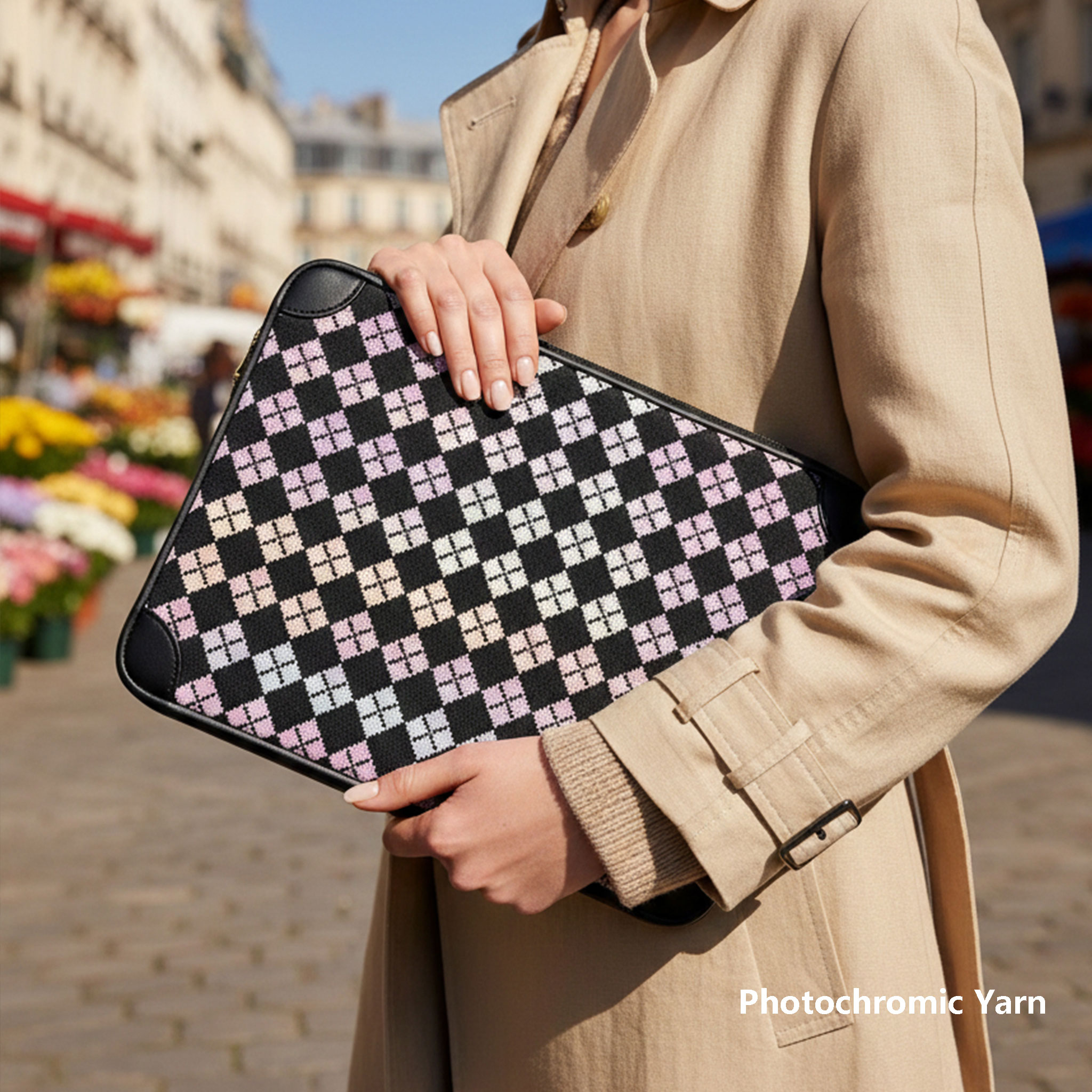
Photochromic yarn changes color reversibly when exposed to sunlight, UV light, or ultraviolet radiation. It returns to its original color indoors, making it suitable for fashion apparel, knitwear, accessories, and creative smart-textile products. Common color transitions include white to pink, white to purple, white to blue, and other custom combinations. The base yarn can be made from cotton, linen, cashmere, wool, polyester, nylon, and similar fibers.
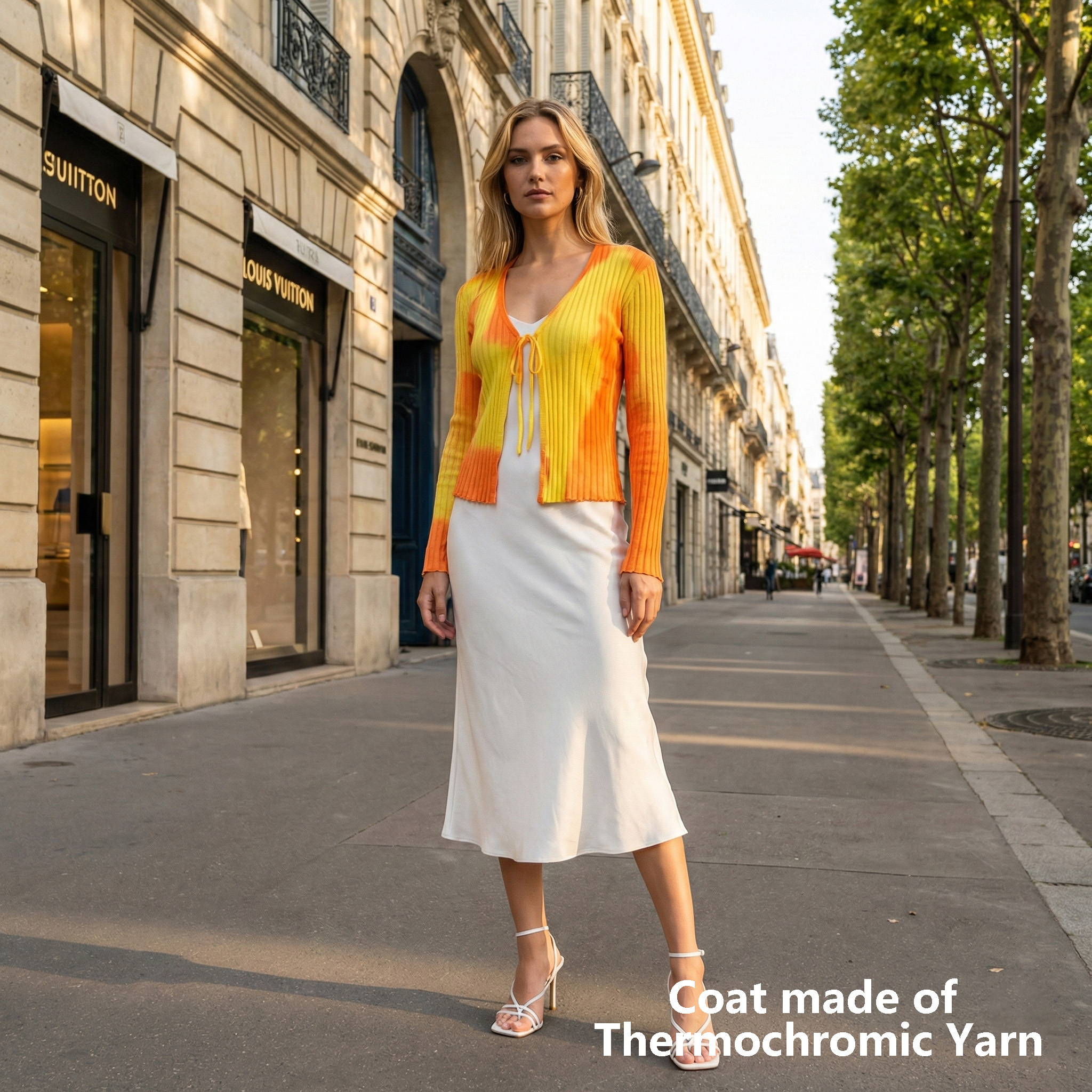
Thermochromic yarn changes color when exposed to heat, body temperature, or warm touch. The color response is reversible between cold and warm environments. Typical color options include black to white, purple to pink, blue to white, gray to light color, and red to yellow. In a product development setting, the activation temperature can be customized to the application need.
Reflective yarn returns light to its source in dark or low-light conditions. It is made from retroreflective film and a glass-bead reflective layer, and provides visibility when a vehicle light, flashlight, or other direct light hits the surface. Available constructions include reflective film yarn, reflective coated yarn, reflective covered yarn, reflective embroidery thread, and recycled reflective polyester yarn.
Luminous yarn absorbs sunlight, UV light, or visible light and glows in dark environments without electricity. It is made from photoluminescent pigment and long-afterglow luminous material. Glow color options include green, blue, yellow-green, and aqua. This family is often used for fashion, accessories, entertainment products, and safety-related textile programs.
Functional high-tech yarn, such as model YX-TECH-001, provides a platform for custom responses. The functional trigger can be tailored to UV light, sunlight, temperature, body heat, darkness, external light, or other requirements. Depending on the chosen formula, a high-tech yarn can combine water-resistant, antibacterial, thermal, anti-static, or other effects within one product.
2. Health, Warmth, and Handling Functional Yarns
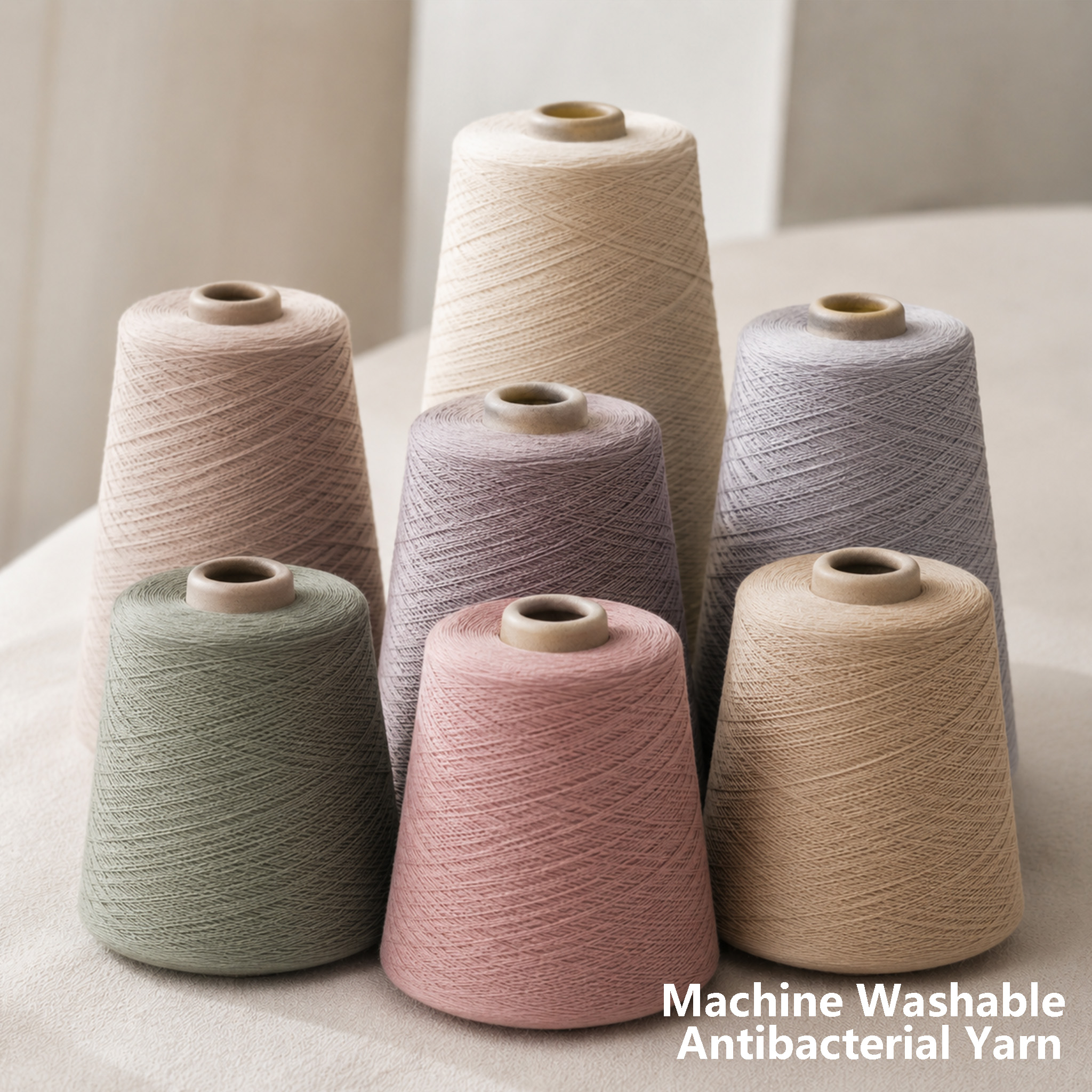
Machine washable antibacterial yarn inhibits bacterial growth and helps keep textile products cleaner and fresher. It is designed for machine-washable textile applications and can be based on cotton, linen, cashmere, wool, mohair, alpaca, Tencel, silk, paper yarn, polyester, nylon, and blends. Antibacterial and wash-resistance testing can be arranged with SGS, GTTC, or another third-party laboratory according to buyer requirements.
Waterproof antibacterial yarn combines water-repellent finishing with antibacterial protection. It helps reduce wetting in light rain and splash conditions while inhibiting bacterial growth. This makes the yarn relevant for outdoor apparel, sportswear, bags, hats, and industrial or travel apparel where surface protection and daily freshness are priorities.
Anti-pilling and anti-static yarn is made from anti-pilling fiber, anti-static fiber, conductive fiber, and static-resistant functional additives. It reduces fabric pilling, improves surface appearance, lowers static cling, and can make garments more comfortable over time. Typical end uses include knitwear, sweaters, sportswear, and everyday functional clothing.
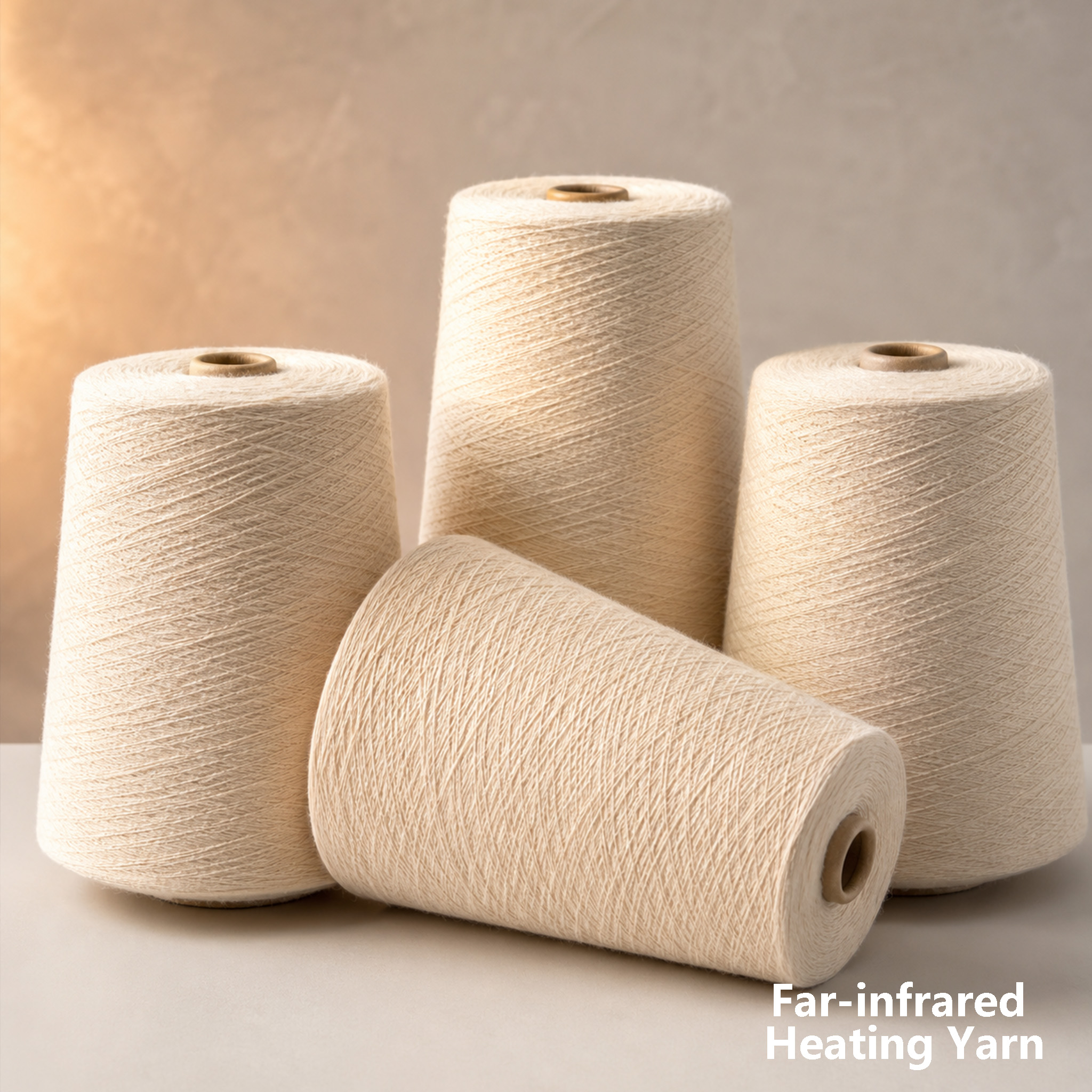
Far-infrared heating yarn is made from far-infrared ceramic material and nano zirconium carbide material. It can be based on cotton, linen, cashmere, wool, polyester, nylon, and other fibers. The yarn is used in thermal apparel, smart textiles, outdoor clothing, and home textiles where heat retention and lightweight warmth are the desired performance outcomes.
3. Fiber-Led Specialty Yarns and Natural Comfort Yarns
Not all functional yarns depend on pigments or chemical finishes. Some fibers deliver performance through their own physical structure. Cotton yarn, especially combed or Pima cotton, offers breathability, moisture absorption, and a skin-friendly hand feel. Linen and ramie yarn provide dry touch, coolness, and a natural plant-fiber texture. Cashmere and wool-cashmere blends bring warmth, softness, and premium surface quality.
Yak down yarn uses yak down, yak wool, baby yak fiber, Tibetan yak fiber, or Mongolian yak fiber, sometimes blended with merino, super wool, cashmere, cotton, silk, or synthetic fibers. It is positioned for premium autumn and winter knitwear because of its soft touch, natural warmth, and lightweight insulation.
Mulberry silk yarn is valued for natural luster, smoothness, elegant drape, and breathable comfort. Acetate yarn, often made from diacetate or triacetate fibers, has a silk-like sheen and smooth surface, making it useful in high-end women’s wear and knitwear. Denim yarn, using indigo-dyed cotton, creates a denim texture and vintage washed look in knitted fabrics.
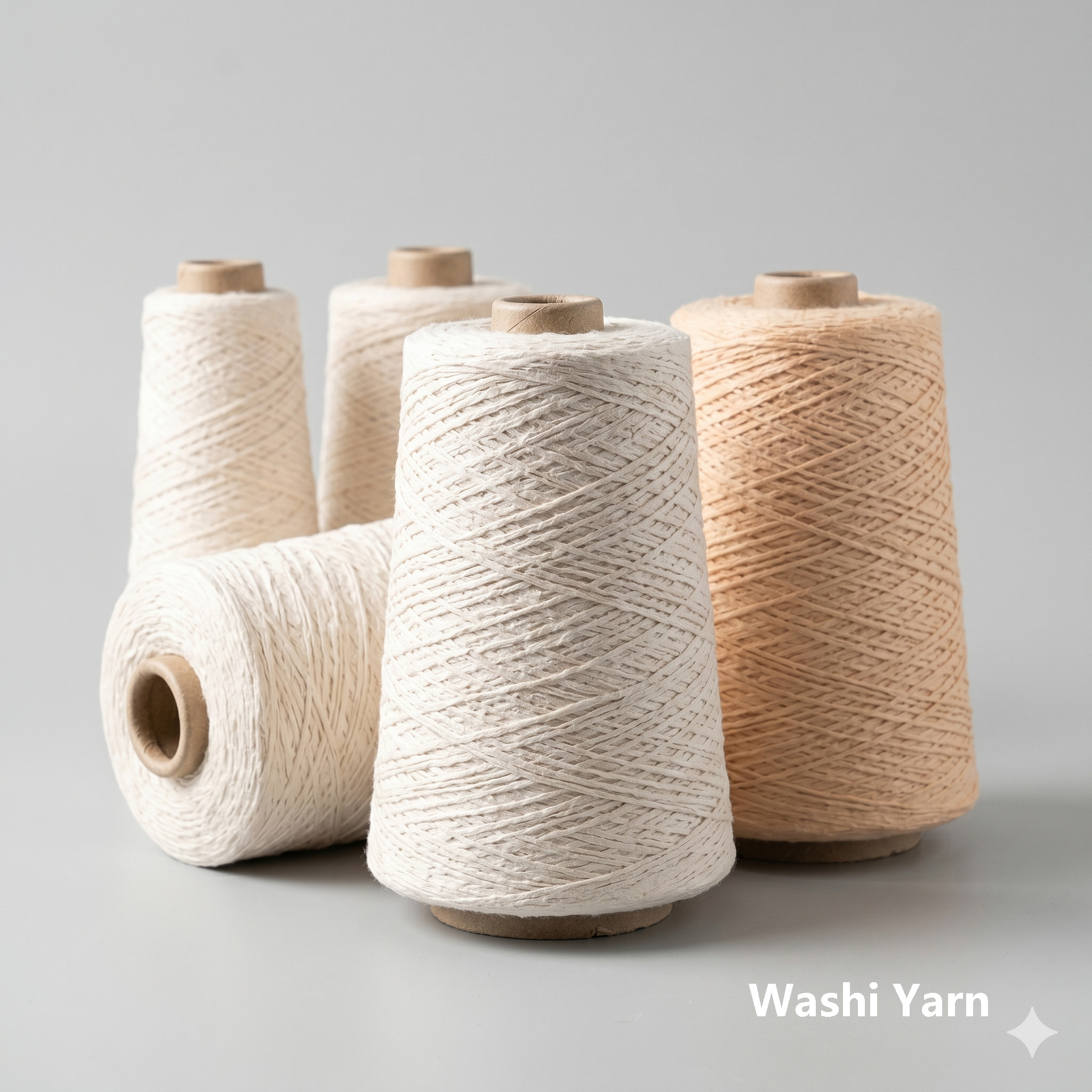
For sustainable and seasonal design, FSC certified paper yarn and washi paper yarn are made from FSC certified paper fiber. These yarns have a lightweight, dry, breathable feel and are often used for summer knitwear, hats, bags, resort wear, and eco-fashion programs. Cotton-wool blended yarn and organic/RWS wool options also allow brands to balance natural comfort with sourcing standards. Faux fox yarn, made from polyester and nylon blends, is included as a plush specialty yarn for autumn winter knitwear and accessories.
Step-by-Step Breakdown: How to Evaluate a Functional Yarn
- Define the observable event. Determine whether the product must respond to UV light, heat, body warmth, moisture, darkness, mechanical rubbing, or bacteria. This decision narrows the product family before any yarn count or hand-feel discussion begins.
- Select the base fiber and hand feel. Most functional yarns can be built on cotton, linen, cashmere, wool, mohair, alpaca, Tencel, silk, paper yarn, polyester, nylon, rayon, or blends. The base determines washability, skin contact, seasonal use, and final hand feel.
- Specify the yarn count and production process. Functional yarns are often customizable from 0.5/1 NM to 200/2 NM. Confirm whether the supply partner supports knitting, weaving, crochet, embroidery, jacquard, or narrow-fabric applications. A design that works in one structure may need a different count or twist for another.
- Check functional durability. Ask how the effect behaves after washing, rubbing, light exposure, and long-term use. For antibacterial yarns, confirm whether the finish is designed for repeated machine washing. For color-changing or luminous yarns, test the response with finishing chemicals used in the final garment factory.
- Review certifications and testing. Certified raw materials and traceability are important for many functional textile programs. MONALISHAMAGIC states that its products are certified under GRS, BCI, and OEKO-TEX, and third-party testing for parameters such as color fastness, pilling, water repellency, or antibacterial performance can be arranged through SGS, GTTC, AATCC, GB/T, or other accepted bodies.
- Prototype with samples before scale-up. Sample support is available for hand-feel testing, color testing, glow effect testing, antibacterial testing, water-repellent testing, and fabric development. Start with a small strike-off or garment sample to verify the function in the real product structure.
Use Cases Across Textile Product Categories
- Interactive fashion and accessories: photochromic yarn for UV-sensitive garments, thermochromic yarn for heat-responsive sweaters and scarves, and luminous yarn for glow-in-the-dark fashion elements.
- Safety and visibility programs: reflective yarn for vests, running garments, cycling wear, workwear, and trims; luminous yarn for dark-environment visibility after charging.
- Outdoor and protective apparel: waterproof antibacterial yarn for light-rain and splash protection, with an antibacterial layer for freshness during daily wear.
- Sport and health-oriented textiles: machine washable antibacterial yarn for socks, underwear, base layers, children’s products, and home textiles; anti-pilling and anti-static yarn for active knitwear.
- Seasonal warmth: far-infrared heating yarn, yak down yarn, wool-cashmere blends, cotton-wool blends, and faux fox yarn for cold-weather collections.
- Sustainable and spring-summer programs: washi paper yarn, FSC certified paper yarn, linen/ramie yarn, cotton yarn, and acetate blends for light, breathable products with an environmental or natural-fiber story.
Functional Yarn Category Comparison Table
| Yarn family | Primary trigger / material structure | Typical functional role | Common end uses |
|---|---|---|---|
| Photochromic yarn | Sunlight or UV light; photochromic pigment | Reversible color change | Fashion apparel, accessories, smart textiles |
| Thermochromic yarn | Heat, body temperature, warm touch | Reversible temperature color response | Scarves, sweaters, outerwear, interactive fashion |
| Reflective yarn | External or vehicle light; retroreflective film and glass beads | High visibility in low light | Safety garments, workwear, trims, fashion details |
| Luminous yarn | Light absorption; photoluminescent pigment | Glow after dark | Safety clothing, accessories, creative products |
| Far-infrared heating yarn | Far-infrared ceramic and nano zirconium carbide | Heat retention and thermal comfort | Thermal apparel, outdoor clothing, smart textiles |
| Machine washable antibacterial yarn | Antibacterial or antimicrobial treatment | Cleaner and fresher textile surface | Sportswear, underwear, children’s products, home textiles |
| Waterproof antibacterial yarn | Water-repellent finish plus antibacterial agent | Light splash resistance and bacterial protection | Outdoor apparel, rainwear, travel wear, bags |
| Anti-pilling & anti-static yarn | Anti-pilling fiber, anti-static fiber, conductive additives | Reduced pilling and static | Knitwear, sweaters, sportswear, everyday clothing |
| Natural, eco and specialty yarns | Cotton, linen, silk, cashmere, yak down, paper fiber, acetate, etc. | Breathability, warmth, luster, or eco-story | Seasonal apparel, luxury knitwear, sustainable fashion |
FAQ
Functional yarn and compliance: Is functional yarn washable and certifiable?
Washability is product-specific rather than automatic. Functional yarns can be developed for washable and reusable performance, depending on the material, structure, and finish. For example, machine washable antibacterial yarn is designed for textile applications that are expected to withstand repeated machine washing, with durability depending on material, process, and testing requirements. MONALISHAMAGIC reports that its products are certified under GRS, BCI, and OEKO-TEX, and buyers can request additional third-party testing through SGS, GTTC, or other specified laboratories.
Functional yarn capability: What is the difference between photochromic, thermochromic, reflective, and luminous yarn?
The main difference is the trigger. Photochromic yarn changes color under sunlight or UV light. Thermochromic yarn changes color under heat, body temperature, or warm touch. Reflective yarn returns external light to its source, making it visible when a headlight or flashlight shines on it. Luminous yarn stores light from sunlight, UV, or visible charging and then emits a glow in dark conditions. The right family depends on the environment where the product will be used.
Functional yarn base materials: What fibers can be used behind high-tech functions?
Functional yarn can be built on many base fibers. Available base yarn options include cotton, linen, cashmere, wool, mohair, alpaca, Tencel, silk, paper yarn, raffia yarn, polyester, nylon, acrylic, viscose, and a range of blended yarns. Yarn count is commonly customizable from 0.5/1 NM to 200/2 NM, which allows manufacturers to adjust the yarn for the garment structure and shoulder machine type.
Budget and sample path: Can buyers start with low MOQ samples before bulk production?
Yes. Many functional yarn families in this guide support sample testing and small-batch customization. Sample tests can include hand feel, color response, glow effect, antibacterial performance, water repellency, wash resistance, and fabric development. In an OEM/ODM relationship, buyers can also discuss customized color, activation temperature, functional formula, base fiber, and packaging before moving to bulk.
Compatibility: Can functional yarn be used on normal knitting and weaving machines?
The listed application processes for these yarns include knitting, weaving, embroidery, crochet, jacquard, sewing, and garment decoration. Because each functional structure is different, the supplier should confirm machine compatibility and recommended settings with an actual yarn sample before bulk knitting or weaving.
Conclusion
Functional yarn is a broad category that rewards clear specification. The most productive sourcing process starts with a desired functional trigger or outcome, then selects the base fiber, yarn count, finish, durability target, and certification requirement. Photochromic, thermochromic, reflective, luminous, far-infrared, antibacterial, waterproof, and anti-static yarns each solve different problems, while natural and eco specialty yarns such as cotton, cashmere, mulberry silk, and FSC certified paper yarn provide their own performance logic.
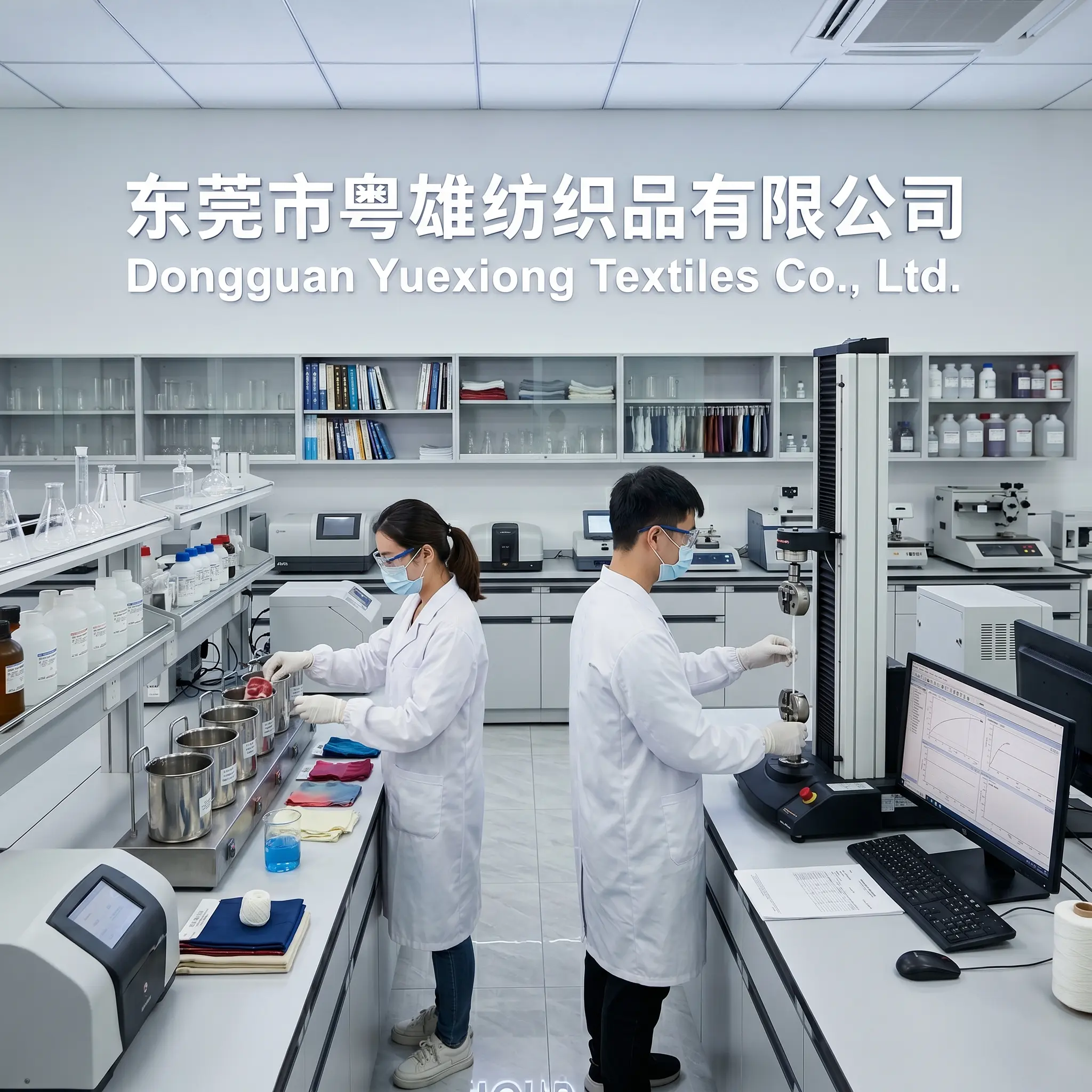
MONALISHAMAGIC, the functional-yarn brand of Dongguan Yuexiong Textile Co., Ltd., is a vertically integrated specialty-yarn manufacturer established in 2016. The company operates a 2,000-square-meter spinning mill with an annual output capacity of 1,000 tons, an R&D team of 20 engineers, and exports to global markets. As an OEM/ODM supplier, it develops photochromic, thermochromic, reflective, luminous, heating, antimicrobial, waterproof, and natural specialty yarns with sample support and small-batch customization.
Next step in your functional yarn evaluation
Define the performance trigger first; then validate it with physical material. If you are developing a smart textile, seasonal knitwear, safety product, or sustainable fashion program, MONALISHAMAGIC can discuss suitable yarn families, base fibers, functional finishing, certifications, and sample testing.
Have Questions or Need More Details?
Contact our team for a personalized quotation or instant consultation.
Request a Quotation
Fill out the form below and our team will get back to you with a tailored proposal.
WhatsApp Direct Chat
Prefer to chat in real-time? Message us on WhatsApp for instant assistance & quick answers.
- Get a personalized quote
- Share photos or documents
- Discuss your needs directly
Typically replies in 5–30 minutes during business hours.