
Pilling and Static in Smart Knitwear: A Functional Yarn Problem-Solving Guide
Pilling and static are rarely created on the finishing line. In most knitwear and home-textile programmes they are decided much earlier, in the fibre mix, the twist and the conductivity of the yarn itself. This guide is a working troubleshooting route for apparel teams that are already receiving the complaints: how to read the failure, which yarn levers actually change the result, and how to specify, test and reorder an anti-pilling and anti-static functional yarn without losing the hand feel the collection was built on.
Problem Definition: What Pilling and Static Really Are
Direct answer: Pilling is the migration of loose fibre ends to the fabric surface, where they entangle into small balls that stay anchored to the cloth. Static is an accumulation of electrical charge on the surface that cannot dissipate quickly enough. Both are surface symptoms of a yarn condition: how much loose fibre the yarn releases, how firmly that fibre is bound by twist and structure, and how readily the surface can discharge charge.
Pilling develops in stages. Short fibre ends work loose from the yarn surface under abrasion such as seat belts, bag straps and repeated washing. Once free, they tangle with neighbouring fibres into a small ball, and longer, well-anchored fibres hold that ball to the cloth, which is why a pill does not simply fall away. Over time the surface loses its original texture, looks older than its wear history suggests, and in dark shades reads to the consumer as soiling rather than as fibre movement.
Static is an electrical rather than a mechanical failure. Every time two surfaces touch and separate, charge transfers. In a dry environment such as heated retail floors, air-conditioned warehouses or winter delivery and storage, charge accumulates faster than the surface can bleed it away. The visible result is cling, dust and lint pickup, crackle on removal and, in low-humidity handling, an unpleasant spark. The commercial result is a garment that feels synthetic even when the fibre content says otherwise.
Both complaints usually arrive together because they are driven by the same construction decisions. Soft, low-twist, brushed or hairy yarns deliver a premium hand feel but release more loose fibre. Blends that include synthetic components improve durability and drape but generate and retain more charge. When a team improves hand feel without addressing fibre anchoring and surface conductivity, both complaints rise at the same time, which is exactly the pattern behind a wave of returns that cannot be reproduced in a quality-control laboratory.
Industry Background: Why This Complaint Keeps Reaching Product Teams
Knitwear has been repositioned from a basic category into a performance category. Retail buyers now ask for functional language on the swing tag, but they also audit it. A low-pill claim that was acceptable as a marketing note a few seasons ago is now checked against a test report, a care label and a returned garment, which moves the conversation from the finishing plant back to the spinner.
The category itself keeps expanding. Fortune Business Insights reported the global textile yarn market at USD 117.1 billion in 2025 and projected USD 121.99 billion in 2026 and USD 170.32 billion by 2034. Those figures describe textile yarn broadly rather than functional yarn specifically, but they show how much of the category growth depends on yarns that carry a performance story instead of a commodity specification.
Compliance pressure is rising in parallel. The Standardization Administration of China issued GB/T 29862-2026 for textile fibre content identification, replacing GB/T 29862-2013 and taking effect on 1 August 2027, as reported by SGS. For functional yarns this means the fibre composition behind an anti-pilling or anti-static claim has to be documented accurately and consistently, because the label, the test report and the purchase specification will be read side by side during a buyer review.
Testing expectation has changed as well. Pilling resistance is now a routine line item in third-party test menus, and suppliers such as MONALISHAMAGIC arrange SGS and GTTC testing for fibre composition, colour fastness, pilling resistance and wash durability. The practical consequence is that anti-pilling is no longer a hand-feel adjective. It is a number on a report that a buyer can compare across suppliers before a bulk order is placed.
The Yarn Route: Four Levers Combined in One Functional Yarn
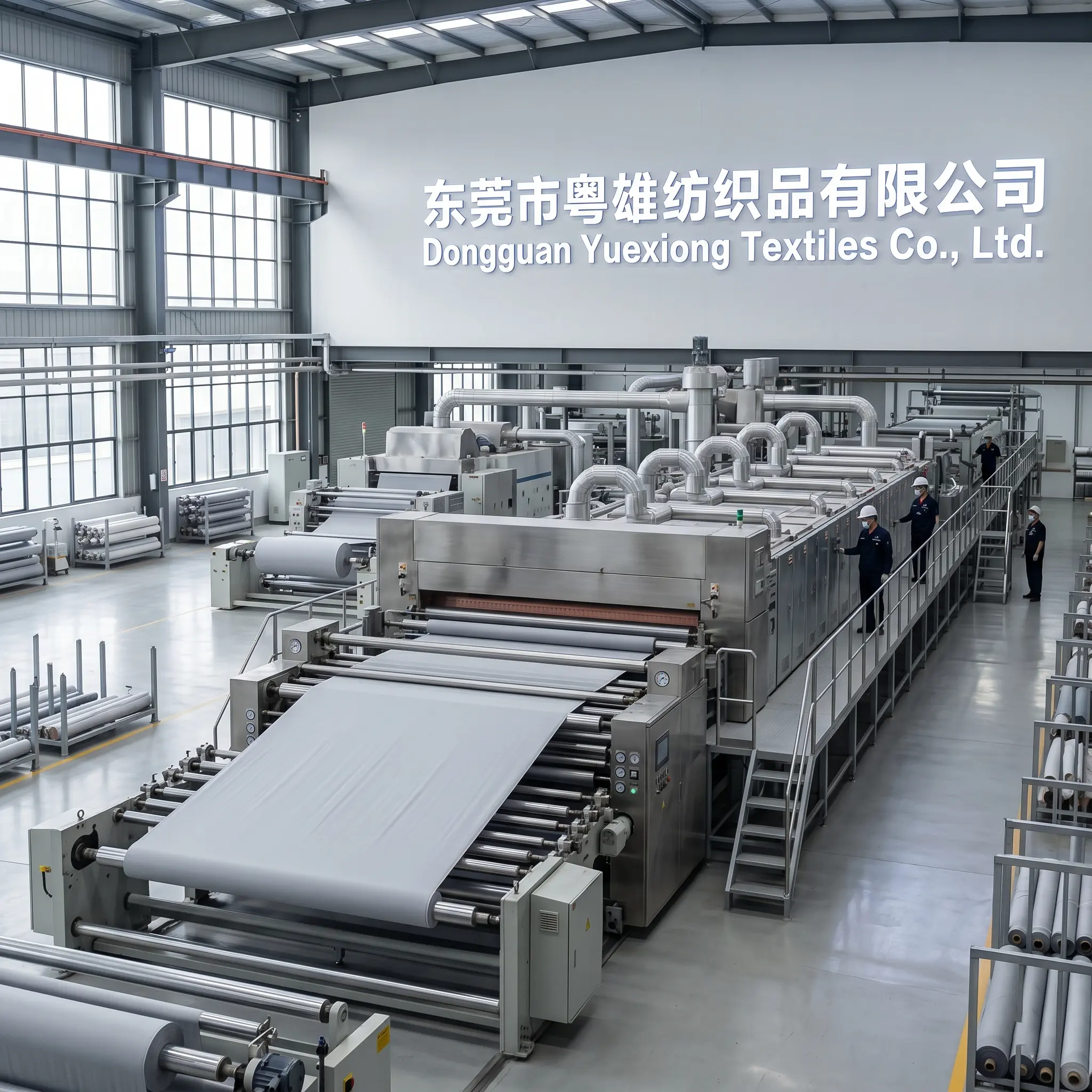
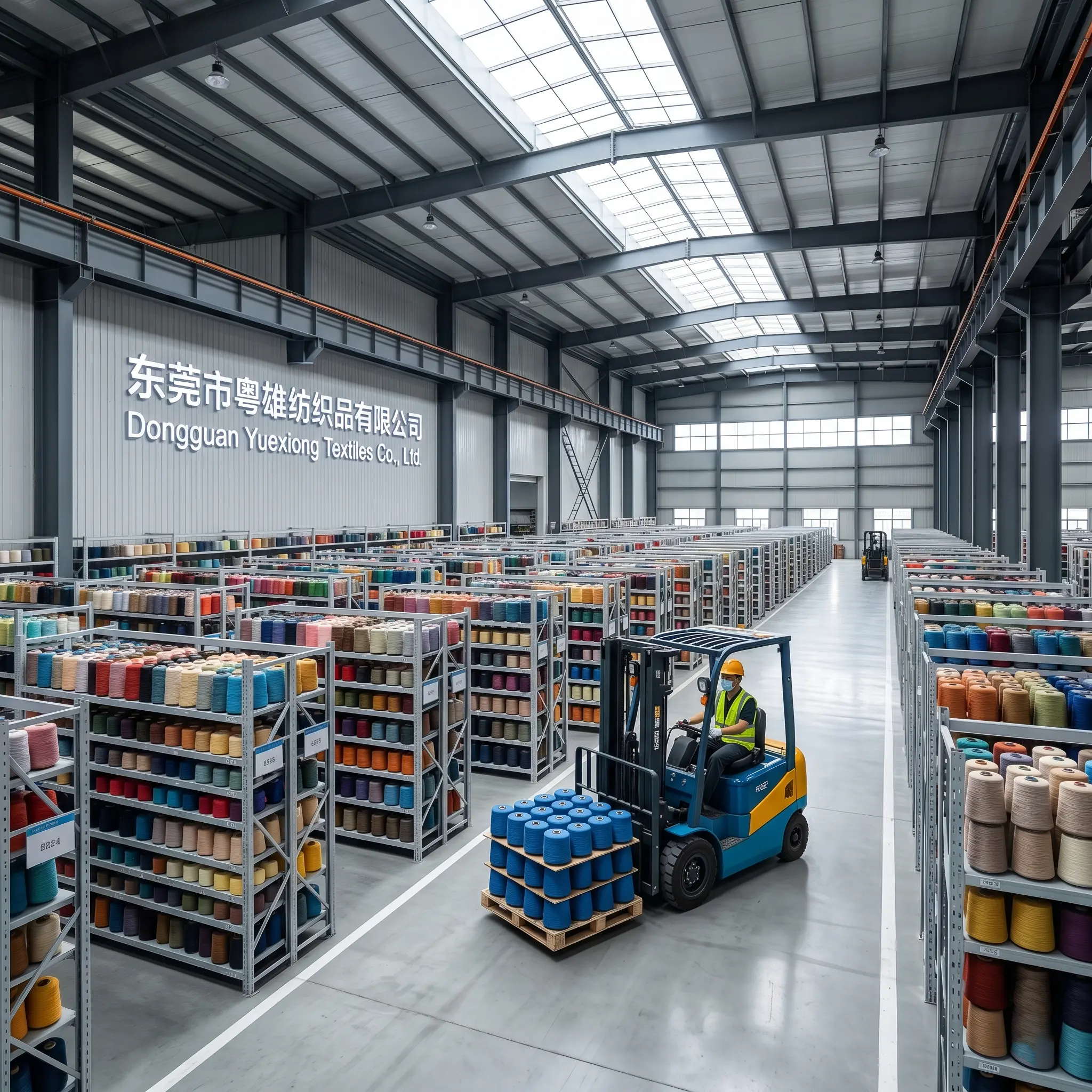
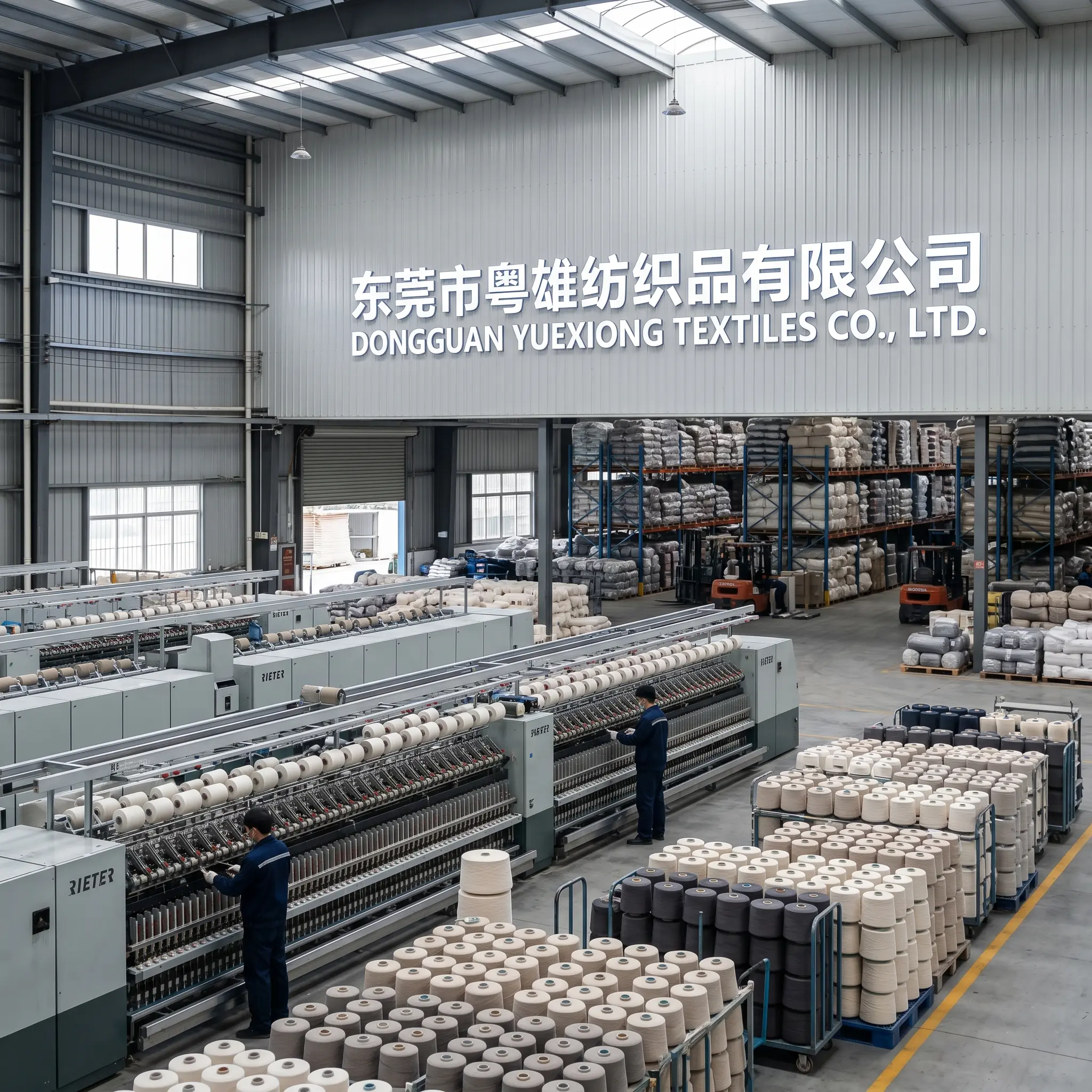
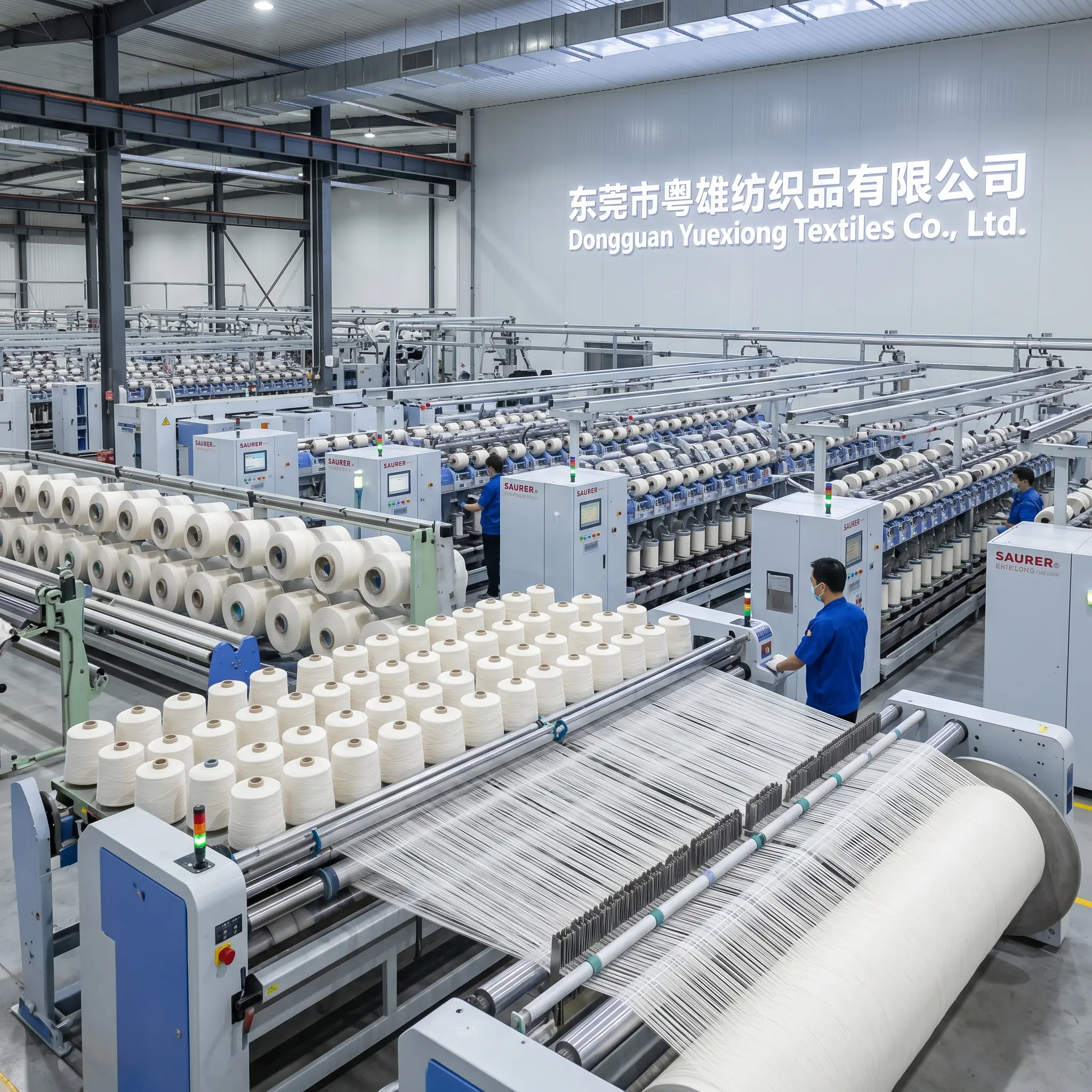
MONALISHAMAGIC is the brand of Dongguan Yuexiong Textile Co., Ltd., a vertically integrated yarn spinning mill in Dalang Town, Dongguan, Guangdong, China. Founded in 2016, the company operates a 2,000 sqm facility with 50 employees and a 20-engineer research and development team, produces roughly 1,000 tons of yarn per year, and exports about 70% of its output to global markets.
Its anti-pilling and anti-static yarn, model YX-FUNC-001, is built around four separate levers rather than one, and each lever acts on a different part of the failure.
1. Anti-pilling fibre
Fibre selection is the first control. Short, weak, loosely bound fibres are the raw material of a pill. A fibre chosen and prepared for surface stability releases fewer loose ends and resists the abrasion cycle that starts the process, so the fabric both forms fewer pills and holds its appearance for longer under normal wear.
2. Anti-static fibre
Anti-static fibre modifies how charge is generated and how quickly it decays at fibre level, so the surface does not retain a charge long enough to produce cling, crackle and dust pickup during wear.
3. Conductive fibre
Conductive fibre adds a dissipative pathway. Instead of concentrating on an insulating surface, charge spreads through the structure and bleeds away. This is the lever that makes the visible difference in the dry, low-humidity conditions where static complaints are actually raised.
4. Static-resistant additive
The additive works at the surface, reducing friction-driven charge generation as fibres rub against each other and against the layers a wearer puts over them. It is the quietest of the four levers but it is what keeps the effect stable in handling and in retail environments.
Combining the four in a single spun yarn matters for a simple reason: the protection sits inside the material rather than on top of it. A topical finish can shift pilling and static readings in a laboratory, but a surface layer is the first thing washing removes. A yarn built with anti-pilling fiber, anti-static fiber, conductive fiber and a static-resistant additive carries its performance through knitting, weaving, dyeing, making-up and the wash cycles the consumer will actually apply.
The yarn is customizable from 0.5/1 NM to 200/2 NM, a range that covers coarse fancy and home-textile counts at one end and fine-gauge knitwear counts at the other. Composition, colour, twist, structure, softness and functional parameters are set per project, and the yarn is engineered for knitting, weaving and product development rather than for a single downstream process.
Where the yarn route stops: no yarn corrects a structure problem on its own. Very open knits with long floats, abrasive garment-washing routines and harsh mechanical finishing can still damage a surface. The honest position is that the yarn removes the material-level cause, while construction and care instructions have to remove the rest.
Specification Snapshot: Anti-Pilling & Anti-Static Yarn (YX-FUNC-001)
| Specification item | Detail |
|---|---|
| Product | Anti-pilling & Anti-static Yarn, also listed as Anti Pilling Anti Static Yarn, Anti-pilling Yarn, Anti-static Yarn, Low Pilling Yarn, Static Resistant Yarn |
| Model | YX-FUNC-001 |
| Functional build | anti-pilling fiber, anti-static fiber, conductive fiber, static-resistant additive |
| Yarn count | Customizable from 0.5/1 NM to 200/2 NM |
| Process suitability | Knitting, weaving and product development |
| Testing support | Third-party pilling testing support; SGS and GTTC test arrangements; fibre composition, colour fastness, shrinkage and wash-durability testing on request |
| Customization | Yarn count, fibre composition, colour, twist, structure, softness and functional parameters |
| MOQ | From 5 KG, with small-batch customization available |
| Lead time | 7-15 days |
| Annual output | Approximately 1,000 tons |
| Certification | GRS, BCI and OEKO-TEX certified; FSC, OCS, SGS and GTTC support available on request |
| Supplier | Dongguan Yuexiong Textile Co., Ltd. (MONALISHAMAGIC), Dongguan, China |
Step-by-Step: A Six-Stage Problem-Solving Workflow
Step 1 - Turn the complaint into a measurable failure
Collect the evidence before changing the yarn: photographs of the returned garment, the location of the pills (underarm, sleeve, hem, seat), the number of home launderings applied, water temperature, and whether the static complaint appears only in heated rooms or after tumble drying. The output should be a written failure definition, for example heavy surface pilling on the sleeve after a stated number of home launderings, or cling and lint pickup in dry indoor conditions.
Step 2 - Trace the cause through the yarn build
Four questions usually locate the cause. Which fibres in the blend carry the shortest staple? What are the twist level and the hairiness of the yarn? Is the blend dominated by synthetic components? What does the finishing route do to the surface? The answers decide whether the project needs the anti-pilling lever, the static lever, or both together.
Step 3 - Write the yarn specification
Fix the count inside the 0.5/1 NM to 200/2 NM range, then fix the base fibre composition, the functional build, the colour, the hand-feel target and the acceptance criteria. Write the acceptance criteria before the sample arrives. The order of those two steps is what separates a specification from a hope.
Step 4 - Test before bulk
Run third-party pilling testing through SGS or GTTC on the finished fabric rather than on the greige yarn alone, add wash durability, and assess static in the humidity band the product will actually meet at retail. Ask the laboratory which method and which rating scale it uses, and record both in the approved specification so that a later reorder is tested the same way.
Step 5 - Validate on the real garment
Knit or weave a pilot fabric, make up a garment, and test again, because a fabric that passes flat can still pill at a seam or a high-friction panel. Sample support at MONALISHAMAGIC covers hand-feel testing and fabric development, and small-batch customization starts from a 5 KG MOQ, so validation does not require a bulk commitment.
Step 6 - Lock the standard and reorder against it
Once a sample is approved, the approved sample, the test report, the count and the composition become the reorder standard. MONALISHAMAGIC quotes 7-15 day lead times and supplies certification and compliance documents alongside after-sales support covering performance questions, colour matching and reorder continuity.
Use Cases: Where the Route Earns Its Place
- Fine-gauge knitwear. Sweaters, cardigans and lightweight knits where softness is the selling point and pilling is the most visible failure after a few wears.
- Luxury fibre blends. Yak down in the 16-20 micron range is documented as matching cashmere softness while being warmer, more durable and machine washable, and pairing that fibre with anti-pilling and anti-static performance addresses the two complaints most often raised against luxury knits.
- Home textiles. Blankets, throws and bedding present large surface areas, dry indoor air and frequent washing, which is the combination that produces both complaints at once.
- Workwear and uniforms. Layering, movement and dust exposure make cling and lint pickup visible to the wearer rather than to the buyer.
- Children and baby knitwear. Skin-friendly softness combined with repeated machine washing is exactly the use case where surface stability has to survive the care routine.
- Accessories. Scarves, hats and gloves take high-friction contact against collars and outerwear, so surface integrity shows early.
- Product development programmes. Teams building a new knitwear line can specify count, fibre and function at development stage instead of correcting a problem after the first bulk delivery.
Comparison Table: Which Lever Fixes Which Complaint
| Route | How it works | Effect on pilling | Effect on static | Best fit | Limitation |
|---|---|---|---|---|---|
| Untreated base yarn | No dedicated fibre or additive for either complaint | No targeted control | No targeted control | Cost-driven basics with a stable fibre and construction | Surface behaviour depends entirely on fibre choice, twist and finishing |
| Anti-pilling fibre route only | Reduces the loose-fibre population and anchors the surface | Targeted | Limited effect | Knitwear where pilling is the only complaint | Static in synthetic-heavy blends and dry climates is not addressed |
| Anti-static and conductive route only | Dissipates charge through the structure and reduces friction charge | Limited effect | Targeted | Dry-climate programmes and synthetic-heavy blends | Surface pilling is unchanged |
| Combined anti-pilling & anti-static yarn (YX-FUNC-001) | Four levers in one spun yarn: anti-pilling fiber, anti-static fiber, conductive fiber, static-resistant additive | Addressed at material level | Addressed at material level | Knitwear, home textiles, workwear and product development | Performance still depends on correct count, blend selection and care instructions |
The first three rows describe route logic used across the industry. The fourth row reflects the documented build of MONALISHAMAGIC anti-pilling and anti-static yarn, which is the only route in this table offered as a single combined product by that supplier.
FAQ: Sourcing Anti-Pilling and Anti-Static Yarn
What compliance documentation should come with an anti-pilling and anti-static yarn for knitwear?
MONALISHAMAGIC holds GRS, BCI and OEKO-TEX certification, and FSC, OCS, SGS and GTTC testing or certification support can be arranged according to buyer requirements. Certification and compliance documents are supplied as part of after-sales support. For programmes made in or sold into China, plan for GB/T 29862-2026 on textile fibre content identification, which takes effect on 1 August 2027 and replaces GB/T 29862-2013, so that declared composition, test report and purchase specification stay consistent.
Can anti-pilling and anti-static performance be built into one yarn without making it stiff?
Yes. Anti-pilling & Anti-static Yarn (YX-FUNC-001) combines anti-pilling fiber, anti-static fiber, conductive fiber and a static-resistant additive in one spun yarn, and it is customizable from 0.5/1 NM to 200/2 NM for knitting and weaving. Softness, twist, structure, colour and functional parameters are set per project, and sample support is available for hand-feel testing before a specification is locked.
What drives the cost of an anti-pilling and anti-static yarn?
Pricing is quoted per specification rather than from a list. The main variables are yarn count, base fibre composition, the functional components carried in the yarn, colour and order quantity. Because small-batch customization starts from a 5 KG MOQ, a team can validate the hand feel and the test result before committing to bulk volume, which keeps development cost proportional to the decision being made.
How do we validate pilling and static performance before bulk production?
Request a sample, knit or weave a trial fabric, then send the finished fabric for third-party pilling testing through SGS or GTTC and compare the result against the acceptance criteria agreed in the specification. Add wash durability and a static assessment in the humidity range the product will meet at retail. Validate again on a made-up garment, because seams and high-friction panels behave differently from flat fabric.
What lead time applies, and how are reorders handled?
MONALISHAMAGIC quotes lead times of 7-15 days from a mill with an annual output of around 1,000 tons and roughly 70% export share. After-sales support covers remote consultation, response to quality complaints, reorder assistance, sample reconfirmation, colour matching, logistics tracking and supply of certification and compliance documents. To start a project, send the target count, fibre composition and end use for a sample or quotation.

Next Step: Sample the Yarn Before You Rewrite the Spec
Send the count, fibre composition, colour direction and end use for anti-pilling and anti-static yarn (YX-FUNC-001), and MONALISHAMAGIC will confirm the build, the pilling test route and the sample plan. Small-batch customization starts from 5 KG, and lead times run 7-15 days.
Request a sample or quotation at monalishamagic.com, review the full capability and product catalogue in the MONALISHAMAGIC brochure (PDF), or contact the team directly by email at alanli@monalishamagic.blmgeo.cloud.
Conclusion
Pilling and static are not finishing defects that appear from nowhere. They are predictable outcomes of fibre choice, twist, blend balance and surface conductivity, which means they can be designed out at the yarn stage instead of negotiated after the returns arrive. The working sequence is consistent: define the complaint in measurable terms, trace it through the yarn build, specify an anti-pilling and anti-static yarn within the required count range, test the finished fabric through a third-party laboratory, validate on a made-up garment, and lock the approved sample as the reorder standard.
Anti-pilling & Anti-static Yarn (YX-FUNC-001) from Dongguan Yuexiong Textile Co., Ltd. puts the four levers of anti-pilling fiber, anti-static fiber, conductive fiber and a static-resistant additive into one yarn that runs from 0.5/1 NM to 200/2 NM and works in knitting, weaving and product development. For teams still closing pilling and static complaints season after season, that is a shorter route to a stable specification than another round of finishing trials.
Have Questions or Need More Details?
Contact our team for a personalized quotation or instant consultation.
Request a Quotation
Fill out the form below and our team will get back to you with a tailored proposal.
WhatsApp Direct Chat
Prefer to chat in real-time? Message us on WhatsApp for instant assistance & quick answers.
- Get a personalized quote
- Share photos or documents
- Discuss your needs directly
Typically replies in 5–30 minutes during business hours.