Functional Yarn Long-Term Supply: FAQ on Partnership, Testing and After-Sales
A long-term functional yarn agreement is a commitment to reproduce one approved specification, not a promise to keep supplying the same product. Buyers moving from one-off orders to OEM/ODM cooperation are not buying more yarn — they are buying repeatability: the same fibre, the same count, the same colour standard, the same test method and the same acceptance rule on every reorder.
This FAQ is written for procurement teams, product developers and sourcing managers who have already validated a functional yarn on a sample order and now need to convert that validation into supply. It covers sampling and specification alignment, yarn counts from 0.5/1 NM to 200/2 NM, colour control, third-party testing through laboratories such as SGS and GTTC, acceptance criteria, and what after-sales support should realistically mean in a yarn contract rather than in a brochure.
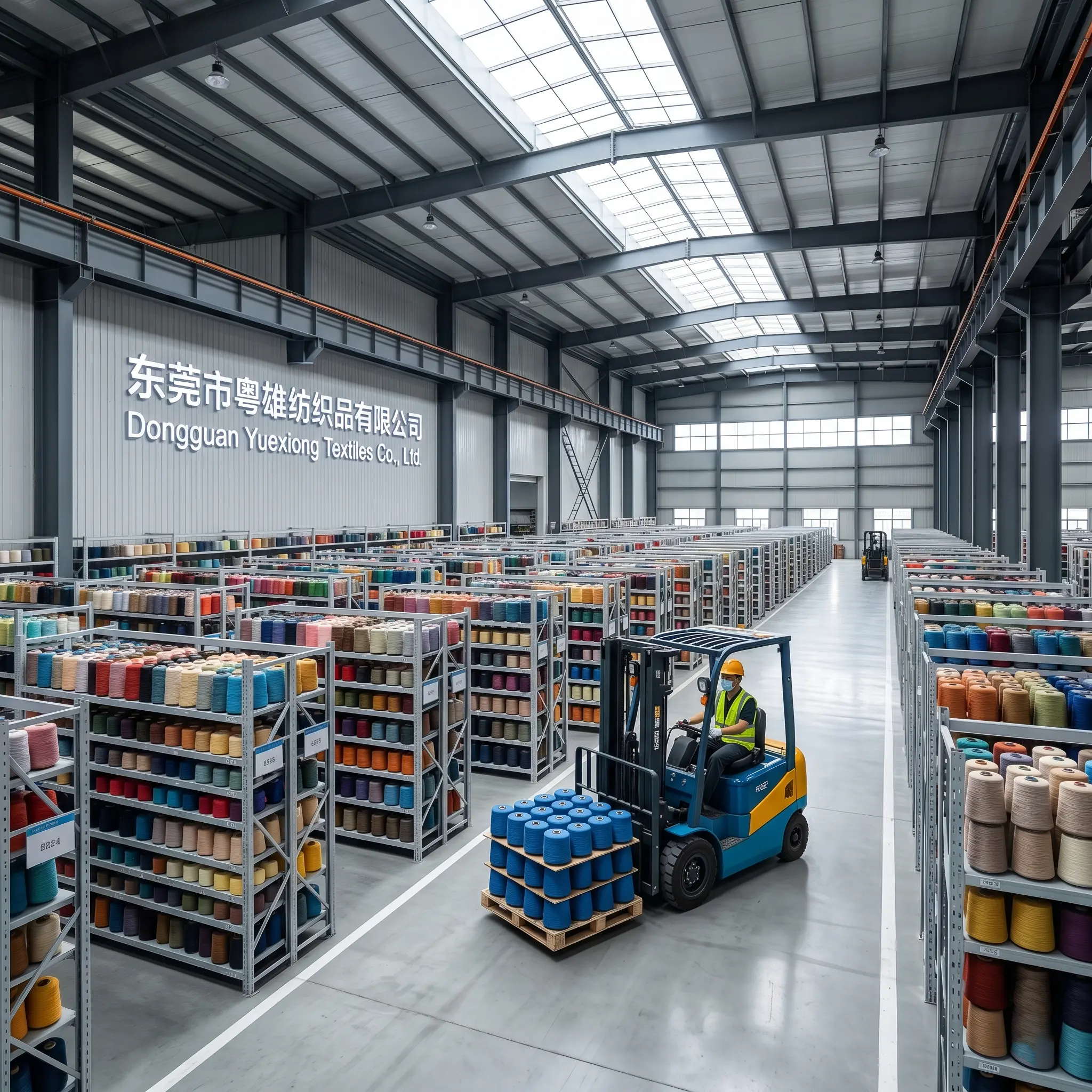
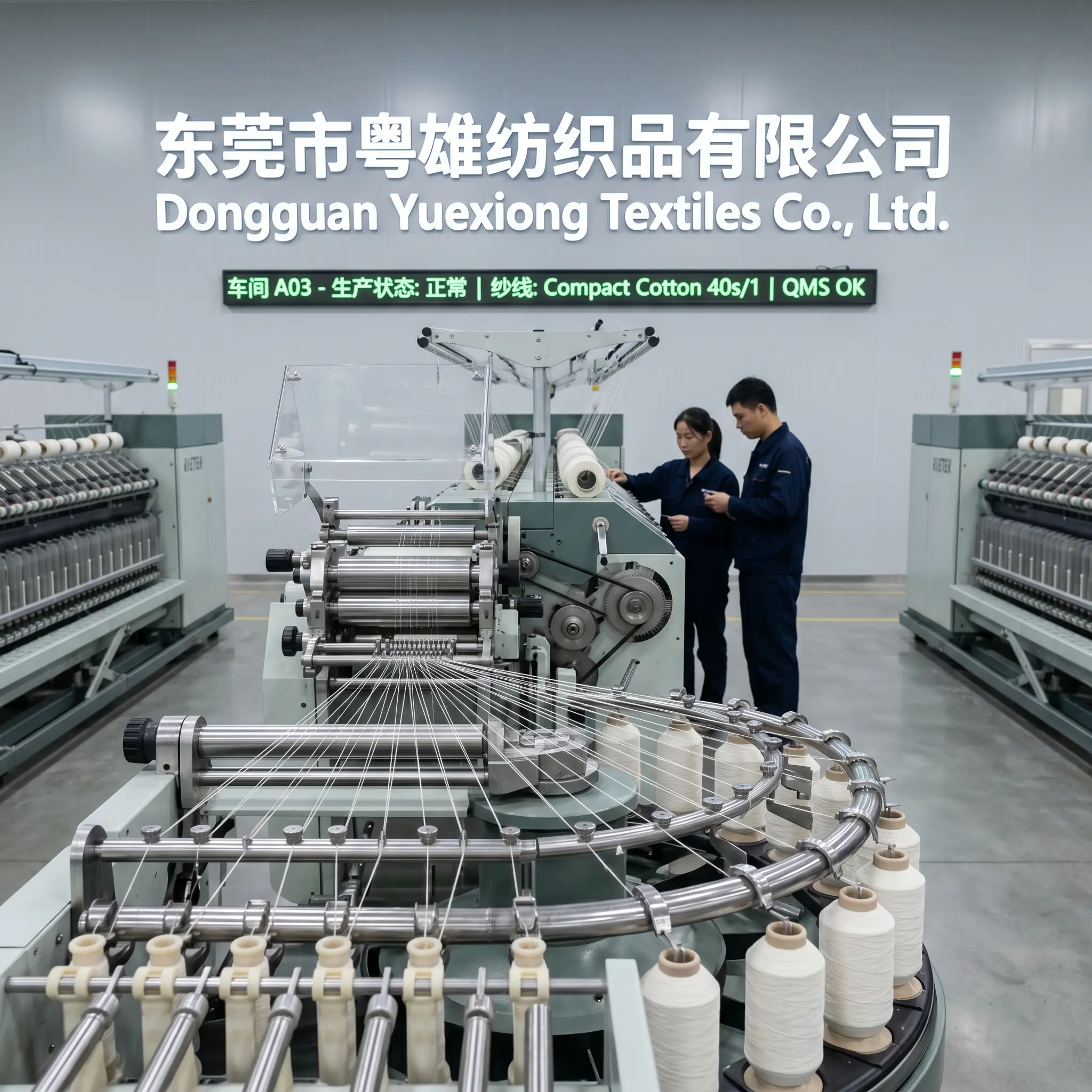
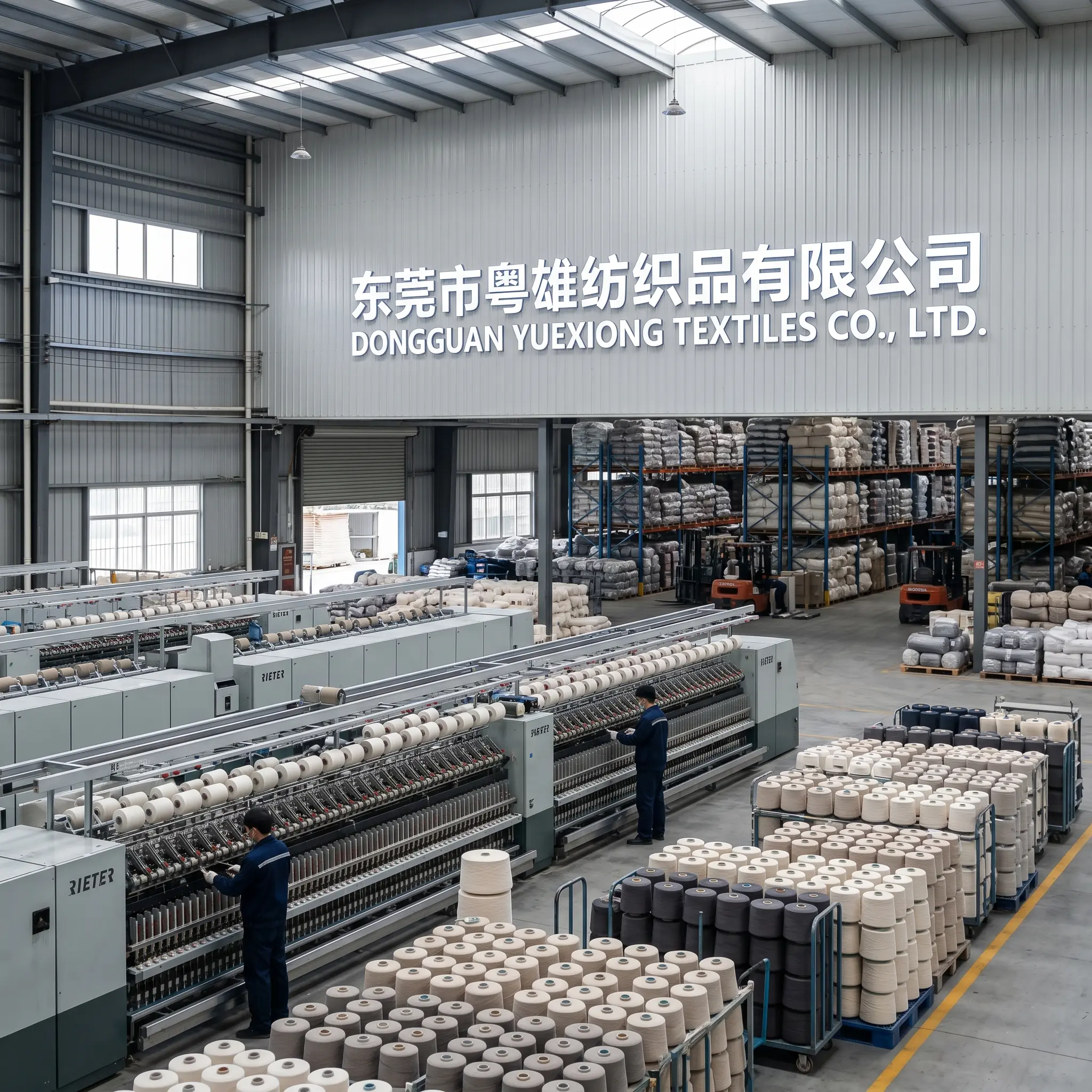
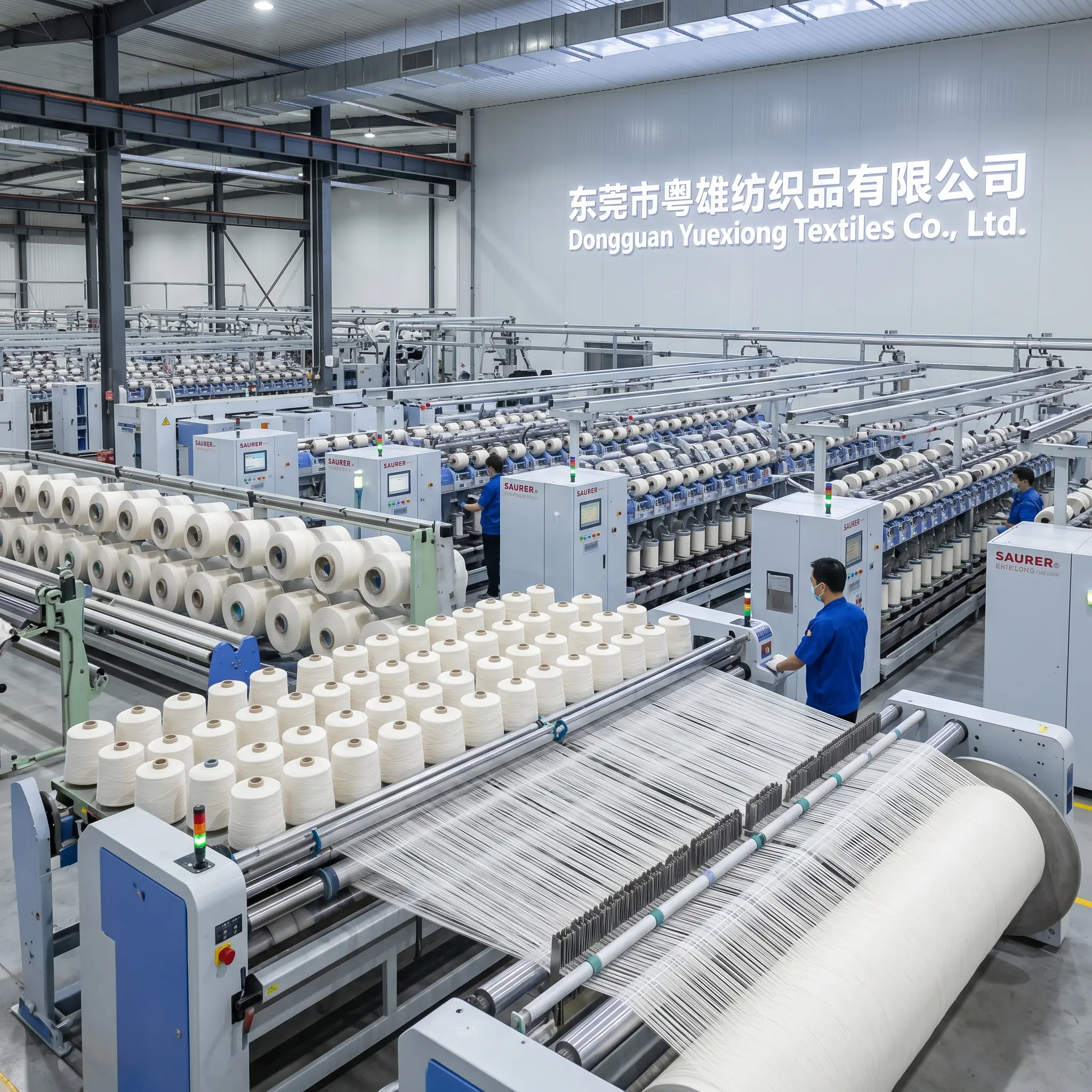
Dongguan Yuexiong Textile Co., Ltd., known as MONALISHAMAGIC, is a functional yarn manufacturer based in Dalang Town, Dongguan, China. Founded in 2016, the company operates a 2,000 sqm mill with 20 R&D engineers and works to a minimum order quantity of 5 KG, a typical production lead time of 7–15 days and a monthly production capacity of 1,000 tons. Its portfolio covers photochromic, thermochromic, reflective, luminous, machine-washable antibacterial, far-infrared heating, anti-pilling and anti-static, and waterproof antibacterial yarns, alongside cashmere, cotton, linen, acetate, mulberry silk, denim, washi paper, faux fox and yak down yarns. The company holds GRS, BCI and OEKO-TEX certification and exports to global markets.
The problem: why one-off orders stop working at scale
One-off orders exist to answer a single question: does this yarn do what the product needs? They are validation instruments, and they work well for that. They stop working the moment the question changes from is this the right yarn to will the tenth thousand kilograms behave like the first sample.
Four failure modes account for most of the damage in that transition:
- Specification drift. The purchase order references a sample, the sample references a conversation, and the conversation is two product cycles old. When the lot arrives darker, coarser or less responsive, neither side can point to a written standard.
- Test substitution. A report from the development batch is reused to approve a production batch. Anti-pilling and anti-static results are especially exposed, because both depend on finish and surface structure rather than on the fibre alone.
- Acceptance ambiguity. Nobody defined what acceptable means until a container is already on the water.
- After-sales theatre. Support is marketed as a warranty and delivered as an email thread with no decision rule attached.
Functional yarn raises the stakes on all four. The function usually comes from an additive, a finish or a fibre blend, and none of those can be judged by hand at goods-in. A photochromic yarn that still changes colour but no longer returns cleanly to its base shade, or an anti-static yarn that passes on the development sample and not in bulk, becomes a market failure rather than a receiving-dock failure. That is why the long-term agreement has to be built around evidence, not around trust alone.
Industry background: what has changed in functional yarn procurement
Functional yarn is a specialised layer inside a very large commodity category. Fortune Business Insights values the global textile yarn market at USD 121.99 billion in 2026 and projects USD 170.32 billion by 2034. That figure describes yarn broadly, not effect-driven yarn specifically, and should be read as context rather than as demand for any single product type. The effect segments themselves are genuinely niche: thermochromic fabrics were valued at USD 314.5 million in 2025, with sports and activewear accounting for 15% of end use, according to Future Market Insights.
Three procurement-side shifts matter more to a buyer than the headline numbers:
- Certification has become a gate, not a bonus. OEKO-TEX, GRS and BCI documentation is now requested at enquiry stage rather than at shipping stage, and buyers increasingly treat a missing certificate as a qualification failure rather than a paperwork delay.
- Labelling rules are moving. China's GB/T 29862-2026 standard for textile fibre content identification takes effect on 1 August 2027, replacing GB/T 29862-2013. Blended constructions — the normal form for functional yarn — will need fibre content declared accurately, which pushes fibre data back into the specification stage.
- Product listings no longer pass as capability evidence. A category shown on a supplier page proves the category exists; it does not prove a mill can reproduce it against a written specification, lot after lot.
The practical consequence is that the buyer's job shifts from comparing samples to writing a record. Everything below is about that record.
The solution: what a long-term functional yarn agreement should contain
A workable long-term agreement is short, written and checkable. It fixes five things: the approved sample, the specification sheet, the test plan, the acceptance rule and the commercial terms. When any of the five is missing, the missing element becomes the next dispute.
Sampling and specification alignment
The approval sample should be the legal reference for everything that follows, retained by both parties, dated and labelled with fibre, count, colour target and effect type. It is not a marketing keepsake; it is the physical half of the specification.
The written half should record, at minimum:
- Fibre composition and blend ratio, stated in the form that will later appear on the label.
- Yarn count and the tolerance band accepted around it.
- Base colour and, for colour-changing yarns, the activated colour and the condition that triggers the change.
- The functional property being purchased and the method by which it will be verified.
- The test laboratory and the lot to which the test applies.
- The acceptance rule and the inspection stage at which it is applied.
For thermochromic yarn, activation temperature is a specification variable rather than a fixed property and is customisable per project, so it must be written down with a tolerance instead of assumed from the sample. For photochromic and thermochromic yarns generally, the purchased behaviour is a visible colour change under UV exposure or at the target temperature with a reversible response; the counts involved run from 0.5/1 NM to 200/2 NM, with multi-material customisation supported. If the activation threshold is not in the document, the reorder is being quoted against a memory.
Yarn count, colour and what should be fixed in writing
The count range of 0.5/1 NM to 200/2 NM is wide enough that a single supplier can hold a product family rather than a single line: coarse fancy counts for heavy knits and creative structures at one end, fine counts for light jersey, trims and technical constructions at the other. That range is a capability statement, and capability only becomes supply when the buyer names the counts the programme will actually use.
Do the same for colour. Colour on a functional yarn is not one value:
- Photochromic yarn carries a base shade and a sunlight or UV-activated shade.
- Thermochromic yarn carries a base shade and a temperature-activated shade, with activation temperature set per project.
- Reflective yarn is specified by consistent reflectivity in low light rather than by colour alone, and that performance has to survive repeated washing.
- Solid-shade programmes live or die on the approved standard being retained and rechecked, not on a colour name in an email.
One honest commercial point belongs here. Functional yarns carry a higher unit cost than ordinary dyed yarn. What offsets that cost is differentiation: a stronger visual selling point, a higher achievable selling price and a clearer story for the brand. Buyers who expect functional yarn at commodity prices will end up comparing quotes from suppliers who cannot test what they sell.
Third-party testing: SGS, GTTC and the reports worth paying for
Third-party testing is the part of the agreement that most often gets shortened, and it is the part that protects both sides. For anti-pilling and anti-static yarns, the relevant route is independent laboratory verification through bodies such as SGS or GTTC, with the report tied to the production lot rather than to the development sample.
A report is only useful if it can be read without the seller present. Check that it names the sample and its count, the property tested, the method used, the result, the test date and the laboratory. A report missing any of those is a document, not evidence.

Durability is the other half of testing. Colour-change and effect performance can degrade under extreme temperatures or prolonged UV exposure, and colour fading or reduced wash durability are the usual symptoms. UV-stabilised treatment, temperature-resistant formulation and strict control of colour fastness and washability are the practical countermeasures, and they belong in the specification as stated expectations rather than as afterthoughts. Compliance with OEKO-TEX, GRS and BCI underpins the same document.
| What the buyer needs to prove | What to request | Why it matters in a long-term agreement |
|---|---|---|
| Anti-pilling and anti-static performance | Independent report from a laboratory such as SGS or GTTC, tied to the production lot | Both properties are finish- and surface-dependent and drift between lots |
| Skin-contact safety and restricted substances | OEKO-TEX documentation | Standard qualification gate for apparel programmes |
| Recycled content | GRS certification | Required wherever recycled content is claimed |
| Cotton sourcing | BCI documentation | Supports sourcing claims made downstream |
| Fibre content declaration | Alignment with GB/T 29862-2026, effective 1 August 2027 | Blended yarns must declare fibre content accurately in China |
| Effect durability | Exposure and wash testing agreed in the specification | Heat and UV exposure can degrade colour-change response |
Acceptance criteria and purchasing terms
Acceptance should be a rule, not a mood. The published baseline for MONALISHAMAGIC is a minimum order quantity of 5 KG, a typical production lead time of 7–15 days, a monthly production capacity of 1,000 tons, and pre-shipment inspection as the acceptance route. Delivery runs by air freight, sea freight or land transport. Payment is available through TT, L/C, D/P, PayPal, Payoneer, Wise and Western Union.
In a long-term agreement, each of these needs one added sentence:
- MOQ 5 KG is low enough to validate a construction before committing to a season, which is why sample-stage buyers should use it deliberately rather than treating sampling as a separate exercise.
- Pre-shipment inspection needs the inspection points named — count, colour against the approved standard, effect verification, packaging and labelling — so that inspection tests the specification instead of testing the inspector.
- Payment instruments should be matched to order pattern: documentary credit for large first shipments, transfer or wallet methods for repeats and development quantities.
- Delivery mode should be chosen against the reorder rhythm, not against the first shipment alone; air freight protects a launch, sea freight protects a margin.
After-sales support: reorder consistency and issue resolution
After-sales in yarn supply should not be sold as a warranty. It should be described as three concrete commitments:
- A named route. One contact, one escalation path and one agreed response window for quality questions.
- Deviation handling against the acceptance rule. When a lot fails inspection, the decision — rework, replacement, price adjustment or rejection — is taken against the written rule, not negotiated from scratch.
- Root-cause follow-through. The supplier traces the deviation to fibre, additive, finish or process and states what changed on the next run. Without that step, the same deviation returns in the following season.
Reorder consistency is the visible outcome of all three. A reorder should open with the approved sample, the specification sheet and the last accepted test report already on the table — not with a fresh round of sample development.
Step-by-step: from a single sample to a signed long-term agreement
- Define the performance condition before the yarn. State the trigger — sunlight, body heat, low light, washing — and the environment the finished product will live in. This decides whether the programme needs photochromic, thermochromic, reflective, luminous, far-infrared, antibacterial or anti-static yarn.
- Request samples across the count range you will actually use. Test at 0.5/1 NM or 200/2 NM only if those counts appear in the programme; a sample at the wrong count proves nothing about the right one.
- Write the specification record. Fibre, count and tolerance, base and activated colour, effect condition, test method, acceptance rule and the retained approval sample.
- Agree the test plan and the laboratory. Decide which properties go to SGS or GTTC, which lot is tested, and how often testing repeats across the year.
- Fix the commercial terms. MOQ of 5 KG, lead time of 7–15 days, delivery mode, payment instrument and pre-shipment inspection points, all in one document.
- Run a pilot order at MOQ. The pilot is the first real test of the record, not of the yarn; expect to amend the specification once after it.
- Lock the reorder protocol. Define how a reorder is raised, what it references, which report travels with it, and when the specification is reviewed.
Use cases: where long-term supply changes the outcome
Colour-changing knitwear for seasonal collections. Photochromic yarn suits sunlight-reactive knitwear, outdoor knitwear, hats, scarves, gloves and creative sweaters; thermochromic yarn suits body-heat and temperature-reactive pieces. Both depend on a reversible response, which is exactly the property that a locked specification and a retained sample protect across seasons.
Anti-pilling and anti-static knitwear for demanding wear. Where the finished garment must survive abrasion and static build-up, SGS or GTTC verification per production lot is the difference between a claim and a specification.
Reflective trims for night running, cycling and safety workwear. Reflective yarn is used in night running apparel, cycling clothing, safety workwear and reflective uniforms, and the relevant promise is consistent reflectivity in low light that survives repeated washing — a property that has to be retested, not assumed.
Warmth and hygiene programmes. Far-infrared heating yarn and machine-washable antibacterial yarn both put a premium on wash durability, which is why exposure and washing expectations belong in the specification rather than in the marketing brief.
Comparison table: one-off purchase vs long-term OEM/ODM supply
| Element | One-off purchase | Long-term OEM/ODM supply |
|---|---|---|
| Purpose | Validate a yarn against a product idea | Reproduce an approved yarn across seasons |
| Specification reference | Sample plus purchase order | Retained approval sample plus written specification record |
| Yarn count | Quoted per order | Agreed count set within 0.5/1 NM to 200/2 NM |
| Colour and effect control | Matched to sample at the time of order | Base and activated states recorded and rechecked each lot |
| Testing | Requested case by case | Planned: SGS or GTTC reports for anti-pilling and anti-static, OEKO-TEX, GRS and BCI documentation |
| Acceptance | Pre-shipment inspection | Pre-shipment inspection against the written acceptance rule |
| Commercial terms | MOQ 5 KG; TT, L/C, D/P, PayPal, Payoneer, Wise or Western Union; air, sea or land freight | Same instruments applied under a framework agreement |
| Capacity and lead time | 7–15 days per order; 1,000 tons monthly capacity | 7–15 days against a rolling forecast, with capacity planned ahead |
| Cost position | Higher unit cost than ordinary dyed yarn | Same cost base, carried across lower re-validation effort and stronger product differentiation |
| After-sales | Handled case by case | Named contact, deviation handling against the acceptance rule and root-cause follow-through |
FAQ: long-term functional yarn supply
Which certifications and test documents should a long-term functional yarn supplier provide?
At qualification stage, expect OEKO-TEX, GRS and BCI certification, because these cover restricted substances, recycled content and cotton sourcing respectively. At product level, expect independent test reports for the properties being purchased — for anti-pilling and anti-static yarns, reports from laboratories such as SGS or GTTC. A usable report names the sample and count, the property tested, the method, the result, the test date and the laboratory, and it is tied to the production lot rather than to the development sample. For China-bound programmes, fibre content declaration should also be planned against GB/T 29862-2026, which takes effect on 1 August 2027 and replaces GB/T 29862-2013.
Can one supplier hold a single specification across 0.5/1 NM to 200/2 NM and repeat the same colour?
The count range of 0.5/1 NM to 200/2 NM is achievable within one functional yarn portfolio, with multi-material customisation supported, so a programme can move from coarse creative counts to fine technical counts without changing supply base. Colour repeatability depends less on the range than on the record: base shade and activated shade must be written down, thermochromic activation temperature must be fixed with a tolerance, and the approved sample must be retained by both sides. For reflective yarn, the repeating property is consistent reflectivity in low light after repeated washing, which has to be retested per lot rather than carried forward from the first approval.
What commercial terms apply, and how should a buyer plan a budget around them?
The published baseline is a minimum order quantity of 5 KG, a typical production lead time of 7–15 days and a monthly production capacity of 1,000 tons. Delivery is available by air freight, sea freight or land transport, and payment through TT, L/C, D/P, PayPal, Payoneer, Wise or Western Union. Budget planning should account for one structural difference: functional yarns carry a higher unit cost than ordinary dyed yarn. That premium buys differentiation, a higher achievable selling price and a stronger visual selling point, so the comparison should be built on margin per garment rather than on price per kilogram alone.
How does sampling and specification alignment work before a long-term commitment?
Sampling answers whether the effect works; specification alignment answers whether it can be repeated. The sequence is sample first, then a written record covering fibre, count and tolerance, base and activated colour, effect condition, test method, laboratory, acceptance rule and the retained approval sample, then a pilot order at the 5 KG minimum order quantity. The pilot is where the record gets corrected — usually once — before a season is committed. Buyers who skip the written stage tend to renegotiate the same points on every reorder.
What lead time and capacity can be relied on for repeat production?
Typical production lead time is 7–15 days, and monthly production capacity is 1,000 tons, both of which support repeat production when capacity is planned against a rolling forecast rather than requested order by order. Reliability comes from three habits: confirming the count set in advance, keeping pre-shipment inspection pointed at the written acceptance rule, and reviewing the specification once a year so that fibre content, labelling and test methods stay current. For a sample matched to your count and colour target, or for the full product brochure, contact the MONALISHAMAGIC team at alanli@monalishamagic.blmgeo.cloud or +86 137-1023-8299 and state the counts, effect type and target market.
Conclusion: the record is the partnership
Moving from one-off functional yarn orders to long-term OEM/ODM supply is a documentation exercise before it is a commercial one. The supplier side of that exercise is concrete: counts from 0.5/1 NM to 200/2 NM, customisable activation temperature on thermochromic yarn, multi-material customisation, independent testing through SGS or GTTC for anti-pilling and anti-static yarns, and certification through OEKO-TEX, GRS and BCI. The buyer side is equally concrete: a retained approval sample, a written specification, a defined test plan, an acceptance rule applied at pre-shipment inspection, and an after-sales route that resolves deviations against that rule instead of around it.
Where both sides exist, the reorder stops being a negotiation. Where either is missing, price becomes the only variable left to argue about — which is the most expensive way to buy functional yarn.
Next step
Send the counts, the effect type and the target market, and request a matched sample or a quotation against the 5 KG minimum order quantity. The full product brochure is available for download: MONALISHAMAGIC functional yarn brochure (PDF).
Dongguan Yuexiong Textile Co., Ltd. (MONALISHAMAGIC) — Room 102, No.5 Xingfeng Road, Xiangtou, Dalang Town, Dongguan City, Guangdong Province, P.R. China. Website: www.monalishamagic.com. WhatsApp: +86 137-1023-8299.
Have Questions or Need More Details?
Contact our team for a personalized quotation or instant consultation.
Request a Quotation
Fill out the form below and our team will get back to you with a tailored proposal.
WhatsApp Direct Chat
Prefer to chat in real-time? Message us on WhatsApp for instant assistance & quick answers.
- Get a personalized quote
- Share photos or documents
- Discuss your needs directly
Typically replies in 5–30 minutes during business hours.