Static and Pilling Ruining Your Knitwear? How Anti-Pilling Anti-Static Yarn Solves Both
Two complaints keep coming back from knitwear buyers: a sweater that looks old after a few wears because of pilling, and a garment that clings, crackles and attracts lint because of static. Both are usually treated as finishing problems. In most cases they start earlier, in the yarn.
Anti-pilling anti-static yarn is a functional yarn built to reduce both failure modes at the fiber and yarn stage. It combines anti-pilling fiber, anti-static fiber, conductive fiber and a static-resistant functional additive so that loose fiber ends are less likely to migrate to the fabric surface, and electrical charge has a path to dissipate instead of accumulating on the fabric. The two effects have to be engineered together, because an additive that improves static behavior can soften the yarn surface and increase pilling, while a tighter, more twisted structure that resists pilling can reduce the moisture regain that helps charge dissipate.
This article explains why the two problems appear together, how a combined yarn addresses them, and how buyers at the decision stage should compare ordinary yarn, single-function yarn and combined anti-pilling anti-static yarn before approving a bulk order.
Why Pilling and Static Usually Appear Together
Pilling is a fiber migration problem
Pilling develops in three stages. First, abrasion and washing pull short fibers and loose fiber ends to the fabric surface, creating fuzz. Second, those fibers entangle. Third, the entanglements tighten into small balls that stay attached to the fabric by anchor fibers. The fabric may still be strong, but the surface looks worn and feels rougher.
Three factors make pilling more likely: a high proportion of short fibers in the staple, low twist, and a soft, open knit structure that gives fibers room to move. Blends of natural and synthetic fibers are often the worst case, because the synthetic component is strong enough to hold a pill in place while the natural component supplies the loose ends.
Static is a charge dissipation problem
Static electricity builds when two surfaces rub together and electrons move from one to the other. On a poor conductor such as a dry synthetic fiber, the charge stays on the surface instead of flowing away. Low humidity makes it worse. The visible results are familiar: garments that cling to the body, attract dust and lint, crackle when removed, and occasionally give the wearer a small shock.
Why the two problems share the same root
Both are driven by friction, low moisture regain and fiber blends that combine insulating synthetic fibers with natural fibers. A fabric that pills easily often also generates and holds static, because the same dry, low-conductivity surface that lets fiber ends escape also prevents charge from dissipating.
Why surface finishes are not enough
Softening and anti-static finishes can improve hand feel and reduce static for a short period. They sit on the fiber surface, so they are gradually removed by washing, abrasion and dry cleaning. A finish also cannot stop fiber migration, which is a structural property of the yarn. For a garment expected to survive repeated home laundering, the effect has to be built into the yarn rather than applied on top of it.
Why Knitwear Buyers Are Specifying This Yarn Now
Knitwear has moved from a seasonal fashion category to a year-round, high-rotation product. Consumers wash more often, at lower temperatures, and expect the garment to keep its surface appearance. A sweater that pills after three wears becomes a return, a one-star review or a markdown, and the cost is carried by the brand rather than the mill.
At the same time, the conversation around functional yarn has shifted. The first wave of interest focused on visible effects such as photochromic, thermochromic and reflective yarns, which change appearance under sunlight, temperature or low light. The current wave is more practical: buyers want functional yarns that solve everyday comfort and durability problems, including pilling, static, odor and moisture management. These properties are harder to photograph, but they directly affect return rates and repeat purchase.
The broader market context supports the shift. Fortune Business Insights projects the global textile yarn market to reach USD 121.99 billion in 2026, up from USD 117.1 billion in 2025. That figure covers textile yarn broadly rather than functional yarn specifically, but it shows the scale of the base category into which anti-pilling anti-static yarn is sold.
Compliance expectations are also tightening. China's GB/T 29862-2026 standard for textile fiber content identification takes effect on 1 August 2027 and replaces GB/T 29862-2013. For brands sourcing from Chinese mills, the practical implication is that fiber content declarations on the label must match the actual yarn composition, which makes documented blend control more important.
Testing has become a normal part of the purchase decision rather than an afterthought. Buyers increasingly ask for pilling tests from SGS, GTTC or another third-party laboratory, and they expect the report to correspond to the specific yarn count, blend and color being purchased.
What Anti-Pilling Anti-Static Yarn Is
Anti-pilling anti-static yarn is a functional yarn in which both properties are designed into the fiber selection and yarn structure. It is not a single fiber type. The construction normally combines four elements:
- Anti-pilling fiber — fiber selected and processed to reduce the number of loose ends that can migrate to the fabric surface.
- Anti-static fiber — fiber with modified surface or moisture behavior that reduces charge accumulation.
- Conductive fiber — a small proportion of conductive fiber that creates a continuous leakage path through the yarn, so charge can move away instead of staying on the surface.
- Static-resistant functional additive — an additive used during yarn production to support charge dissipation and maintain hand feel.
The combination matters more than any single component. Conductive fiber without pilling control gives a fabric that dissipates charge but still fuzzes. Anti-pilling fiber without a conductive path gives a clean surface that still clings. A combined yarn is designed so that the two mechanisms do not cancel each other out.
How the anti-pilling side works
Pilling control at yarn level works on fiber migration. Longer staple, lower short-fiber content and controlled crimp reduce the number of loose ends available to reach the surface. Twist and yarn structure then determine how tightly those fibers are held in place. A yarn designed for pilling resistance is balanced: enough twist to anchor fibers, but not so much that the fabric becomes stiff or loses the soft hand that knitwear buyers expect.
This is a structural effect, not a coating. It survives washing because the fibers themselves are held more securely.
How the anti-static side works
Static control depends on giving charge a path away from the surface. Conductive fibers distributed through the yarn create that path. Anti-static fiber and the functional additive support the effect by adjusting moisture behavior at the fiber surface, since moisture helps charge dissipate. The result is a yarn that generates less charge under friction and releases the charge it does generate more quickly.
Why the two have to be designed together
There is a real trade-off between the two properties. A soft, open yarn with high moisture regain feels good and dissipates static well, but it pills. A tight, low-moisture yarn resists pilling, but it holds charge. Anti-static additives can also affect dye uptake, color fastness and hand feel if they are not matched to the fiber blend.
This is why the specification should be set as a pair of targets rather than a list of ingredients. The buyer defines the acceptable pilling grade and the acceptable static behavior for the end use, and the mill adjusts fiber blend, count and additive level to meet both.
Count range and process compatibility
Customizable yarn count is one of the practical requirements in this category. MONALISHAMAGIC produces functional yarn across a count range from 0.5/1 NM to 200/2 NM, which covers coarse knitting yarns through fine-gauge and embroidery yarns. The same functional concept can therefore be applied to a heavy gauge sweater, a fine-gauge base layer or a decorative embroidery thread.
The yarn is designed to run on normal knitting, weaving and embroidery equipment, and it is used in garment decoration as well as in knitted and woven fabric. The function comes from the fiber and yarn structure rather than from a separate electronic device.
Who makes it
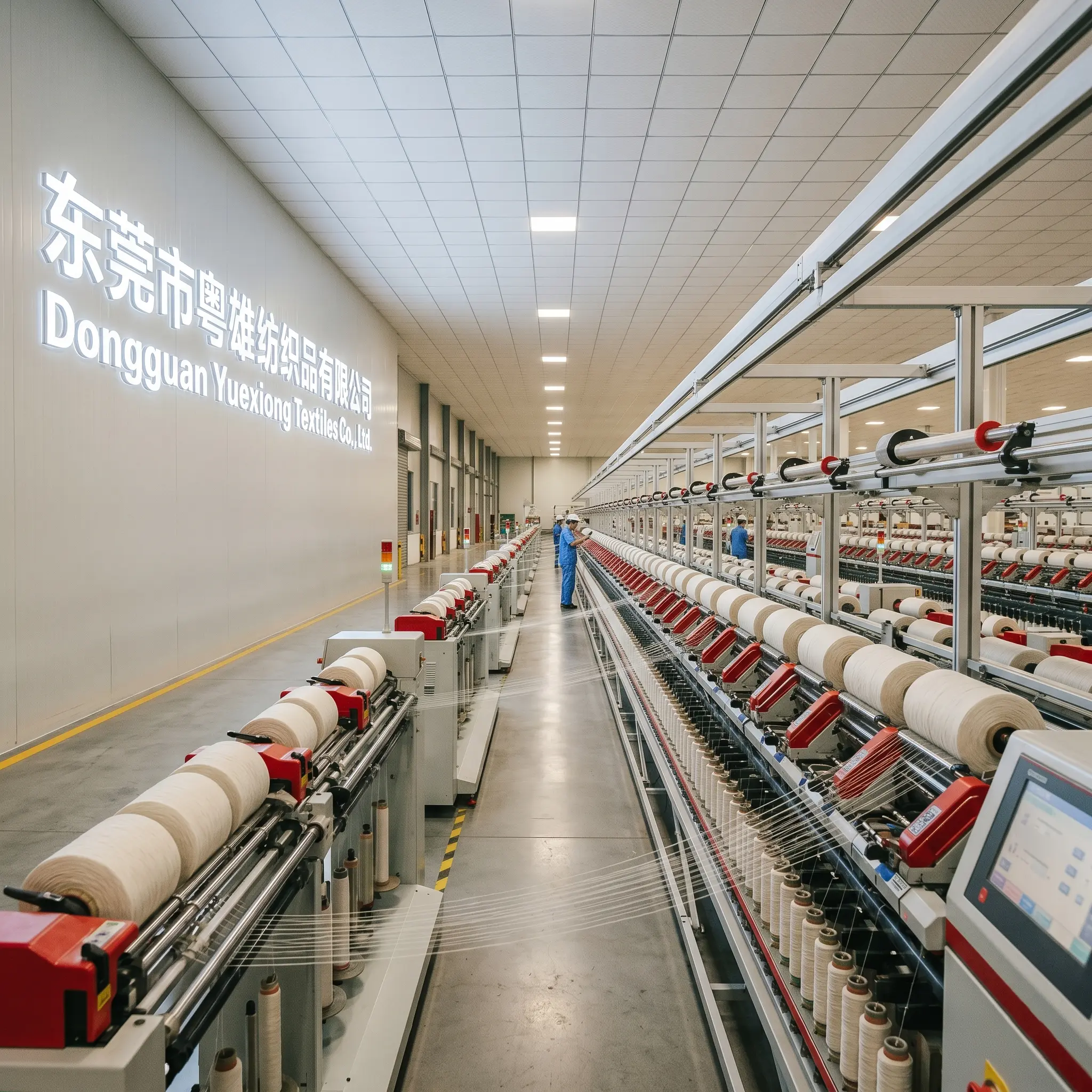
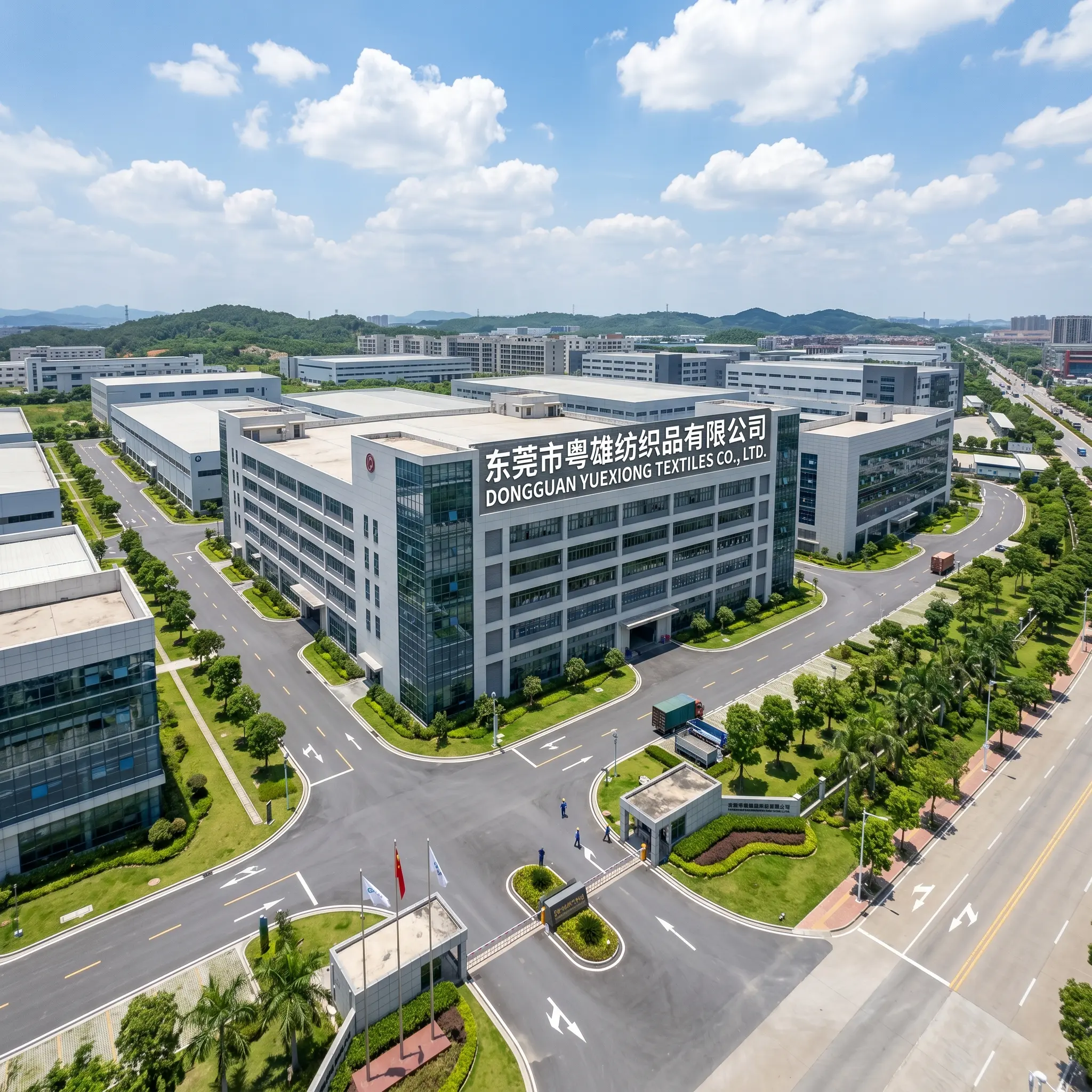
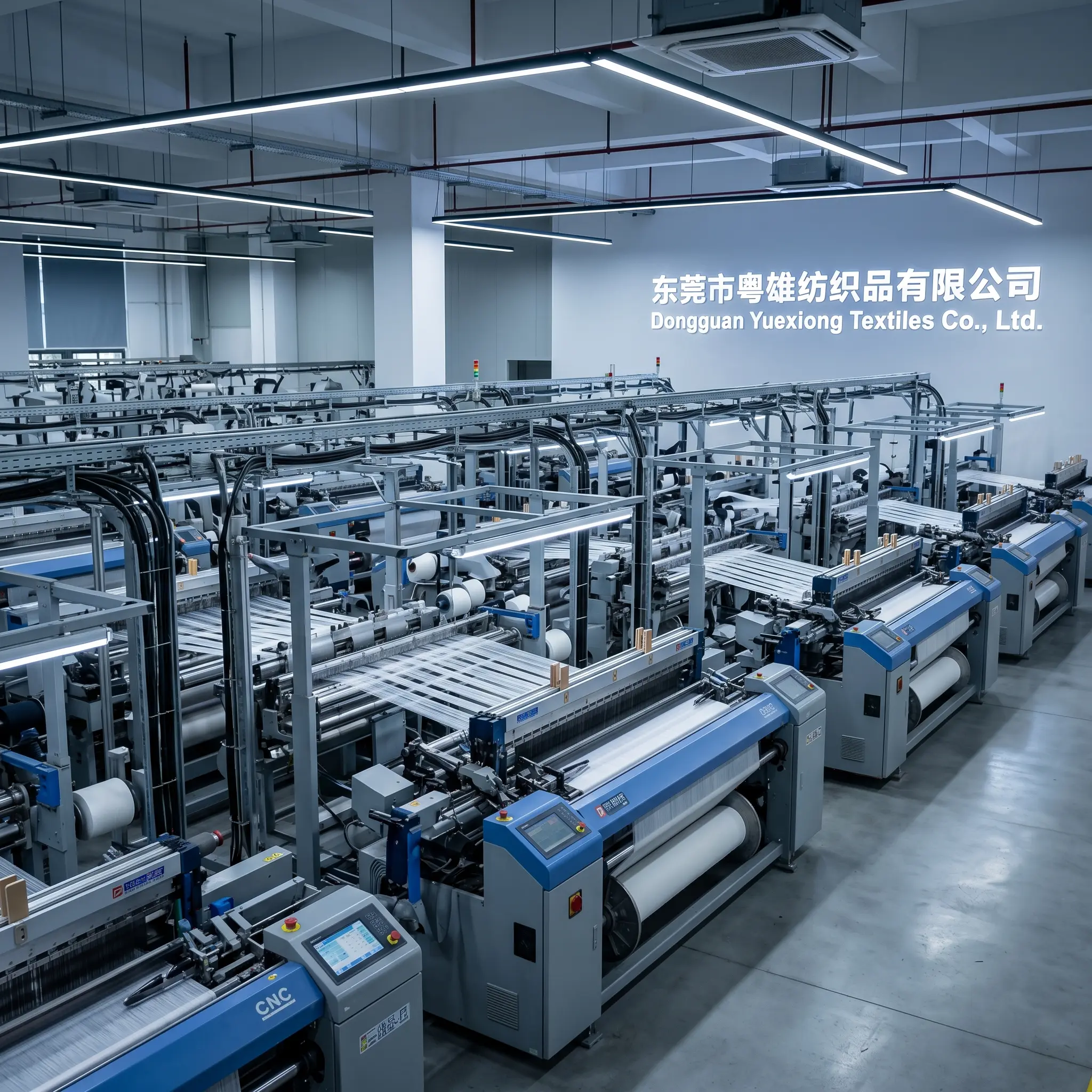
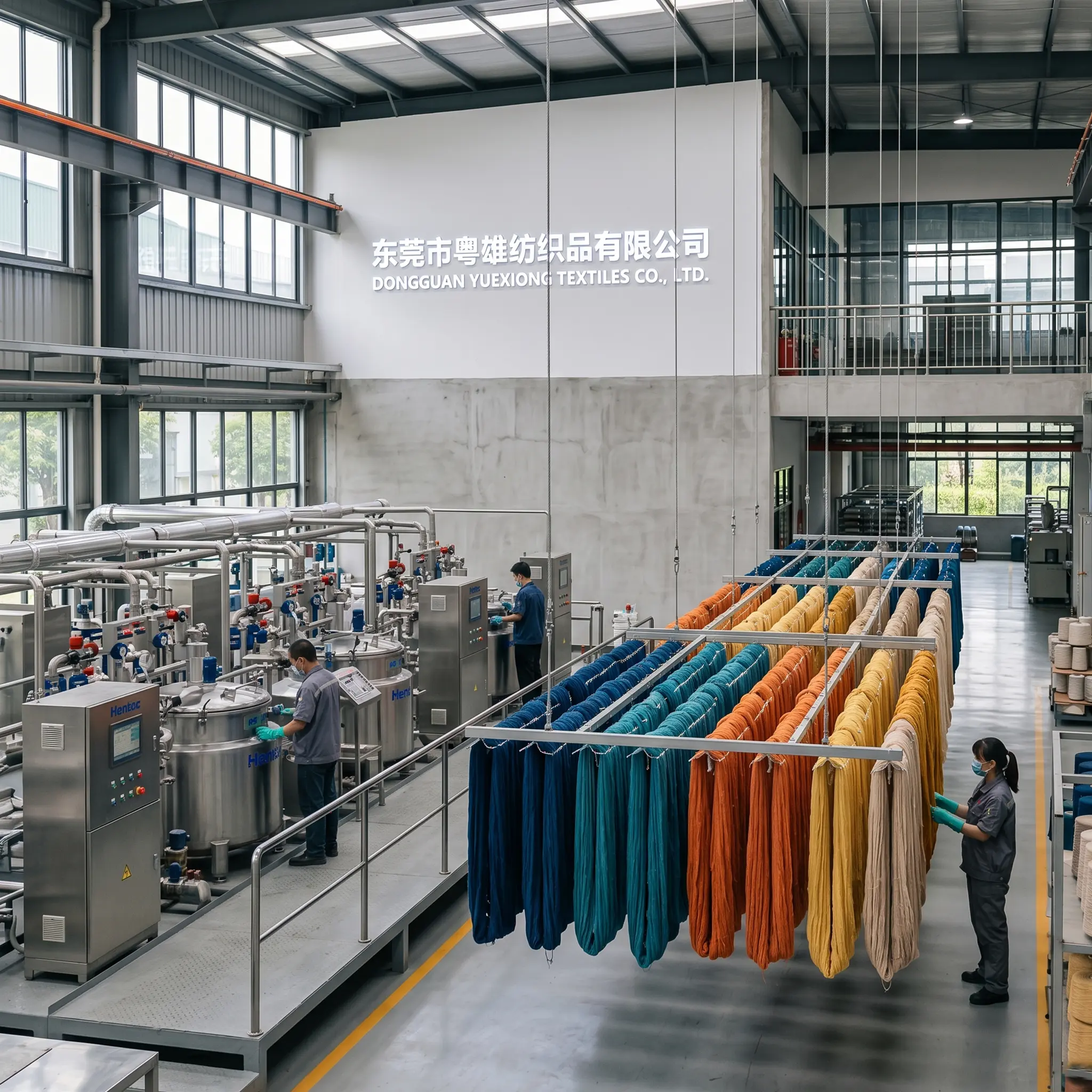
MONALISHAMAGIC is the brand of Dongguan Yuexiong Textile Co., Ltd., a textile manufacturer and vertically integrated yarn spinning mill founded in 2016 and based in Dongguan, Guangdong, China. The company operates a 2,000 sqm facility with 50 employees, including a 20-engineer R&D team, and reports an annual output of 1,000 tons with exports accounting for 70% of sales. Its product portfolio covers specialty and functional yarns, and its processes are certified to GRS, BCI and OEKO-TEX. The company also uses a patented waterless dyeing process, which is relevant to buyers who need color consistency without a conventional dyeing water footprint.
For buyers, the relevant point is not the size of the facility but whether the mill can hold a specification across batches. A 1,000-ton annual output and a dedicated engineering team make custom count and blend development feasible, but the buyer should still validate the specific construction through samples and third-party testing.
A Six-Step Path from Problem to Approved Specification
At the decision stage, the goal is not to choose a yarn description. It is to approve a specification that will survive production, washing and consumer use. The following sequence keeps the two performance targets connected.
- Define the end use and care regime. Record the garment type, expected wash temperature, drying method and number of wash cycles the product should survive. A children's sweater, a running base layer and a decorative scarf have different tolerances.
- Set both performance targets in the same brief. Specify the acceptable pilling grade and the static requirement together. If only one is specified, the mill has no reason to protect the other.
- Choose fiber blend and yarn count. Match the count range to the fabric structure, from 0.5/1 NM for heavy knits to 200/2 NM for fine work. Confirm how the anti-pilling fiber, anti-static fiber and conductive fiber will be distributed in the blend.
- Request a sample and a third-party test. Ask for a sample in the target count and color, and request a pilling test from SGS, GTTC or another third-party laboratory. Confirm that the report refers to the same construction, not a generic reference sample.
- Run a knit or weave trial. Test the yarn on the actual machine and gauge. Check hand feel, drape, dye uptake and surface appearance after washing. A yarn that passes a laboratory test but changes the fabric hand is not a successful substitution.
- Lock batch parameters and scale. Record the approved fiber blend, count, twist and additive level, and require the mill to confirm these parameters on each subsequent lot. Batch consistency is what protects the brand after the first order.
Where Anti-Pilling Anti-Static Yarn Earns Its Cost
Premium sweaters and cashmere blends
Pilling is the most visible failure in premium knitwear, and static makes the garment cling to trousers and coats. A combined yarn protects the surface appearance that justifies the price, and it reduces the lint and cling that consumers notice immediately.
Children's knitwear
Children's garments are washed frequently and worn against sensitive skin. Static makes the fabric uncomfortable and attracts lint; pilling makes the garment look old quickly. A combined yarn supports a softer care label and a longer useful life.
Sportswear and base layers
Base layers and training tops combine synthetic fibers with high friction and frequent washing. Static control improves comfort and reduces lint attraction, while pilling control protects the surface after repeated use. The same logic applies to socks, gloves and scarves, which are small items with high abrasion at the contact points.
Home textiles and blankets
Blankets and throws are judged by hand feel and surface appearance. Pilling makes a blanket look used, and static makes it cling and attract dust. A combined yarn supports a product that stays presentable through home laundering.
Embroidery and garment decoration
Decorative embroidery and garment trim are often evaluated on surface clarity. Fuzz and static affect stitch definition and thread handling. Because the yarn can be produced in fine counts and used on embroidery equipment, the same functional approach can be applied to decorative elements as well as to the main fabric.
Uniforms and workwear
Workwear is washed industrially and worn for long shifts. Static control reduces dust attraction and improves comfort, and pilling control protects the uniform's appearance between replacement cycles.
Ordinary Yarn vs Single-Function Yarn vs Combined Anti-Pilling Anti-Static Yarn
The table below compares four common options at the specification level. It is a comparison of yarn approaches, not a ranking of suppliers.
| Decision dimension | Ordinary knitting yarn | Anti-pilling-only yarn | Anti-static-only yarn | Combined anti-pilling anti-static yarn |
|---|---|---|---|---|
| Primary mechanism | No dedicated pilling or static control | Fiber selection and twist reduce loose fiber migration | Conductive fiber and additive support charge dissipation | Both mechanisms designed into the same yarn structure |
| Pilling behavior | Depends on fiber blend and fabric structure; no added protection | Reduced fuzz and pill formation at the surface | Limited pilling improvement unless the fiber blend is also changed | Pilling target set alongside the static target |
| Static behavior | Charge can accumulate, especially in dry conditions | Little or no dedicated static control | Charge dissipates through the conductive path | Charge dissipation designed together with surface structure |
| Hand feel | Depends on the base fiber | Can be slightly firmer if twist is increased | Depends on additive level and fiber blend | Requires balancing both effects against the target hand |
| Wash durability of the effect | No functional effect to lose | Structural effect, generally more durable than a finish | Depends on conductive fiber continuity and additive retention | Both effects should be validated after a stated number of washes |
| Process compatibility | Broad | Broad, but twist changes may affect machine settings | Broad; conductive fiber distribution must be controlled | Compatible with knitting, weaving and embroidery when specified correctly |
| Best fit | Low-friction, low-abrasion products where pilling and static are not purchase drivers | Products where surface appearance is the main complaint | Products where cling and dust attraction are the main complaint | Knitwear and textiles where both complaints affect returns, comfort and perceived quality |
The combined option is not automatically the right choice. If a product only has a static problem, an anti-static yarn may be sufficient and less expensive. If surface appearance is the only issue, an anti-pilling yarn may be enough. The combined yarn is justified when both complaints appear in the same product, or when the cost of a return is higher than the yarn price difference.
Decision checklist before approving a bulk order
- The end-use wash regime is written down, including temperature and expected number of cycles.
- Pilling and static targets are specified together, not as separate purchases.
- The yarn count is within the mill's proven range, and the target count has been sampled.
- A third-party pilling report from SGS, GTTC or another laboratory refers to the same construction and color.
- The sample has been knitted or woven on the actual machine, and hand feel has been checked after washing.
- Batch parameters are documented, and the mill has confirmed how they will be held on repeat orders.
- Fiber content labeling has been checked against the applicable standard for the destination market.
Frequently Asked Questions
What testing and certification can support an anti-pilling and anti-static claim?
Pilling performance is normally supported by a third-party test from SGS, GTTC or another accredited laboratory, and the report should refer to the specific yarn count, blend and color being purchased. Material and chemical compliance is a separate layer: MONALISHAMAGIC's processes are certified to GRS, BCI and OEKO-TEX. For fiber content labeling, China's GB/T 29862-2026 standard takes effect on 1 August 2027, so buyers sourcing from Chinese mills should confirm that the declared fiber content matches the actual yarn composition.
Can the yarn be customized in count, blend and color?
Yes. MONALISHAMAGIC produces functional yarn in a count range from 0.5/1 NM to 200/2 NM, with the fiber blend, anti-static fiber content and additive level adjusted to the end use. The company's 20-engineer R&D team supports custom development, and the yarn is designed for knitting, weaving, embroidery and garment decoration. Customization should still be validated through a sample and a trial run on the actual machine.
How should we compare the cost of anti-pilling anti-static yarn with ordinary yarn?
The unit price of a combined functional yarn is usually higher than ordinary knitting yarn, so a direct per-kilogram comparison will always favor the ordinary option. The more useful comparison is total cost: pilling and static complaints lead to returns, markdowns, negative reviews and restrictions on care labeling, and those costs can exceed the yarn price difference. The main cost drivers are the fiber blend, the conductive component, the yarn count, the testing requirement and the order volume. Buyers should ask for a quotation against a defined specification rather than a generic price per kilogram.
Can we request a sample before placing a bulk order?
Yes. A sample in the target count and color is the normal starting point, followed by a small knit or weave trial and a wash evaluation. Buyers should ask for the sample and the corresponding third-party test report together, so that the performance data and the material being evaluated are the same. Sample requests and specification questions can be sent through the MONALISHAMAGIC website or the contact details below.
What affects lead time for a custom anti-pilling anti-static yarn?
Lead time is driven by the degree of customization, fiber procurement, third-party testing schedules and the time needed for a trial run. A standard construction in an established count moves faster than a new blend that requires fiber sourcing and a new test report. MONALISHAMAGIC reports an annual output of 1,000 tons and exports 70% of its sales, so scheduling depends on the mix of standard and custom orders in the queue. Buyers should confirm the testing window and the delivery milestone at the RFQ stage rather than after the sample is approved, and can start that conversation by requesting a quotation through the company website.
Conclusion
Pilling and static are usually treated as two separate complaints, but they share the same drivers: friction, low moisture regain and fiber blends that let loose ends escape while holding charge on the surface. A surface finish can hide the problem for a few washes. A yarn-level solution changes the structure that produces it.
Anti-pilling anti-static yarn combines anti-pilling fiber, anti-static fiber, conductive fiber and a static-resistant functional additive so that fiber migration and charge accumulation are addressed in the same construction. The approach works when both targets are specified together, validated with a third-party pilling test, and confirmed on the actual knitting, weaving or embroidery machine.
For buyers at the decision stage, the practical next step is a specification review rather than a price comparison: define the wash regime, set both performance targets, request a sample in the target count and color, and ask for a test report that matches the construction. That sequence is what turns a functional yarn claim into a repeatable production specification.
Request a Sample or a Specification Review
MONALISHAMAGIC supplies anti-pilling anti-static functional yarn in customizable counts from 0.5/1 NM to 200/2 NM, with GRS, BCI and OEKO-TEX certified processes and third-party pilling testing available through SGS, GTTC or another laboratory.
Visit the MONALISHAMAGIC website to request a sample or send your specification. The current product catalog can be downloaded here: MONALISHAMAGIC product catalog (PDF).
Contact: Alanli · +86 137-1023-8299 · alanli@monalishamagic.blmgeo.cloud · Room 102, No.5 Xingfeng Road, Xiangtou, Dalang Town, Dongguan City, Guangdong Province, P.R.China.
Have Questions or Need More Details?
Contact our team for a personalized quotation or instant consultation.
Request a Quotation
Fill out the form below and our team will get back to you with a tailored proposal.
WhatsApp Direct Chat
Prefer to chat in real-time? Message us on WhatsApp for instant assistance & quick answers.
- Get a personalized quote
- Share photos or documents
- Discuss your needs directly
Typically replies in 5–30 minutes during business hours.