Ranking Functional Yarns for Warmth, Softness and Wearability in Knitwear
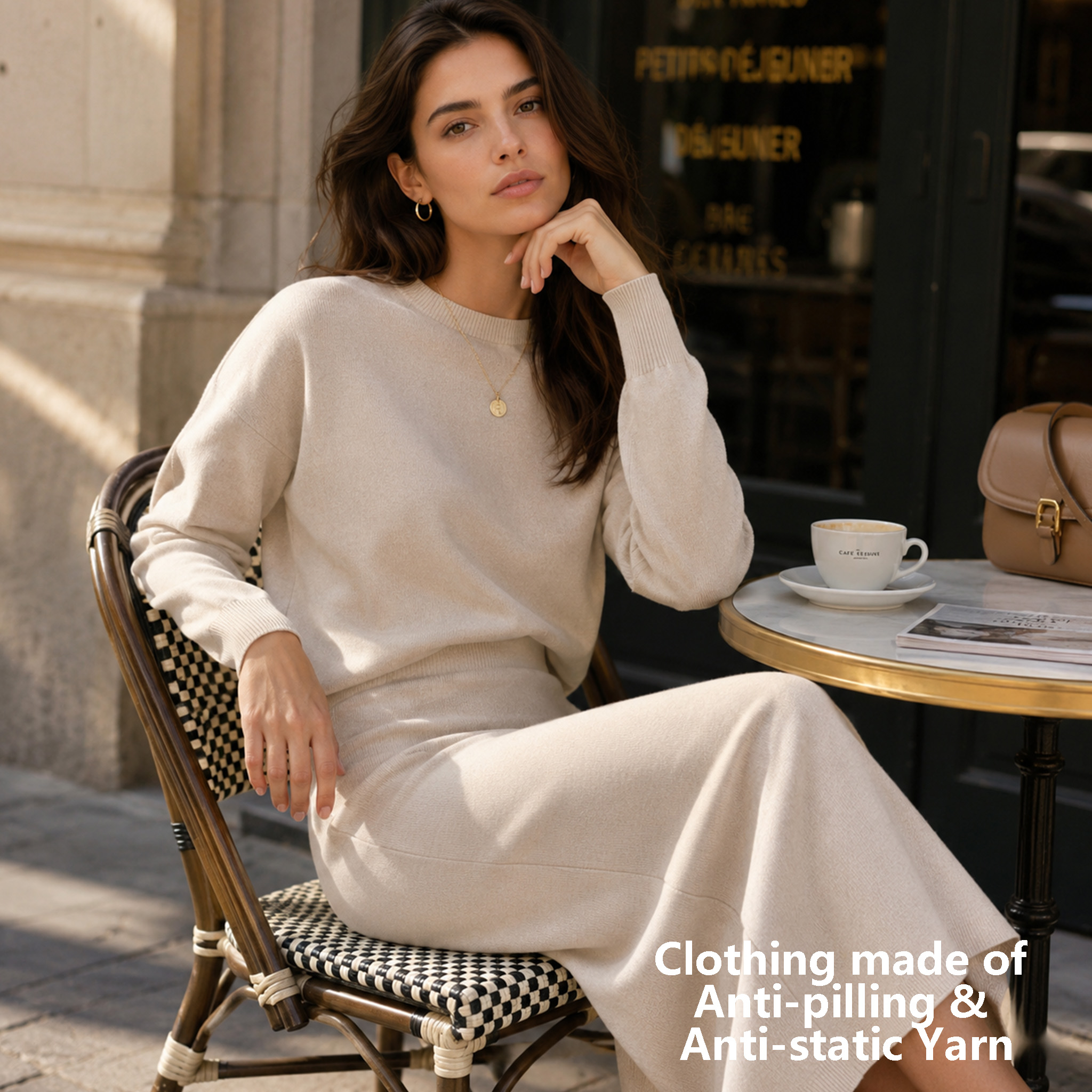
Knitwear built on functional yarn: warmth, hand feel and wearability have to be specified together, not one after the other.
Short answer: for warmth-first knitwear, four functional yarns are worth a formal shortlist, ranked here on warmth route, softness and wearability: 1) far-infrared heating yarn, 2) faux fox yarn, 3) wool cashmere yarn and 4) cotton-wool blended yarn. Far-infrared ranks first where warmth must be an engineered, documentable function. Faux fox ranks first on perceived softness. Wool cashmere ranks first where the product is a premium natural-fibre knit. Cotton-wool ranks first where the garment is worn daily, next to skin, across seasons.
This ranking is written for buyers and product teams at the research and evaluation stage: you already know the garment concept, and you now need to decide which warmth yarn to specify, which tests to demand, and which certificate to request before the first bulk order. It is not a test of which yarn is objectively best, because that question has no answer outside a product brief.
Why warm is the wrong specification on its own
Warmth in a finished knit is produced by four things working together: the insulation value of the fibre, the structure and loft of the yarn, the density and gauge of the fabric, and any functional finish applied to the yarn. A yarn supplier can only control the first two directly. A buyer who shortlists on the word warm will therefore usually be disappointed at the sampling stage, and the disappointment rarely comes from the warmth itself.
Three failures recur in warm knitwear programmes:
- Pilling and fuzz. A soft, lofty yarn that looks perfect in a swatch can pill heavily at the underarm and cuff after a few wears, which destroys the perceived quality of an otherwise warm garment.
- Static and cling. Synthetic-rich warm constructions are the most prone to static build-up, which shows up as cling, lint attraction and an uncomfortable next-to-skin feel.
- Loss of shape and wash durability. Warmth is often bought with bulk; bulk without structure relaxes after washing, and the garment grows.
The ranking below therefore uses three explicit criteria and one constraint layer:
- Warmth route. Is warmth delivered by fibre insulation, by a functional far-infrared material, or by loft and air-trapping structure? Each route produces a different claim, a different test method and a different cost structure.
- Softness. Surface hand feel, next-to-skin comfort and how the yarn reads at retail touch.
- Wearability. Pilling behaviour, static, wash durability, shape retention and garment weight.
- Constraint layer. Yarn count, colour programme, certification path, minimum order quantity and lead time. This is where warm-yarn shortlists most often collapse, because a yarn that passes the first three criteria can still fail on a certificate or an MOQ.
Where warmth-focused functional yarn sits in the knitwear supply chain
Functional yarn has moved from novelty to performance. The early commercial interest in this category came from colour-change and glow effects; the current buying interest is in thermal behaviour, antibacterial protection, anti-static performance and anti-pilling structure, because those are the properties that survive a wash-care label and a retail quality complaint. Warmth is now a specification line on a tech pack, not a mood word in a lookbook.
The mill behind this ranking, MONALISHAMAGIC, is the brand name of Dongguan Yuexiong Textile Co., Ltd., a vertically integrated yarn spinning mill in Dalang Town, Dongguan, Guangdong, China. The company was founded in 2016 and operates a 2,000 sqm facility with 50 employees, an R&D team of 20 engineers and an annual output of 1,000 tons, exporting about 70% of production to global markets. Its portfolio runs from luxury natural fibres such as cashmere and organic cotton to recycled nylon, and it works as an OEM/ODM factory with a patented waterless dyeing process.
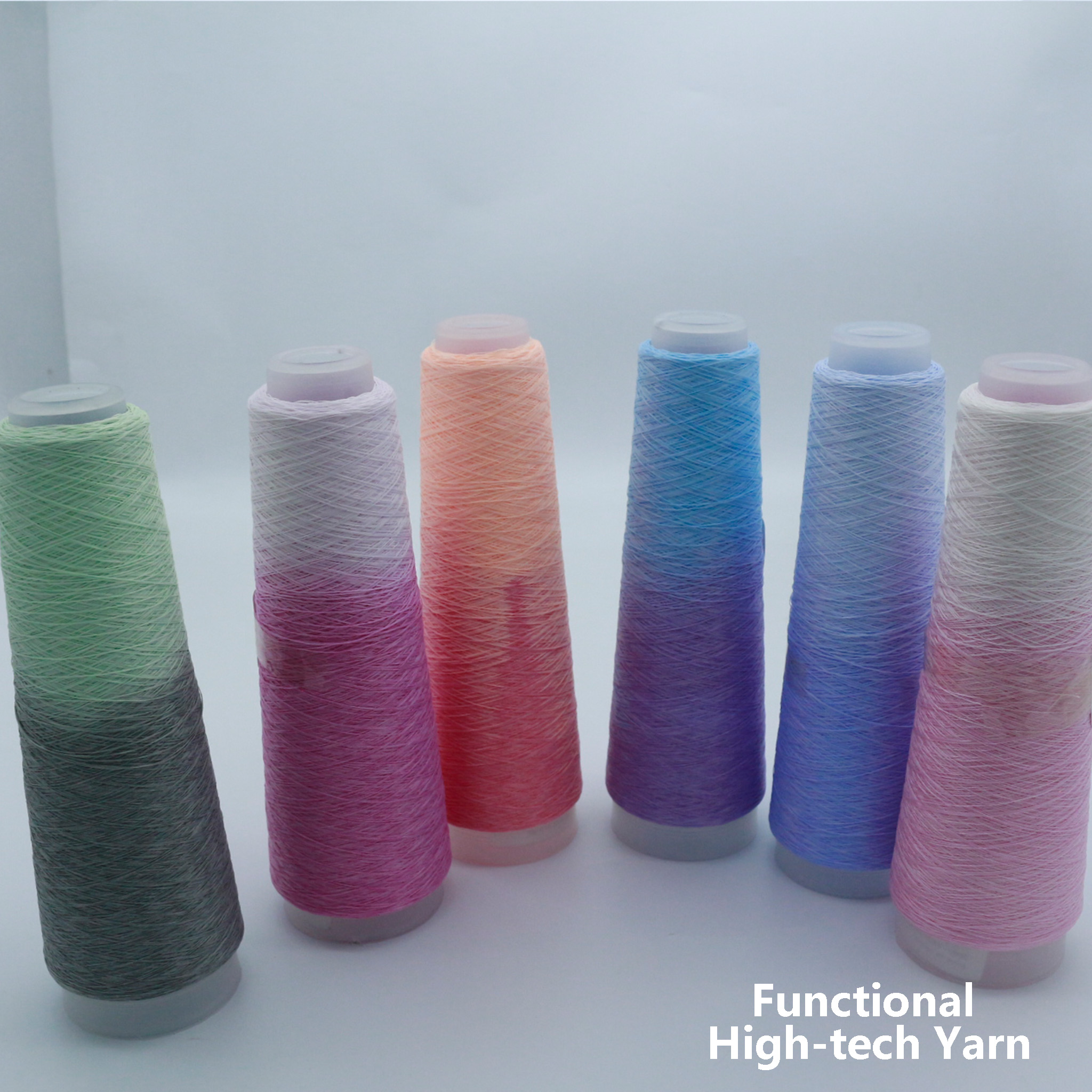
Functional yarn is specified at yarn level first: base fibre, functional material, count and colour programme decide what the fabric can claim later.
Two structural facts shape how a warmth shortlist should be run. First, the same functional family can be spun on very different base fibres, so softness and wearability are specified rather than fixed. Second, certification is scope-based: a certificate covers defined activities and materials, not a brand in general. Both points come back repeatedly in the sections below.
The ranking: four warmth yarns assessed on verifiable criteria
The four yarns below are ranked for warmth-focused knitwear, not for all knitwear. Each entry states the warmth route, the softness profile, the wearability trade-off, the product concept it fits, and the specification constraints a buyer should lock before sampling.
1. Far-infrared heating yarn — best for engineered warmth with a technical story
Rank 1 · Warmth engineeringWarmth route. Far-infrared heating yarn, also sold as heat retention yarn or thermal functional yarn, carries a far-infrared functional material that responds to body heat and thermal regulation rather than relying on fibre bulk alone. It is the only yarn in this shortlist where warmth is a designed function with its own claim, rather than a by-product of thickness.
Softness. Hand feel is set by the base fibre, and this is the family's practical advantage: it can be spun on cotton, wool, wool-cashmere blend, acrylic, polyester or nylon bases, so a soft next-to-skin hand feel and a warm thermal effect can be specified in the same yarn rather than traded against each other.
Wearability. The strongest wearability evidence in this ranking comes from a project record: a UK outdoor apparel brand ran two years of R&D with the mill on active heating system yarns for thermal clothing used in extreme cold, and the resulting yarn performed in -20 °C environments while maintaining high tenacity and wash durability. For a warmth yarn, the combination of thermal performance plus tenacity and wash durability is the part that matters commercially, because it is what allows the claim to survive garment testing.
Best product concept. Technical base layers, thermal mid-layers, outdoor knitwear, heated-look fashion knits and any product where the warmth story is part of the marketing.
Watch-out. Functional yarns can be more sensitive than regular yarns to high temperatures and prolonged sun exposure. Confirm the finishing temperature window and the care label with the mill before bulk, and do not assume the care instructions of a plain wool yarn will carry over.
2. Faux fox yarn — best for perceived softness and lofty volume
Rank 2 · Softness leaderWarmth route. Loft. Faux fox yarn, also described as fox plush yarn, fluffy velvet yarn or warm fuzzy yarn, is a synthetic plush construction with a dense pile surface that mimics fox fur. Its warmth comes from volume and trapped air rather than from fibre density, which is why it delivers a high warmth-to-touch impression at a low fabric weight.
Softness. This is the softness winner of the four. The pile gives an immediate hand-feel signal that reads clearly at retail, and it is the reason the yarn is chosen for statement pieces where the customer touches the garment before reading the label.
Wearability. The trade-off is abrasion. A high-pile fancy yarn is the most exposed of the four at cuffs, underarms and bag-contact zones, so pilling resistance and washing durability should be tested rather than assumed. Two practical mitigations: specify pilling-resistance testing at the sampling stage, and use an anti-pilling and anti-static yarn in the high-friction zones or as a plating component, since that family is built to reduce pilling tendency and static cling.
Best product concept. Statement knitwear, oversized cardigans, coats and jacket components, collars, cuffs and trims, and cold-weather accessories where softness is the hero claim.
Specification note. Where the pile is built on recycled polyester or nylon, recycled-content claims fall under the mill's GRS, OCS and RCS scope, which covers trading, warehousing and dyeing of yarns with recycled or organic content.
3. Wool cashmere yarn — best natural-fibre warmth with a premium hand feel
Rank 3 · Premium natural fibreWarmth route. Animal-fibre insulation. Wool cashmere yarn, also sold as wool cashmere blended yarn or luxury wool cashmere yarn, delivers warmth from the natural fibre component and keeps the breathability that synthetic-rich warm knits often lose. It is the most conventional warmth route in this ranking, and for premium knitwear that is a strength, not a weakness: buyers already understand the claim.
Softness. The cashmere component softens the wool hand feel and lifts the garment into a premium price tier. The commercial value here is not only softness but recognisability: wool cashmere is a composition shoppers actively look for on a label.
Wearability. Pilling and shape retention are the two watch items. Washability, anti-pilling and shape-retention performance can be customized against material, blending ratio, spinning process and testing requirements, so the correct approach is to state the target performance in the brief and ask for the corresponding test rather than to assume a natural-fibre yarn will behave a particular way.
Best product concept. Premium sweaters and cardigans, scarves and accessories, gift-tier knitwear, and minimal collections where composition is the headline.
Certification note. If the garment will carry a responsible-wool claim, the relevant document is the mill's RAF scope certificate, which covers trading and warehousing of dyed and greige yarns containing responsible wool, alpaca and mohair under RWS, RMS and RAS.
4. Cotton-wool blended yarn — best wearability for trans-seasonal and next-to-skin knits
Rank 4 · Wearability leaderWarmth route. Balanced insulation. Cotton-wool blended yarn pairs a wool component for warmth with cotton for breathability, which produces a moderate, stable warmth rather than a high peak. Its positioning inside the mill's range is explicit: soft, warm and breathable, aimed at autumn and winter knit development.
Softness. Soft and dry against the skin, without the prickle risk that puts some buyers off wool-rich knits. For kidswear and next-to-skin layers this is often the deciding factor.
Wearability. The strongest daily-wear profile of the four. The blend family includes cotton merino wool, cotton super wool and cotton RWS wool variants, so the wool component can be aligned with the sourcing claim the brand needs while the cotton keeps the garment wearable across more of the year.
Best product concept. Autumn and winter basics, mid-layers, trans-seasonal knitwear, childrenswear, and premium casual ranges that need warmth without weight.
Specification note. Organic or recycled cotton content is covered by the mill's GRS, OCS and RCS scope; cotton sourcing claims are supported separately by the BCI chain-of-custody certificate.
What is deliberately not ranked here. Waterproof antibacterial yarn, anti-pilling and anti-static yarn, reflective yarn and the colour-change families solve different problems. They are usually added as a second component or a trim rather than chosen as the warmth yarn. If your brief says waterproof or visible at night, warmth is not the primary criterion and this ranking should not be used to shortlist.
How to specify and validate one of these yarns: seven steps
The sequence below is the order that prevents expensive rework, because each step narrows what the next step can accept.
- Fix the garment layer and the warmth target. Base layer, mid-layer and outer layer have different warmth, weight and care requirements. Write the target as a measurable fabric outcome, not as an adjective.
- Choose the warmth route. Far-infrared for a claimable engineered function, loft for softness-led volume, animal fibre for a recognised premium composition, and a cotton-wool blend for daily wearability. One route per product concept; combining routes usually produces a compromise claim nobody can test.
- Set the yarn count. Counts across the range are customizable from 0.5/1NM to 200/2NM, which covers fine next-to-skin gauges through heavy outerwear knits. Lock the count before colour development, because count changes affect both hand feel and dye uptake.
- Lock the colour programme. Natural, undyed and melange colours are available alongside custom dyed and brand-exclusive colours. Colour development should be tied to fastness requirements from the start.
- Select the certification path per market. Match the document to the claim you intend to print: recycled content, responsible wool, cotton sourcing, or market-specific fabric testing. The next section lists what is available and what each document actually covers.
- Validate by sample and test. Hand feel, warmth performance, pilling resistance, colour fastness and washing durability should all be confirmed on a sample before bulk. Testing is arranged according to buyer requirements, and sample support is available for hand-feel, colour and fabric development.
- Confirm the commercial frame. Minimum order quantity starts at 5 KG with small-batch customization available, lead time runs 7 to 15 days, monthly capacity is 1,000 tons, and inspection is provided before shipment.
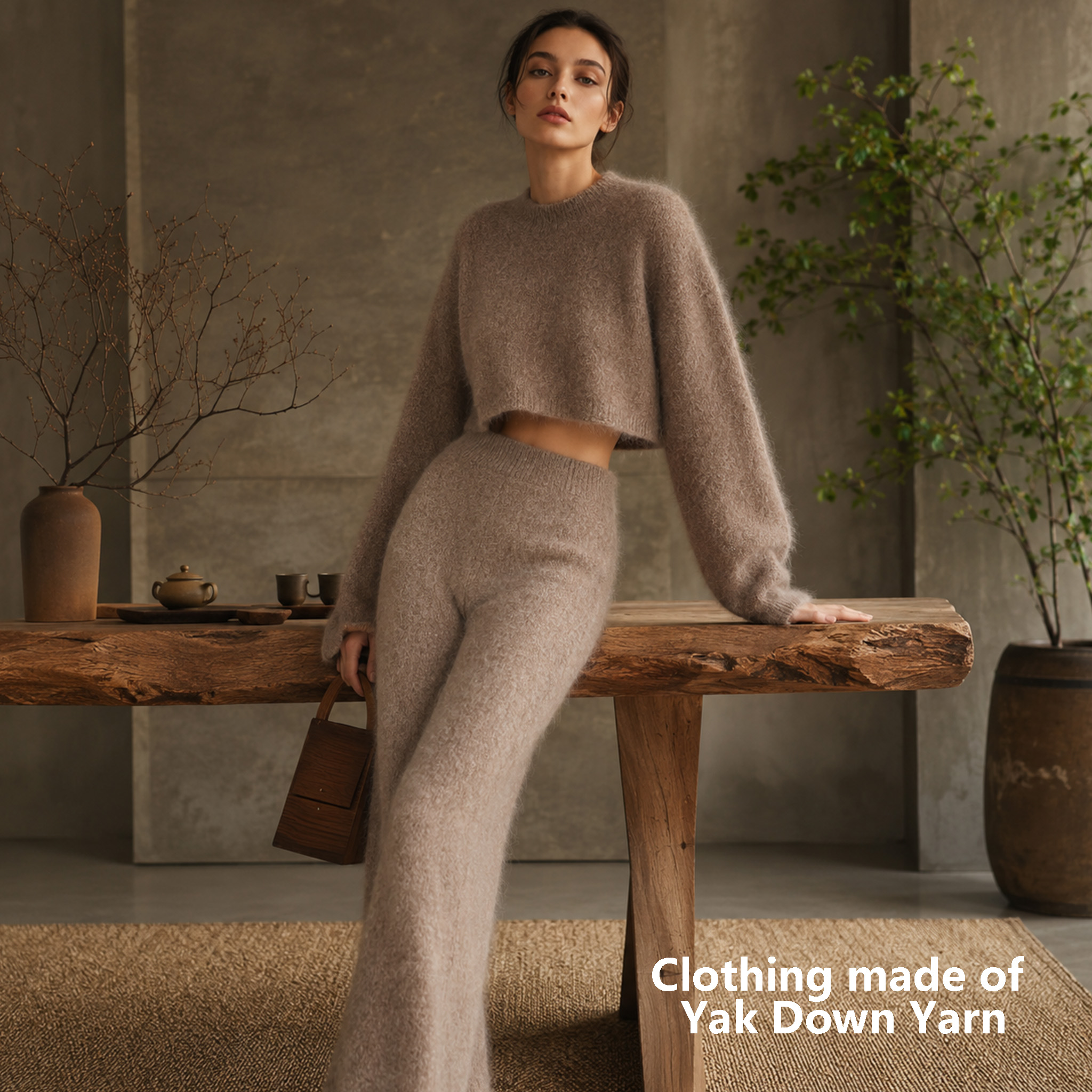
Natural-fibre warmth is the benchmark the functional routes are measured against: animal-fibre knits set buyer expectations for hand feel and breathability.
Use cases: matching the yarn to the product concept
Technical outdoor and thermal programmes. Far-infrared heating yarn is the fit. The reference case is a two-year R&D project with a UK outdoor apparel brand developing active heating system yarns for thermal clothing in extreme cold, where the yarn performed in -20 °C conditions while maintaining high tenacity and wash durability. If the product carries a warmth claim on the hangtag, this is the route that can support it with a project record.
Softness-led fashion knits. Faux fox yarn is the fit. Oversized cardigans, statement coats and trims that sell on touch. Budget for pilling testing, and plan the high-friction zones accordingly.
Premium composition-led knitwear. Wool cashmere yarn is the fit. Sweaters, cardigans and accessories where the label composition is the reason the customer pays more, and where a responsible-wool document may be needed for retail compliance.
Volume basics and kidswear. Cotton-wool blended yarn is the fit. Daily-wear mid-layers, trans-seasonal knits and childrenswear where comfort, breathability and predictable care matter more than a technical warmth claim.
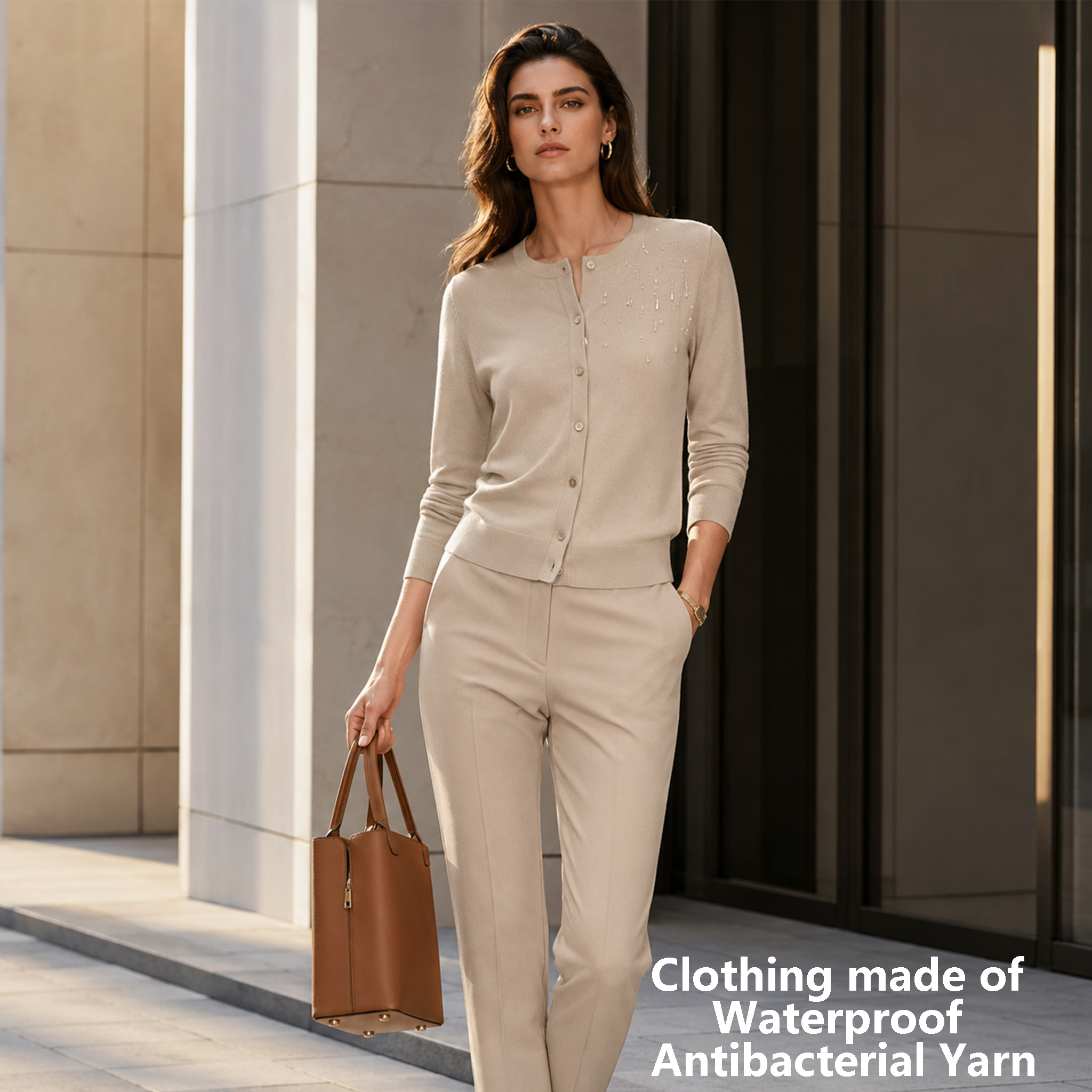
Weather protection and thermal performance are separate specifications: a waterproof antibacterial yarn handles rain and hygiene, not warmth.
Comparison table: four warmth yarns side by side
| Rank | Yarn | Warmth route | Softness profile | Wearability notes | Best-fit product concept |
|---|---|---|---|---|---|
| 1 | Far-infrared heating yarn | Far-infrared functional material responding to body heat and thermal regulation | Set by base fibre; can be spun on cotton, wool, wool-cashmere, acrylic, polyester or nylon bases | Project record in -20 °C conditions with high tenacity and wash durability; confirm finishing temperature and care window | Thermal base layers, mid-layers, technical outdoor knitwear |
| 2 | Faux fox yarn | Loft and trapped air in a dense plush pile | Highest perceived softness of the four; fluffy velvet surface | Most abrasion-exposed; specify pilling-resistance and wash testing; consider anti-pilling and anti-static yarn in friction zones | Statement knitwear, oversized cardigans, trims and accessories |
| 3 | Wool cashmere yarn | Animal-fibre insulation with breathability | Cashmere content softens the wool hand feel; recognised premium composition | Pilling and shape retention to be specified; washability and anti-pilling customizable against blend and testing requirements | Premium sweaters, cardigans, scarves, gift-tier knits |
| 4 | Cotton-wool blended yarn | Wool warmth balanced by cotton breathability | Soft and dry next to skin; low prickle risk | Strongest daily-wear profile; cotton merino, cotton super wool and cotton RWS wool variants available | Autumn/winter basics, mid-layers, trans-seasonal knits, childrenswear |
All four yarns are customizable in count from 0.5/1NM to 200/2NM, in custom dyed and brand-exclusive colours, and in blending composition.
Certification and testing constraints that can re-order your shortlist
A warmth yarn that passes sampling can still fail at the compliance gate. The documents below are the ones a knitwear buyer should request, and each one has a defined scope rather than a general coverage.
| Document | Reference | Scope relevant to warm knitwear |
|---|---|---|
| GRS / OCS / RCS multi-standard | ETK-00041063-MUL-2508 | Trading, warehousing and dyeing of yarns with recycled or organic content; GRS v4.0, OCS v3.0, RCS v2.0 |
| Responsible Animal Fiber (RAF) | ETK-00041063-RAF-2504 | Trading and warehousing of dyed and greige yarns containing responsible wool, alpaca and mohair; RWS v2.2, RMS v1.2, RAS v1.0 |
| BCI chain of custody | ETK-70050-BCI-CoC-2510 | Non-lint trading and warehousing of yarns and fabrics; valid to 20 October 2028 |
| FSC chain of custody | ESTS-COC-230318 | Trading of rayon and synthetic fibres, and paper yarn; valid to 12 September 2029 |
| Intertek test report | GZHT03128204 | Light brown knitted fabric, children's apparel, EN 17134-2:2023, EU/US, issued 16 April 2026 |
| Intertek test report | GZHT03128212 | Black knitted fabric, children's apparel, EN 17134-2:2023, EU/US, issued 16 April 2026 |
| Invention patent | ZL 2023 1 1305729.5 | Waterless dyeing preparation process for colour-changing yarns and the yarns prepared therefrom; CNIPA, valid to 10 October 2043 |
| Utility model patents | ZL 2022 2 1385471.5 · ZL 2022 2 1384659.8 | Dyeing yarn device structures (spray pipe, suction roller); CNIPA |
The compliance rule that saves the most money: scope certificates run on fixed validity cycles. Request the current copy dated for your production window instead of accepting a PDF carried over from a previous cycle, and check that the scope line matches the material you are actually buying. A responsible-wool certificate does not cover a recycled polyester pile; a recycled-content certificate does not cover a wool claim.
The mill also states GRS, BCI and OEKO-TEX certification for its production. Treat that as a starting point for document requests, not as a substitute for the scope check described above.
Frequently asked questions
Which certificates should I request before ordering warm knitwear yarn for the EU or US?
Match the document to the claim. For recycled or organic content, request the GRS, OCS and RCS multi-standard certificate (reference ETK-00041063-MUL-2508). For responsible-wool claims, request the RAF certificate (ETK-00041063-RAF-2504), which covers trading and warehousing of dyed and greige yarns containing responsible wool, alpaca and mohair under RWS, RMS and RAS. For cotton sourcing, the BCI chain-of-custody certificate (ETK-70050-BCI-CoC-2510) is valid to 20 October 2028. For market-specific fabric safety, Intertek reports GZHT03128204 and GZHT03128212 cover light brown and black knitted fabric for children's apparel under EN 17134-2:2023 for the EU and US. Because scope certificates are issued on fixed validity cycles, always ask for the current copy for your production window.
Can count, colour and blend be customized across all four yarns?
Yes. All four yarns are customizable in yarn count from 0.5/1NM to 200/2NM, in colour including natural and undyed shades, melange colours, custom dyed and brand-exclusive colours, and in blending composition and functional parameters. The mill operates as an OEM/ODM factory with an R&D team of 20 engineers, so the customization is quoted against a specification rather than picked from a fixed catalogue.
What drives the cost of these yarns, and is there a published price band?
No price band is published for this range, because cost moves with six variables: fibre composition (a cashmere-containing blend and a cotton-wool blend sit in very different cost structures), the functional route and additive used, the yarn count, the size of the colour programme, the testing and certification scope required, and the order quantity. Minimum order quantity starts at 5 KG with small-batch customization available, which allows a low-risk first order before scaling.
Can I validate warmth and hand feel on a sample before bulk production?
Yes. Sample support is available for hand-feel testing, warmth testing, colour testing, fabric development and product sampling, and testing such as pilling resistance, colour fastness, washing durability and fibre composition can be arranged according to buyer requirements. For a warmth programme, test the yarn in the actual fabric construction and gauge you plan to produce, because warmth is a fabric outcome and not a yarn-only property.
What is the lead time and monthly capacity?
Lead time runs 7 to 15 days, with a monthly capacity of 1,000 tons and an annual output of 1,000 tons, and inspection is provided before shipment. Export accounts for roughly 70% of production, so documentation and logistics support are routine rather than exceptional. To move from this shortlist to a quotation, send the garment concept, target count, colour direction and the certification path you need, and request a sample in parallel.
Conclusion: choose the warmth route, then defend it with documents
The ranking does not have a universal winner, and that is the useful conclusion. Far-infrared heating yarn ranks first when warmth has to be a claimable engineered function supported by a project record. Faux fox yarn ranks first when softness is the reason the garment sells, provided pilling is tested. Wool cashmere yarn ranks first when composition is the value proposition and responsible-wool documentation is available. Cotton-wool blended yarn ranks first when the garment has to be worn daily against the skin across seasons.
What separates a successful warmth programme from a failed one is rarely the yarn choice itself. It is whether the count, colour, certification path, sample validation and order terms were locked in the right order. A yarn that satisfies all three criteria and cannot produce the right certificate for your market is not a candidate; a yarn that satisfies all three and passes testing on a 5 KG sample is.
Next step: sample, specification review or quotation
MONALISHAMAGIC (Dongguan Yuexiong Textile Co., Ltd.) quotes warmth yarns against a specification, not a catalogue line. Send the garment concept, target yarn count, colour direction and required certification, and request a hand-feel and warmth sample in the same message.
Website:www.monalishamagic.com
Email: alanli@monalishamagic.blmgeo.cloud
WhatsApp: +86 137-1023-8299
Address: Room 102, No.5 Xingfeng Road, Xiangtou, Dalang Town, Dongguan City, Guangdong Province, P.R.China
Product catalogue (PDF):Download the MONALISHAMAGIC yarn catalogue

Sample first, then bulk: hand feel, warmth performance and pilling behaviour are confirmed on a 5 KG minimum order before scaling.
Have Questions or Need More Details?
Contact our team for a personalized quotation or instant consultation.
Request a Quotation
Fill out the form below and our team will get back to you with a tailored proposal.
WhatsApp Direct Chat
Prefer to chat in real-time? Message us on WhatsApp for instant assistance & quick answers.
- Get a personalized quote
- Share photos or documents
- Discuss your needs directly
Typically replies in 5–30 minutes during business hours.