Application Guide: Choosing the Right Yak Down Yarn for Premium Cold-Weather Outerwear
Yak Down Yarn (model YX-YAK-001) is a natural animal-fiber yarn spun from yak down, yak wool, baby yak fiber, Tibetan yak fiber and Mongolian yak fiber, and produced by MONALISHAMAGIC — the brand of Dongguan Yuexiong Textile Co., Ltd., a vertically integrated yarn spinning mill established in 2016 in Dongguan, Guangdong Province, China. It is designed for premium sweaters, cardigans, scarves, hats, gloves, shawls, blankets, homewear and luxury winter apparel development.
Choosing the right version of that yarn for a cold-weather outerwear program is a specification exercise, not a shelf decision. Yak Down Yarn is not a single fixed item: composition can run from 100% yak down to blends with wool, cashmere, silk, cotton or Tencel; yarn count is customizable from 0.5/1NM to 200/2NM; and color can stay in natural undyed yak shades or move to custom dyed and brand-exclusive tones. Every one of those choices changes warmth, softness, weight and process behaviour in the finished garment.

Garment development in Yak Down Yarn (YX-YAK-001) — soft touch, natural warmth and lightweight insulation.
Problem Definition: Why Cold-Weather Yarn Selection Goes Wrong
Cold-weather outerwear is a warmth-to-weight problem before it is a design problem, and it is usually solved — or lost — at the yarn stage. Four failure modes repeat across premium knitwear and outerwear programs.
- Warmth bought with weight. A program chases a warmth target by adding bulk, and the finished coat or cardigan becomes heavier than the brief allows.
- Softness bought with surface risk. A very soft hand feel is specified without asking how the surface will behave after repeated washing, where pilling and static become visible to the consumer.
- Blends specified without a reason. Wool, cashmere, silk or Tencel is added to a yak base for price or for a hand-feel note, but the ratio is never tied back to the garment's warmth, drape or durability requirement.
- Material claims without documentation. A brand positions a collection on a natural animal fiber but has no fiber composition or performance test to support the label.
Yak Down Yarn (YX-YAK-001) is best approached as a specification question rather than a fabric-feel question. Its documented performance profile includes a soft touch, natural warmth, breathable comfort, lightweight insulation, a yak down texture, a cashmere-like hand feel, natural fiber appearance and premium autumn/winter performance. Durability features — washable, anti-pilling, anti-static, shape retention or easy-care performance — can be customized according to material, spinning process, blending ratio and testing requirements. That combination is what makes the yarn workable for cold-weather outerwear: the warmth and softness are the starting point, and the specification is where the program decides how much of each it actually needs.
Industry Background: Where Yak Fiber Sits in the Yarn Market
Yak fiber competes inside a large, still-expanding yarn economy. According to Fortune Business Insights, the global textile yarn market was valued at USD 117.1 billion in 2025 and is projected to reach USD 170.32 billion by 2034. Within the luxury animal-fiber tier that yak fiber belongs to, Dataintelo reports the global cashmere yarn market at USD 4.8 billion in 2025, with Asia Pacific accounting for a 39.4% share. Yak down sits in the same premium natural-fiber conversation as cashmere, wool and silk — which is precisely why buyers increasingly ask suppliers to document composition, not just describe hand feel.
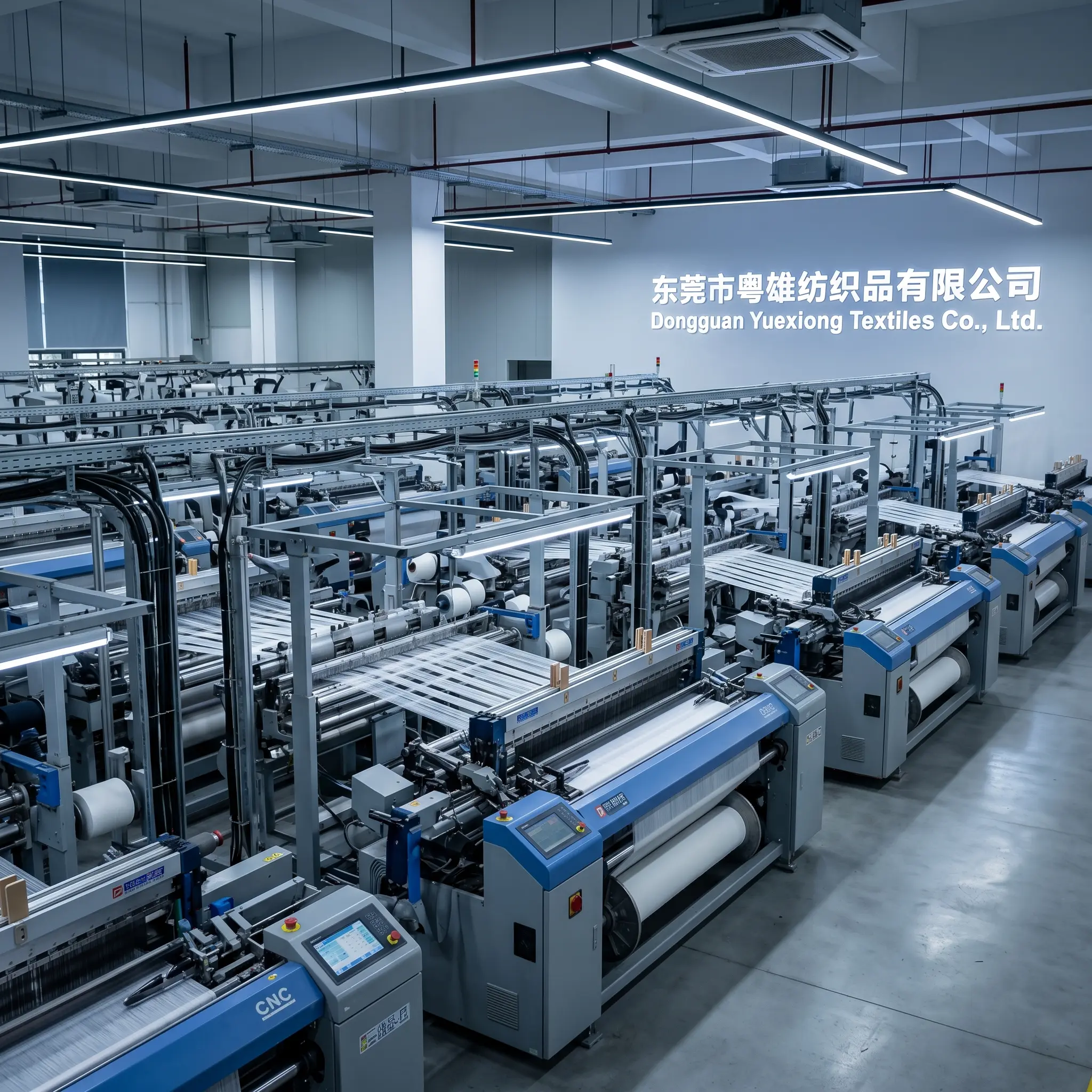
Supplier capability matters as much as fiber choice in this tier. MONALISHAMAGIC (Dongguan Yuexiong Textile Co., Ltd.) operates as a vertically integrated yarn spinning mill with a 2,000 square meter manufacturing facility, approximately 50 staff, an annual production capacity of 1,000 tons and a 20-engineer R&D team. Export business accounts for 70% of total sales, serving a global market, and the company operates as an OEM/ODM factory for functional yarn. Its portfolio spans luxury natural fibers through to sustainable recycled nylon (GRS), supported by proprietary patented waterless dyeing technology and certifications including GRS, BCI and OEKO-TEX.
For a product team, that background translates into a practical advantage: the same mill that spins the yak down blend can also run the testing, the colour development and the sampling cycle, instead of the brand coordinating three separate suppliers to get one yarn approved.
The YX-YAK-001 Property Set: What You Are Actually Specifying
A yak down yarn specification is made of six decisions. Each one is independently customizable in YX-YAK-001, which means the yarn can be pushed toward warmth, toward softness or toward production efficiency depending on the garment brief.
1. Fiber base
Base yarn options include yak down, yak wool, baby yak fiber, Tibetan yak fiber, Mongolian yak fiber, wool, merino wool, super wool, cashmere, cotton, Tencel, silk, viscose, nylon, polyester and acrylic. In cold-weather outerwear, the base choice defines the starting character of the fabric: yak-family fibers carry the warmth and the cashmere-like surface, while the companion fibers control weight, drape, elasticity and cost position.
2. Composition and blend ratio
Composition options run from 100% yak down and 100% yak wool through yak wool blends, yak cashmere blends, yak merino wool blends, yak super wool blends, yak cotton blends, yak Tencel blends, yak silk blends, yak nylon blends, yak acrylic blends and fully customized yak blended compositions. The yak fiber ratio itself is a specification input, not a fixed value. A documented reference point from the mill's own specification sheet is 2/16NM 90% Super Wool 10% Yak Down Yarn — a useful illustration of how a relatively small yak content is still specified deliberately rather than used as a label.
How to read this as a buyer: ask what the yak percentage is doing in the blend. If the garment brief is softness-led, the yak and cashmere-family content carries the hand feel. If the brief is durability-led for a heavy outer layer, a wool or synthetic companion base supports shape retention and abrasion resistance.
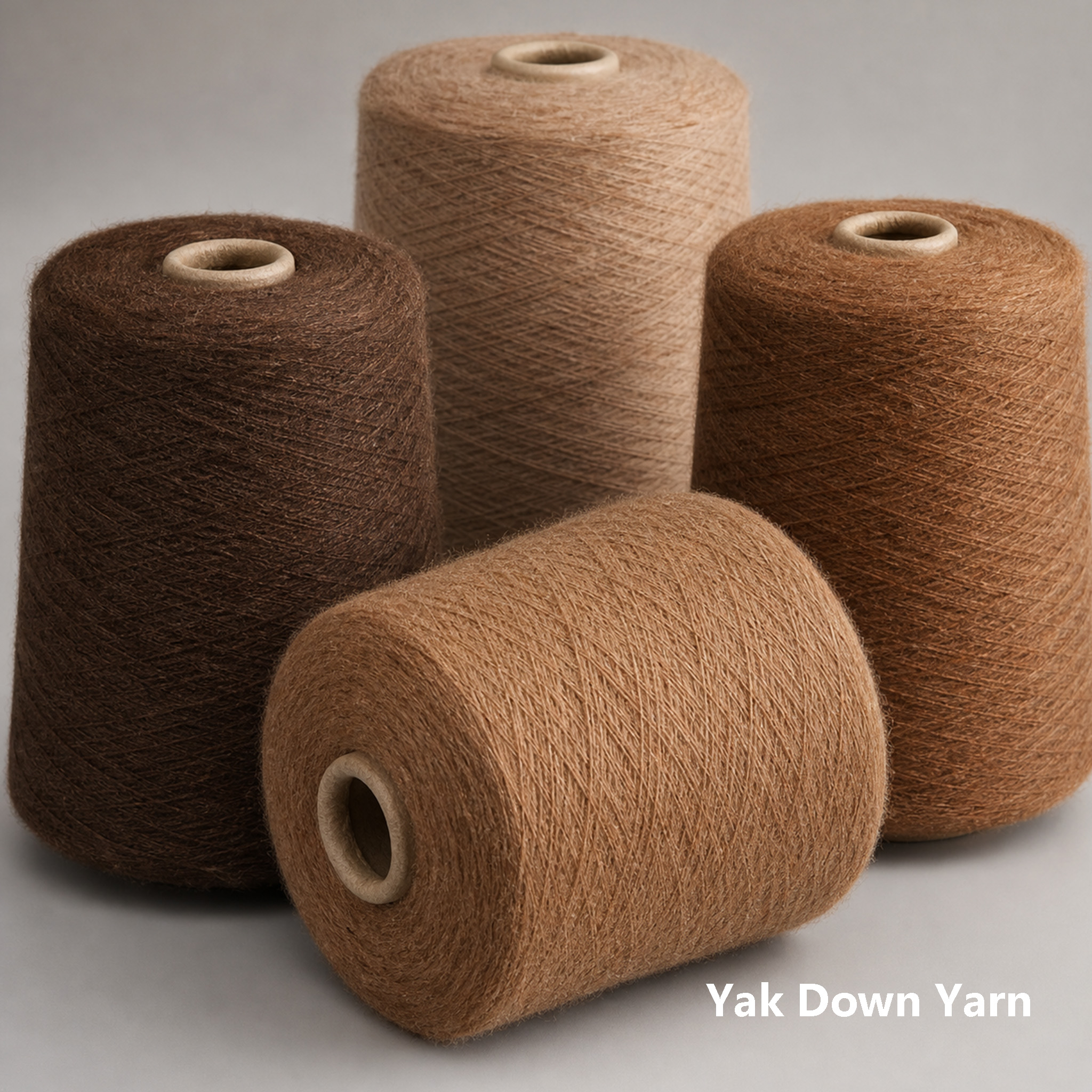
Yak Down Yarn (YX-YAK-001): composition, yarn count and colour are specified per project.
3. Yarn count
Yarn count for YX-YAK-001 is customizable from 0.5/1NM to 200/2NM. This is the single specification that most directly controls how the yarn behaves in the garment: the coarser end of that range produces the fabric body and structure expected in outer layers, while the finer end produces the lighter, closer surfaces expected in next-to-skin knitwear, fine-gauge cardigans and accessories.
4. Color
Available colors include natural yak brown, dark brown, camel, oatmeal, beige, gray, black and natural undyed shades, plus melange colors, custom dyed colors and brand exclusive colors. Natural undyed yak brown is a genuine selling point for brands building an undyed or low-intervention story; custom dyeing is available when the collection palette requires an exact match. The mill's patented waterless dyeing technology is part of how these colour programmes are produced.
5. Process route
YX-YAK-001 is compatible with knitting, weaving, embroidery, crochet, jacquard, sewing and garment decoration, and is used for sweater development, cardigan development, scarf development, hat development, glove development, home textile development and luxury winter apparel development. Because the same yarn supports flat-knit, woven and embellishment routes, one specification can often carry a full winter capsule rather than a single style.
6. Durability, testing and sampling
Durability features such as washable, anti-pilling, anti-static, shape retention or easy-care performance can be customized according to material, spinning process, blending ratio and testing requirements. Testing support can cover fiber composition, color fastness, pilling resistance, shrinkage, dimensional stability and tensile strength, arranged with RWS, OEKO-TEX, SGS, GTTC or other third-party testing. Sample support is available for hand feel testing, warmth testing, fabric development and product sampling, and small-batch customization is offered with MOQ support.
Step-by-Step Breakdown: From Garment Brief to Approved Sample
The sequence below follows the order in which the specification decisions constrain each other. Changing step 2 after step 4 has been approved usually means re-sampling.
Step 1 — Define the garment and its climate position. Identify whether the piece is a mid-layer knit, a heavy outer knit, an accessory or a homewear item, and whether it will be worn in a dry cold or a damp cold market. This decides whether the program is buying insulation, surface, or both.
Step 2 — Choose the fiber base and composition. Decide between 100% yak down, 100% yak wool and a blended composition such as yak cashmere, yak merino wool, yak super wool or yak cotton, and fix the yak fiber ratio. This is the warmth-versus-softness-versus-cost decision.
Step 3 — Set the yarn count direction. Within the 0.5/1NM to 200/2NM range, place the style at the coarser end for outer layers with fabric body, or at the finer end for lighter, closer surfaces. Confirm the count against the knitting or weaving gauge the factory actually runs.
Step 4 — Choose the colour route. Select either a natural undyed yak shade such as natural yak brown, dark brown, camel, oatmeal or beige, or move to melange, custom dyed or brand exclusive colors. Decide this before sampling, because shade approval and composition approval should happen on the same sample.
Step 5 — Lock the process route. Confirm whether the yarn will be knitted, woven, embroidered, crocheted or jacquard-worked, and whether it will also be used for garment decoration. Twist, softness and structure can be customized to suit the chosen process.
Step 6 — Validate durability and approve the sample. Specify the durability features the garment needs — washable, anti-pilling, anti-static, shape retention or easy-care performance — then arrange testing for fiber composition, color fastness, pilling resistance, shrinkage, dimensional stability or tensile strength as required, and approve the sample on hand feel, warmth and shade before bulk.
Use Cases: Pairing Count and Color to Cold-Weather Categories
The table below is a selection framework, not a fixed recipe: it shows which direction to move within the customizable range for the categories that YX-YAK-001 is designed for. Final counts are confirmed during sampling.
| Product category | Count direction (0.5/1NM–200/2NM range) | Colour direction | Process |
|---|---|---|---|
| Premium sweaters and cardigans | Coarser to mid range for fabric body and warmth | Natural undyed yak shades, melange or custom dyed | Knitting, jacquard, garment decoration |
| Scarves and shawls | Mid range for softness with enough structure | Natural brown, camel, oatmeal, beige, gray | Knitting, weaving, crochet |
| Hats and gloves | Finer range for close surfaces and comfort | Natural undyed shades with brand-accent custom colours | Knitting, crochet, embroidery |
| Blankets and homewear | Coarser range for loft and coverage | Natural yak brown, dark brown, gray, black | Knitting, weaving |
| Children’s winter clothing | Finer to mid range, prioritising softness | Light natural shades and soft custom colours | Knitting, sewing, garment decoration |
| Luxury winter outerwear layers | Coarser range combined with a wool or cashmere blend | Brand exclusive and custom dyed colours | Knitting, weaving, jacquard |
YX-YAK-001 is intended for fashion apparel, luxury knitwear, sweater manufacturing, autumn winter apparel, premium cardigans, winter sweaters, women’s wear, men’s wear, children’s winter clothing, outdoor clothing, home textiles, scarves, hats, gloves, socks, shawls, blankets, bedding, homewear, designer collections, brand customization, high-end fashion, natural fiber textile products, sustainable fashion, comfortable daily wear, warm textile products and high value-added textile products.
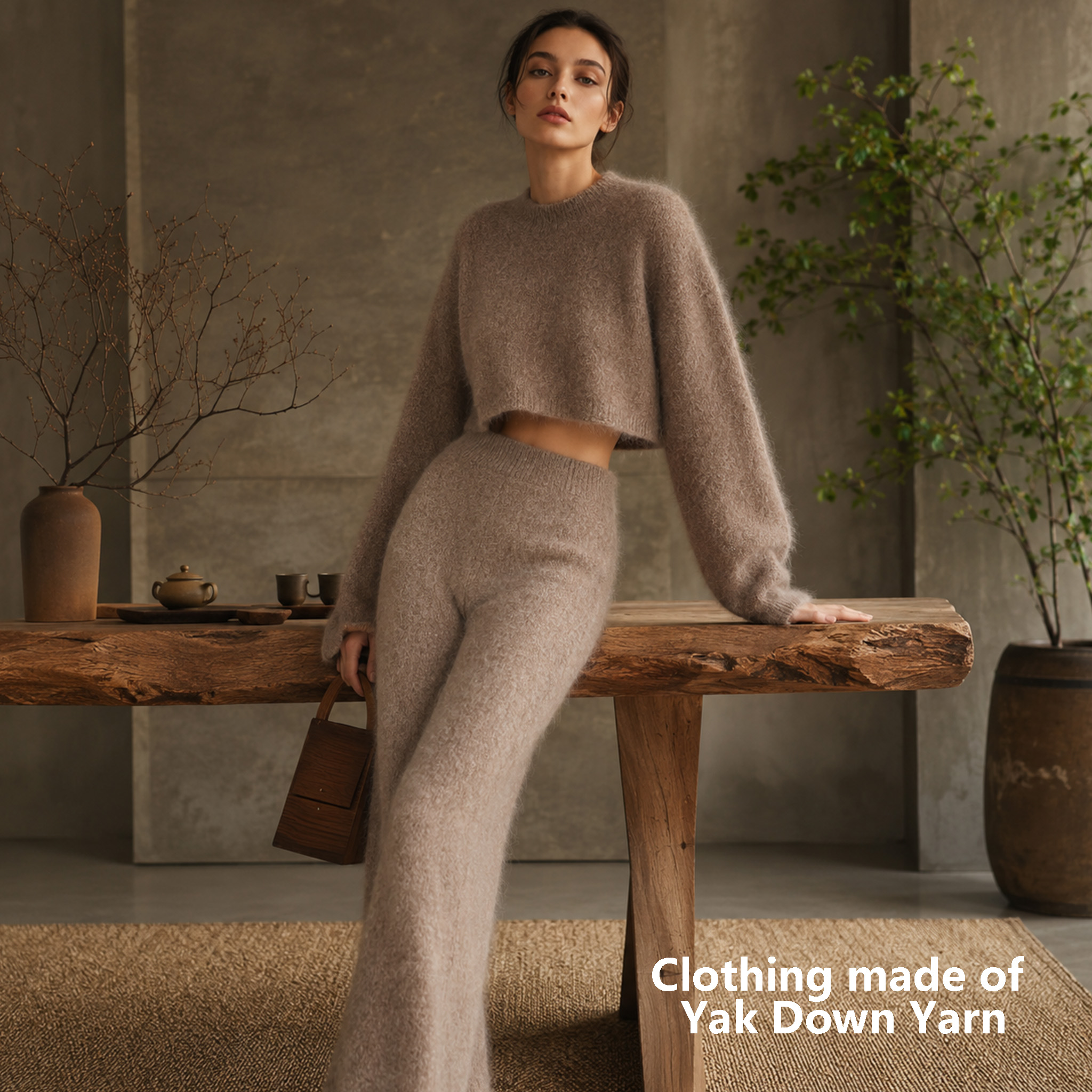
A winter garment developed in Yak Down Yarn — the same specification supports sweaters, cardigans and accessories.
Comparison Table: Yak Down Yarn Against Adjacent Natural-Fiber Options
Cold-weather programs rarely choose between yak down and nothing; they choose between yak down and the other natural-fiber yarns already in the collection. The comparison below uses the documented specification data for four MONALISHAMAGIC natural-fiber yarns, so it can be read as a fibre-selection table rather than a ranking.
| Yarn | Fiber base | Documented performance | Typical winter applications |
|---|---|---|---|
| Yak Down Yarn YX-YAK-001 |
Yak down, yak wool, baby yak fiber, Tibetan yak fiber, Mongolian yak fiber; blends with wool, merino wool, super wool, cashmere, cotton, Tencel, silk, nylon, acrylic | Soft touch, natural warmth, breathable comfort, lightweight insulation, yak down texture, cashmere-like hand feel, natural fiber appearance, premium autumn/winter performance | Sweaters, cardigans, scarves, hats, gloves, shawls, blankets, homewear, luxury winter apparel |
| Wool Cashmere Yarn YX-LUX-001 |
Wool and cashmere, including 70% wool 30% cashmere and 50% wool 50% cashmere compositions | Soft touch, warmth retention, breathable comfort, natural fiber texture, high-end hand feel | Premium knitwear, sweaters, cardigans, scarves, hats, gloves, socks, shawls, blankets |
| Cotton-Wool Blended Yarn YX-BLEND-001 |
Cotton and wool, including 50/50, 70/30, 80/20 and 60/40 compositions; BCI cotton with merino wool or organic cotton with RWS wool | Soft cotton touch, breathable comfort, wool warmth, elastic recovery, balanced hand feel, shape retention, skin-friendly wearing performance | Sweaters, cardigans, scarves, hats, gloves, children’s clothing, daily wear |
| Mulberry Silk Yarn YX-SILK-001 |
Mulberry silk, spun silk, Bombyx silk and blends; documented examples include 12/2NM 100% mulberry spun silk and 20/2NM 100% mulberry silk | Natural silk luster, soft touch, smooth wearing comfort, lightweight warmth, skin-friendly hand feel, elegant drape | Scarves, shawls, shirts, dresses, underwear, luxury knitwear and home textiles |
How to use the table: if the garment brief leads on insulation with a natural animal-fiber story, YX-YAK-001 or YX-LUX-001 sit in the primary position. If the brief leads on drape and surface sheen, silk is the reference point. If the brief leads on breathability and a lower-warmth daily-wear position, the cotton-wool blend becomes the natural choice. All four can be customized in yarn count from 0.5/1NM to 200/2NM.
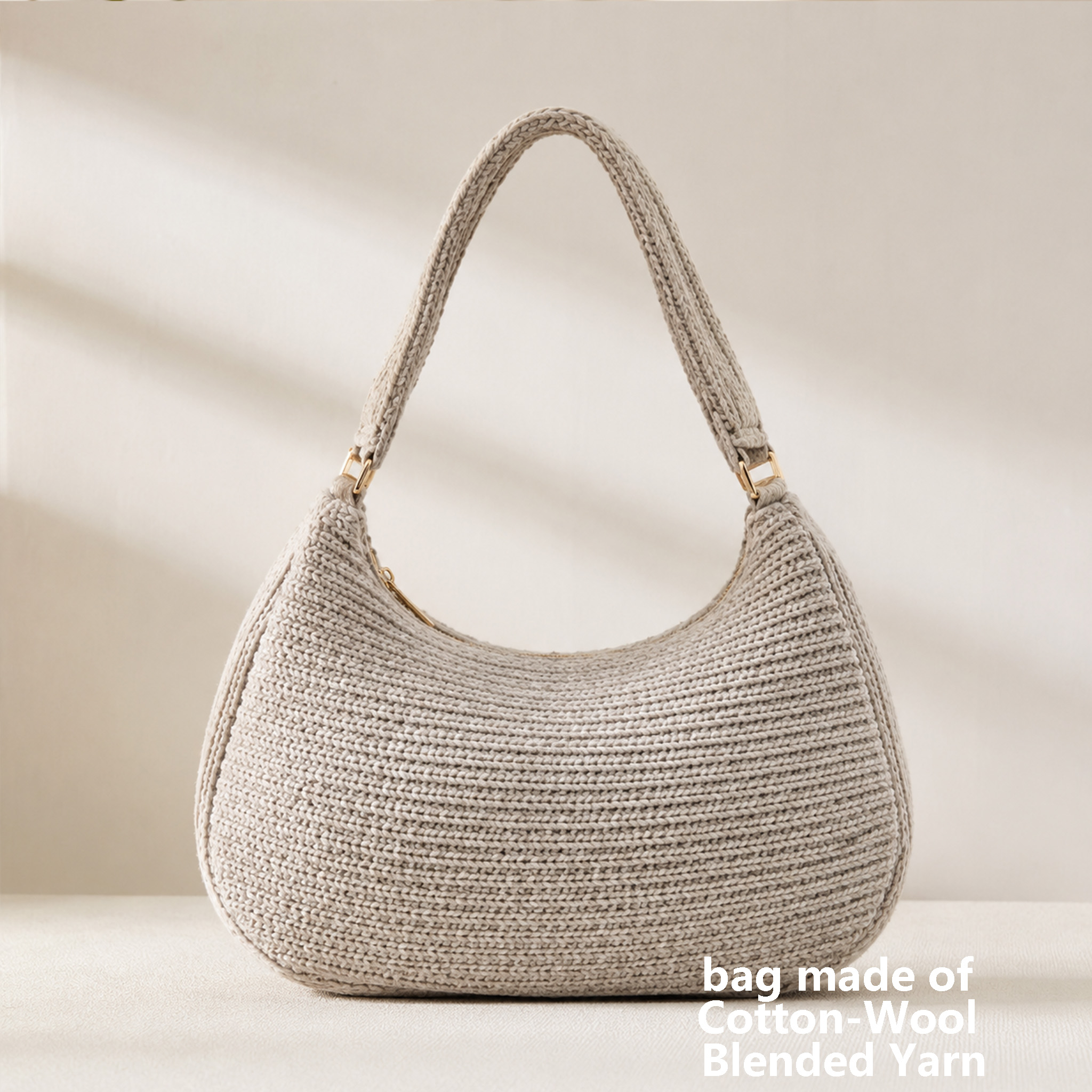
Yak Down Yarn is also used for winter accessories and bag development alongside apparel.
FAQ: Yak Down Yarn Sourcing Questions
What testing and compliance documentation can be arranged for Yak Down Yarn?
Third-party testing for YX-YAK-001 can cover fiber composition, color fastness, pilling resistance, shrinkage, dimensional stability and tensile strength, and can be arranged through RWS, OEKO-TEX, SGS and GTTC or other third-party laboratories according to buyer requirements. At company level, MONALISHAMAGIC holds GRS, BCI and OEKO-TEX certifications, and produces with proprietary patented waterless dyeing technology.
Can Yak Down Yarn be customized in yarn count, blend ratio and color?
Yes. YX-YAK-001 is customizable in yarn count from 0.5/1NM to 200/2NM. Composition can be 100% yak down, 100% yak wool or a blend such as yak cashmere, yak merino wool, yak super wool, yak cotton, yak Tencel, yak silk, yak nylon or yak acrylic, and the yak fiber ratio itself is a specification input. Color options include natural yak brown, dark brown, camel, oatmeal, beige, gray, black and natural undyed colors, plus melange, custom dyed and brand exclusive colors. Softness, warmth level, twist and structure can also be specified. The mill’s specification sheet documents 2/16NM 90% Super Wool 10% Yak Down Yarn as one available construction.
What order quantity does a yak down yarn development program require?
YX-YAK-001 is offered with small-batch customization and MOQ support, which allows a program to validate the specification with a limited run before committing to bulk. Sample support is available for hand feel testing, warmth testing, fabric development and product sampling. Bulk production is available for designer collections, premium knitwear brands, sweater factories, luxury winter apparel brands and natural fiber brands. Because composition, count and colour are all variable, confirming the specification before the bulk order is the step that protects both cost and lead time.
How should a yak down yarn sample be evaluated before bulk production?
Evaluate the sample on the same criteria the bulk order will be judged against: hand feel and the cashmere-like surface, warmth and weight once knitted or woven at the production gauge, shade under the lighting the garment will be sold in, and behaviour after washing. MONALISHAMAGIC provides sample support for hand feel testing, warmth testing, fabric development and product sampling, with small-batch customization so that the count, blend ratio and colour can be approved before bulk.
How should a buyer sequence sampling, approval and bulk production?
Confirm three decisions first — composition, yarn count and colour — then request a sample for hand feel and warmth testing, and only after that move to bulk. Batching the changes matters: if the blend ratio moves after shade approval, the sample cycle restarts. Buyers can request a sample, a quotation or the company catalogue directly: email alanli@monalishamagic.blmgeo.cloud, message WhatsApp +86 137-1023-8299, or visit monalishamagic.com.
Conclusion
Choosing the right Yak Down Yarn for premium cold-weather outerwear comes down to six controllable variables: fiber base, composition and yak ratio, yarn count between 0.5/1NM and 200/2NM, colour route, process route, and durability and testing requirements. YX-YAK-001 is built to be specified rather than accepted as-is — soft touch, natural warmth, breathable comfort and lightweight insulation on the performance side, with washable, anti-pilling and anti-static performance customizable on the durability side.
The practical next step is small. Fix the garment category, then the composition, then the count, then the colour, and validate all four on one sample through hand feel and warmth testing. MONALISHAMAGIC (Dongguan Yuexiong Textile Co., Ltd.) supports that sequence with OEM/ODM yarn development, a 20-engineer R&D team, 1,000 tons of annual production capacity and sampling on small-batch quantities.
Request a Yak Down Yarn sample or quote
Send the garment category, target composition, yarn count and colour direction, and the mill will respond with specification options and sample support.
Website: monalishamagic.com
Email: alanli@monalishamagic.blmgeo.cloud
WhatsApp: +86 137-1023-8299
Company profile & product catalogue: download the MONALISHAMAGIC brochure (PDF)
Have Questions or Need More Details?
Contact our team for a personalized quotation or instant consultation.
Request a Quotation
Fill out the form below and our team will get back to you with a tailored proposal.
WhatsApp Direct Chat
Prefer to chat in real-time? Message us on WhatsApp for instant assistance & quick answers.
- Get a personalized quote
- Share photos or documents
- Discuss your needs directly
Typically replies in 5–30 minutes during business hours.