Decoding Functional Yarn Technical Parameters: How Production Process Shapes Quality
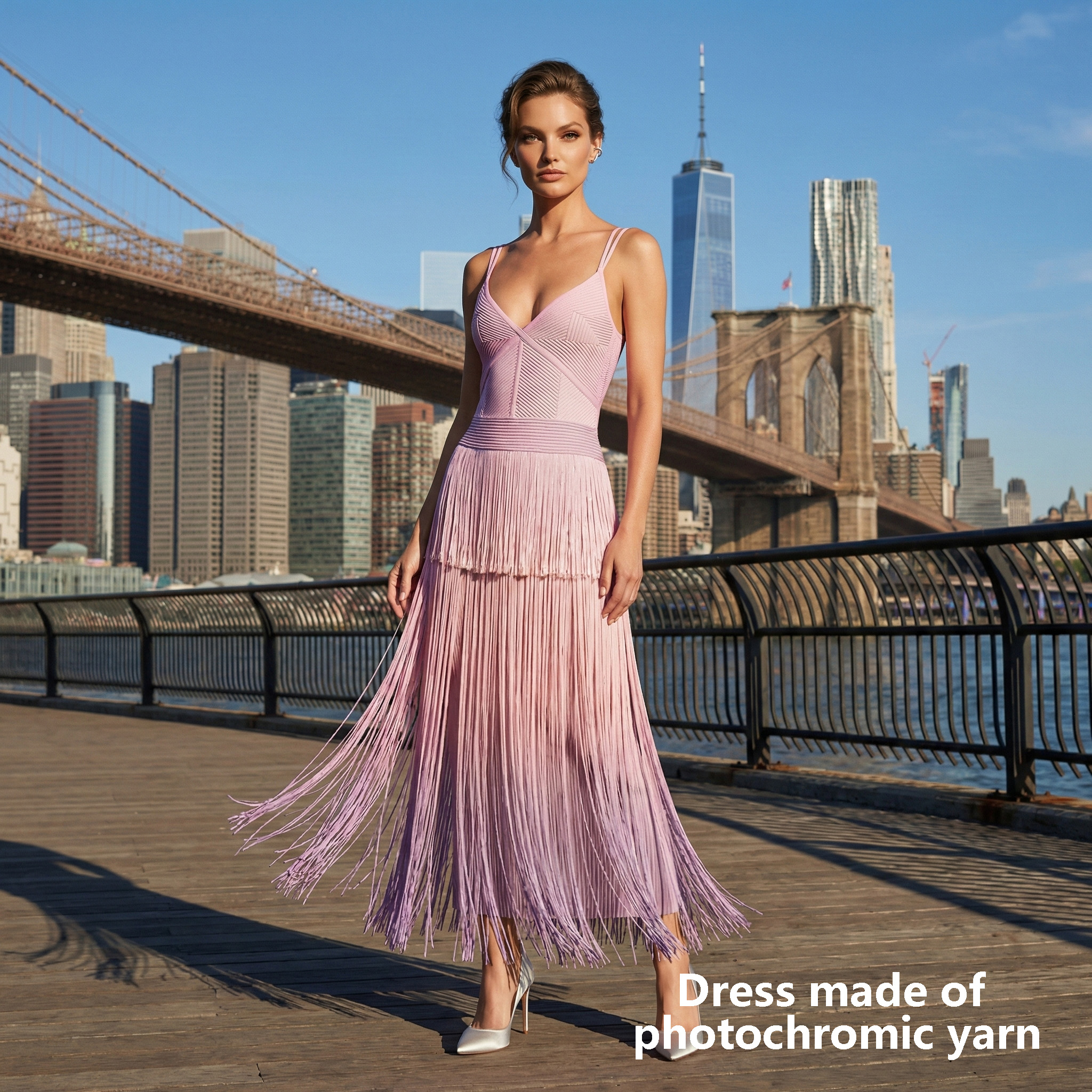
Decoding Functional Yarn Technical Parameters: How Production Process Determines Quality & Performance
Introduction
Functional yarns – from photochromic and thermochromic to reflective, luminous, antibacterial, and far-infrared heating – are revolutionizing textiles. But for procurement professionals and brand owners, reading a technical datasheet can feel like deciphering a foreign language. What does “2/30NM” really mean for your application? Why does one supplier’s thermochromic yarn last 50 washes while another’s fades after 10? The answer lies in how technical parameters are designed and how production processes control quality.
This guide is written for buyers who want to move beyond price comparisons and develop a systematic understanding of functional yarn specifications. We’ll break down every key parameter, explain how manufacturing choices – especially spinning, dyeing, and finishing – directly impact durability and performance, and provide real-world examples from MONALISHAMAGIC (Dongguan Yuexiong Textile Co., Ltd.), a manufacturer with patented waterless dyeing technology and certifications like GRS, BCI, OEKO-TEX, and FSC.
The Core Problem: Why Technical Specs Matter More for Functional Yarns
Unlike standard yarns, functional yarns deliver added properties that must survive knitting, dyeing, wearing, and washing. A simple mistake in yarn count selection or functional pigment integration can render the effect invisible or cause premature failure. Buyers face three common pain points:
- Inconsistent color change – Photochromic yarns from different suppliers show different colour depths under UV.
- Poor wash durability – Antibacterial or far-infrared effects disappear after a few washes.
- Mismatched hand feel – Functional additives can make yarns stiff or rough if not properly formulated.
Understanding the technical parameters and their relationship to production processes is the only way to avoid these traps.
Industry Background: The Rise of Smart Textiles and Demanding Buyers
The global functional yarn market is growing rapidly, driven by demand in fashion, sportswear, outdoor gear, and medical textiles. Brands like Adidas, which tested MONALISHAMAGIC’s photochromic and thermochromic yarns (Intertek reports GZHT91138296, GZHT91138285), require strict adherence to their A-01 Policy. Simultaneously, sustainability certifications such as GRS (Global Recycled Standard), BCI (Better Cotton Initiative), and FSC (Forest Stewardship Council) are becoming must-haves. This means buyers must evaluate not only functional performance but also production transparency and certified supply chains.
Detailed Solution: Key Technical Parameters Explained
1. Yarn Count (NM / Ne / Denier)
Yarn count defines the thickness. For functional yarns, the choice of count directly affects functional intensity and fabric drape. MONALISHAMAGIC offers customization from 0.5/1NM to 200/2NM. A fine count (e.g., 2/60NM) is ideal for lightweight shirts; a coarse count (e.g., 1/7NM) for chunky knits. Why it matters: If the base yarn is too thick, the functional pigment concentration per unit length can be diluted; if too thin, the yarn may break during processing.
2. Material Composition (Base Yarn Options)
Functional yarns can be built on cotton, linen, cashmere, wool, Tencel, polyester, nylon, acrylic, paper yarn, etc. The base material determines hand feel, breathability, and processing compatibility. For example, MONALISHAMAGIC’s thermochromic yarn for a high-end sensual lingerie brand (Case ID 879) used a skin-safe formulation on a soft cotton-nylon blend to achieve fast body-temperature response while maintaining a silk-like touch.
3. Functional Trigger & Activation Conditions
| Parameter | Example (Photochromic Yarn YX-UV-001) |
|---|---|
| Functional Trigger | Sunlight / UV exposure |
| Functional Effect | Reversible color change (e.g., white → purple) |
| Activation Temperature (for thermochromic) | Customizable (e.g., 31°C for body heat) |
Buyer tip: Always request response time and reversibility cycle data. MONALISHAMAGIC’s yarns undergo Intertek testing for performance under Adidas standards.
4. Durability: Washability, Pilling, Tensile Strength
Functional yarns must survive repeated washing. Key metrics include color fastness, pilling resistance, and tensile strength. For example, MONALISHAMAGIC’s Machine Washable Antibacterial Yarn (YX-WASH-001) is designed to withstand repeated machine washing while maintaining its antimicrobial effect. The difference lies in functional finishing technology: silver-ion or zinc-based antibacterial agents that are chemically bonded to the fiber, not merely coated.
5. Certifications as Quality Guarantees
Certifications like GRS, BCI, FSC, OEKO-TEX are not just marketing badges – they prove that the production process meets environmental and social standards. For instance, MONALISHAMAGIC holds:
- GRS / OCS / RCS Multi-Standard (No. ETK-00041063-MUL-2508) for recycled and organic content.
- FSC Chain of Custody (No. ESTS-COC-230318) for paper yarn sourcing.
- Intertek reports for photochromic, thermochromic, and antibacterial yarns (EN 17134-2:2023).
How Production Process Impacts Quality: A Step-by-Step Breakdown
Step 1: Raw Material Selection
High-quality functional yarns start with certified fibers. MONALISHAMAGIC uses BCI cotton, GRS recycled polyester, and FSC-certified paper fiber. The purity of the base fiber directly affects functional additive adhesion.
Step 2: Spinning Process
The spinning method (ring, compact, open-end) influences yarn evenness, hairiness, and strength. Compact spinning reduces pilling. For anti-pilling & anti-static yarns (YX-FUNC-001), a low-pilling fiber structure combined with a controlled twist is essential.
Step 3: Functional Additive Integration
How pigments or agents are incorporated determines uniformity and wash durability. MONALISHAMAGIC’s patented waterless dyeing process (Invention Patent ZL 2023 1 1305729.5) encapsulates functional pigments into the yarn structure, preventing leaching during washing. This is why their thermochromic yarns (used in the lingerie case) retain color change after multiple laundry cycles.
Step 4: Quality Control & Testing
Pre-shipment inspection, SGS, GTTC, and Intertek third-party testing ensure compliance. For outdoor heating yarns (Case 878: -20°C performance), the yarn underwent far-infrared emissivity tests and washability trials.
Use Cases: From Parameter to Product
Case 1: Body-Heat-Responsive Lingerie
A high-end French lingerie brand needed a thermochromic yarn that changed colour instantly with body heat. MONALISHAMAGIC developed a custom formulation using a cotton-nylon blend (base) with a 31°C activation temperature and skin-safe OEKO-TEX certification. The result: a viral “magic” effect that generated a significant market premium.
Case 2: Active Heating Yarn for Extreme Cold
A UK outdoor brand required a heating yarn that could maintain performance at -20°C. MONALISHAMAGIC’s R&D team engineered a far-infrared heating yarn with nano zirconium carbide material, achieving stable heat retention and high wash durability. The yarn was tested under strict Intertek standards.
How to Choose the Right Functional Yarn: A Buyer’s Decision Framework
- Define your functional requirement – UV color change? Heat retention? Antibacterial?
- Select the base material – Consider hand feel, application process (knitting/weaving), and sustainability goals.
- Review technical parameters – Yarn count, activation conditions, washability.
- Demand certifications – GRS, BCI, OEKO-TEX, FSC as needed.
- Request samples and test reports – Perform actual wash tests and functional validation.
- Evaluate supplier’s production capability – Look for patents (like waterless dyeing) and in-house R&D (MONALISHAMAGIC has 20 engineers and an annual output of 1000 tons).
Frequently Asked Questions (FAQ)
What does “2/30NM” mean for functional yarn?
“2/30NM” indicates a two-ply yarn with a metric count of 30. The “2” means two single strands twisted together. This construction improves strength and uniformity. For functional yarns, a ply structure can help distribute the functional pigment evenly.
How can I verify the wash durability of a thermochromic yarn?
Request an Intertek test report that includes color fastness after multiple washes. MONALISHAMAGIC provides test certificates (e.g., GZHT91138300 for thermochromic yarn) showing performance after repeated laundry cycles.
Why does the same photochromic yarn from different suppliers look different?
Differences often arise from pigment quality, concentration, and base material compatibility. A reputable supplier will provide datasheets with color change reference (e.g., white → specific Pantone shade). MONALISHAMAGIC uses photochromic microcapsules that produce consistent, reversible color change across cotton, polyester, and blends.
What is the minimum order quantity for custom functional yarns?
MONALISHAMAGIC accepts as low as 5 KG for sample development, making it easy for designer collections and small-batch trials. Bulk production scales up without MOQ restrictions.
Conclusion
Mastering functional yarn procurement requires more than checking a box. By understanding the interplay between technical parameters – yarn count, material composition, activation conditions, and durability – and the production processes that deliver them, you can make informed decisions that save time, reduce risk, and elevate your product’s performance. MONALISHAMAGIC stands ready as a partner with proven expertise, patented waterless dyeing, and full certification portfolio.
For more technical datasheets, test reports, and a product catalog, download our company brochure here.
Have Questions or Need More Details?
Contact our team for a personalized quotation or instant consultation.
Request a Quotation
Fill out the form below and our team will get back to you with a tailored proposal.
WhatsApp Direct Chat
Prefer to chat in real-time? Message us on WhatsApp for instant assistance & quick answers.
- Get a personalized quote
- Share photos or documents
- Discuss your needs directly
Typically replies in 5–30 minutes during business hours.