When Antibacterial Knits Fail After Washing: Functional Yarn Fixes
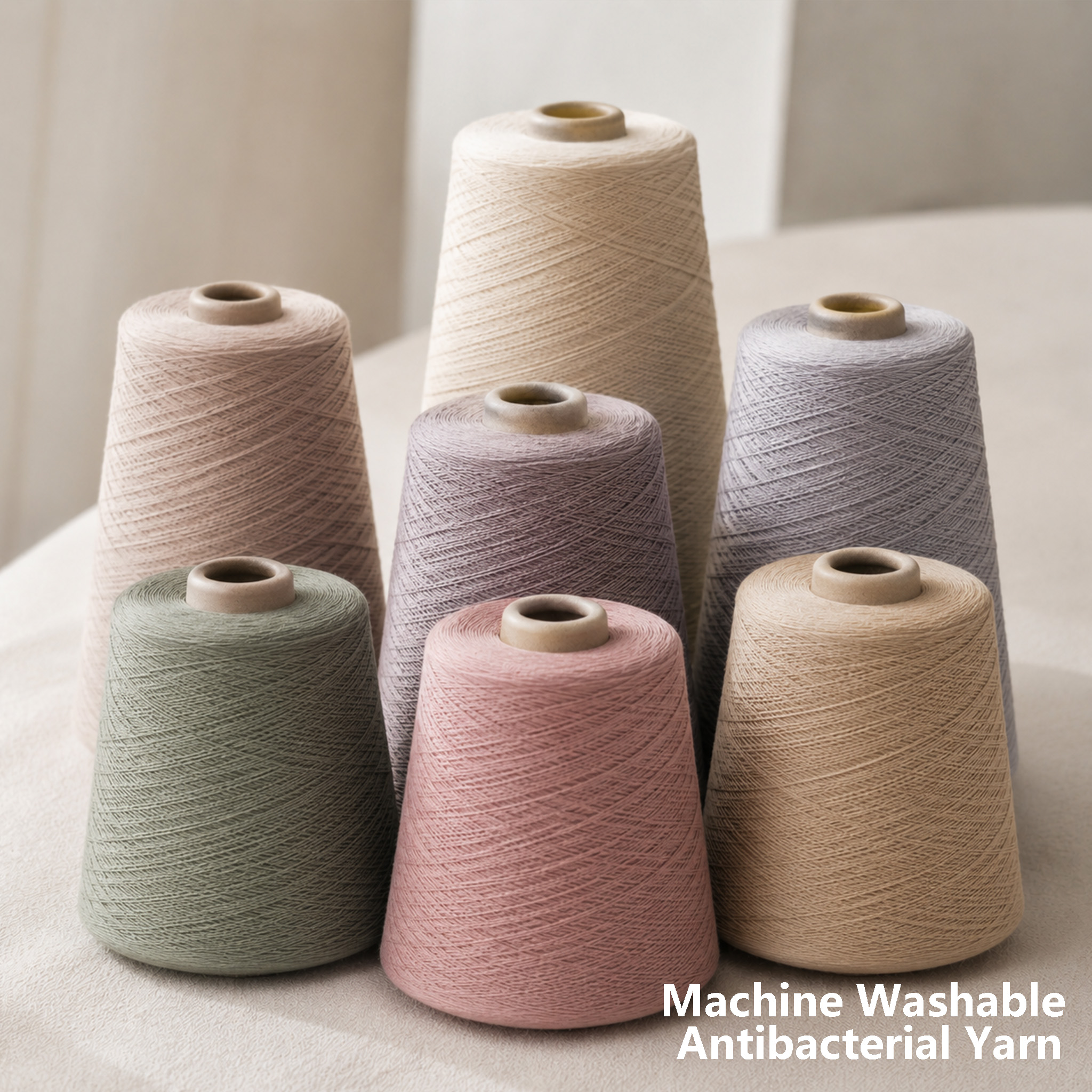
Machine Washable Antibacterial Yarn YX-WASH-001 — the base construction examined in this guide.
This guide treats post-wash failure as a specification problem rather than a yarn defect. It is written for product teams, knit technologists and sourcing managers who are already past the discovery stage: the antibacterial claim is on the tech pack, the fabric has been approved on hand feel, and the open question is whether both survive the laundering cycle the end consumer will actually use.
The path runs in the order a real program runs. First, name what "failure" means in the four places a buyer notices it. Second, understand why an antibacterial claim weakens in home laundry even when nothing was wrong at the mill. Third, write wash-durability and hand-feel requirements as numbers your team owns. Fourth, re-specify the yarn around those numbers — here, Machine Washable Antibacterial Yarn YX-WASH-001. Fifth, validate before bulk, protect softness while raising durability, and pilot at a scale small enough to walk away from.
The yarn in question comes from MONALISHAMAGIC, the brand of Dongguan Yuexiong Textile Co., Ltd. — a yarn spinning mill in Dongguan, China, founded in 2016, operating a 2,000 sqm factory with a 20-engineer R&D team and an annual output of 1,000 tons, about 70% of which is exported.
What "Failure After Washing" Actually Looks Like
Failure is not a single event, and it is not automatically the antibacterial claim. In a knit program it surfaces in four places, and each one needs a different check. Three of the four are visible to the consumer; only one of them is the antibacterial claim. That asymmetry explains why a program can be technically correct and commercially wrong.
- The claim itself. The garment still carries an antibacterial statement, but the evidence behind it no longer describes the product as sold — because the laundering cycle in the report and the cycle on the care label are not the same thing.
- The surface. Pilling, fuzz and hairiness change how the knit reads in the hand and under light, and surface change is often noticed before any performance claim is questioned.
- The shape. Dimensional change shows up as length growth, width loss or a collar that no longer sits flat — a fit complaint that quietly undermines confidence in every other claim on the label.
- The hand. Softness, drape and smoothness are the reasons the style was approved. If durability is bought by making the knit firmer or drier, the product has been traded away to protect a claim.
Defining these four as separate acceptance criteria is the first real decision in the project, because each one routes to a different corrective action: a claim problem routes to testing and specification, a surface problem routes to fiber and twist, a shape problem routes to fabric structure and finishing, and a hand problem routes back to the yarn.
Why an Antibacterial Claim Loses Strength in Home Laundry
The treatment is a component of the yarn, not a surface story
Machine Washable Antibacterial Yarn YX-WASH-001 is built on an antibacterial finishing and antimicrobial functional treatment — described in the specification as a washable antibacterial technology. The material options behind that treatment include an antibacterial agent, a silver-ion antibacterial material, a zinc-based antibacterial material and a washable antibacterial treatment. The stated functional effect is that the yarn inhibits bacterial growth and helps keep textile products cleaner and fresher.
The critical sentence in the same specification is about durability: the yarn is suitable for repeated machine washing depending on material, process and testing requirements. That qualifier is not legal hedging — it is the actual engineering statement. Wash durability is a function of the base fiber, the treatment route and the test method used to prove it. Change any one of the three and the number moves. A buyer who treats "washable" as a property of the brand name rather than of a defined combination has skipped the only part that matters.
The test report and the home wash are two different cycles
An antibacterial and wash-resistance report only has meaning when it states three things: the test method, the number of laundering cycles applied, and the specimen actually tested. If those are missing, the claim has no boundary, and a claim without a boundary cannot be defended in a customer complaint, a retail audit or a relabeling decision. The mill can arrange SGS, GTTC or third-party antibacterial and wash-resistance testing according to buyer requirements; deciding which cycle to test to remains the buyer's job, because the buyer is the party that knows the market.
Fiber content is a separate obligation that travels with the claim
Re-specifying a yarn usually means changing the blend, and the blend is a declared value. China's Standardization Administration issued GB/T 29862-2026, an updated national standard for textile fiber content identification that replaces GB/T 29862-2013 and takes effect on 1 August 2027, as reported by SGS. Teams selling into or manufacturing in China should treat fiber-content verification as part of the same validation file as the antibacterial claim, not as a labeling afterthought — because both describe the same object to the same regulator.
The category context is real, but it is broad
Commercial research published by Fortune Business Insights projects the global textile yarn market at USD 121.99 billion in 2026, rising from USD 117.1 billion in 2025. That figure covers textile yarn broadly — natural, synthetic and blended — and does not isolate functional or antibacterial yarn, so it is useful as category background and not as a demand estimate for this product family.
Step 1 — Write the Wash-Durability and Hand-Feel Requirements First
A yarn specification cannot be evaluated against an unwritten requirement. Before any sample is requested, the product team should fix six values on one page and treat them as the acceptance criteria for the whole project.
- Claim horizon. The number of home launderings the antibacterial statement must survive, expressed as a count, not an adjective. This is a commercial decision about the market and the price point; it is not a value the mill can choose for you.
- Laundering route. Wash temperature band, detergent type and drying method, written down, so that the lab cycle and the care label describe the same process.
- Retained hand criteria. Which sensory attributes must survive — softness, smoothness, drape, dryness — and in what order of priority when they compete.
- Colour and surface limits. Acceptable change in shade, staining and surface fuzz after the claim horizon.
- Dimensional tolerance. Permitted length and width change for the finished garment, not only for the greige fabric.
- Acceptable evidence. Which third-party reports will be accepted, and the minimum content each report must contain.
Written this way, the brief does something a feature list cannot: it tells the supplier exactly which trade-off to solve for. "Antibacterial and machine washable, keep it soft" invites a generic sample. "Antibacterial claim must survive the stated cycle count under the stated route, with softness ranked first and dryness second" produces a yarn decision.
Step 2 — Re-Specify the Yarn Around Those Requirements
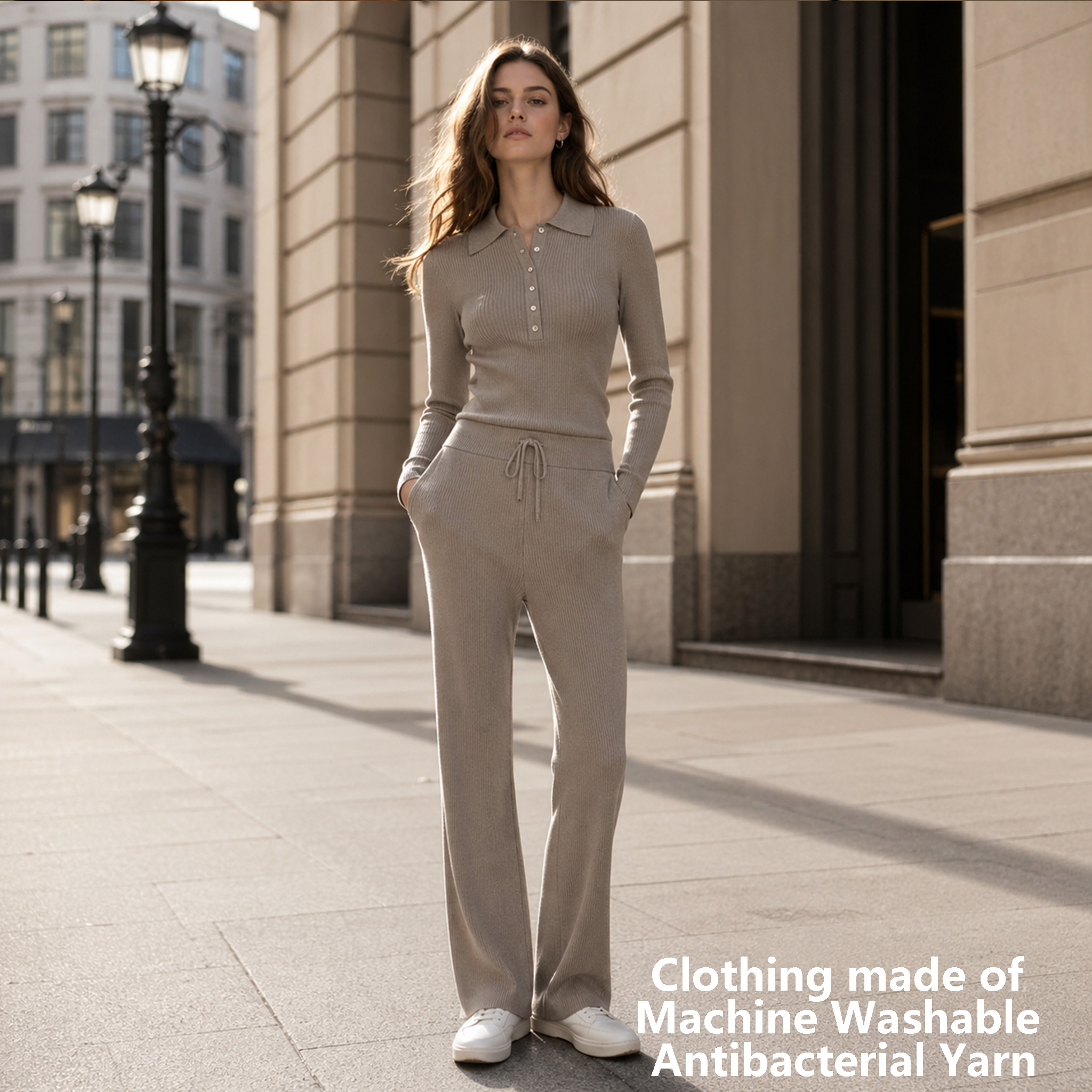
Knit apparel built on machine washable antibacterial yarn — the end use this specification is written for.
YX-WASH-001 is a functional yarn engineered so that the antibacterial claim and the machine-wash requirement are handled in the same construction. Its functional trigger is the antibacterial finishing and antimicrobial functional treatment; its stated response is antibacterial protection with a soft hand feel and wearable comfort — the pairing that most often breaks in programs where durability is retrofitted onto a soft base.
Four specification levers determine whether it fits a given knit:
- Base fiber. Options documented for this yarn include cotton, linen, cashmere, wool, mohair, alpaca, Tencel, silk, paper yarn, raffia yarn, polyester, nylon, cotton blends, wool-cashmere blends, viscose blends, acrylic blends, fancy yarn and chenille. The base fiber governs hand feel, drape and how the knit ages — the antibacterial treatment rides on top of that decision rather than replacing it.
- Yarn count. Customizable from 0.5/1 NM to 200/2 NM, which spans coarse gauge outerwear through fine-gauge next-to-skin knitwear. Count selection is a comfort decision as much as a machine decision.
- Treatment and structure. The antibacterial treatment, softness, twist and structure are all listed as customizable, which is exactly where the durability-versus-hand-feel trade-off gets resolved.
- Colour. Natural white, black, grey and beige are standard directions, with custom dyed colours, custom blended colours and brand-exclusive colours available — relevant because a re-specification that changes dye route can reopen the colour-fastness question.
The yarn is compatible with knitting, weaving, embroidery, crochet, jacquard, sewing, garment decoration and accessory decoration, and the supplier notes that its functional yarns run on standard knitting and weaving equipment without special machine modification. For a team re-specifying an existing style, that matters: the change can often be absorbed inside the current development budget instead of triggering a machine or process investment.
Which antibacterial route to sample — and what it does not tell you
| Route listed in the specification | What the document states | Question to settle at sampling |
|---|---|---|
| Silver-ion antibacterial material | Listed as an available antibacterial material option for this yarn | How does the finished knit read in the hand after your stated cycle count? |
| Zinc-based antibacterial material | Listed as an available antibacterial material option for this yarn | Does the colour route stay stable under your laundering route? |
| Washable antibacterial treatment | Described as the technology behind the yarn's machine-wash positioning | Which test method and cycle count will the third-party report state? |
| Antibacterial agent (general) | Listed as an available antibacterial finishing material | Does the specification name the exact agent for traceability? |
The table is deliberately a list of questions rather than a ranking. The supplier's documentation names these material routes as available options; it does not publish comparative hand-feel or durability outcomes for them, and no such comparison should be assumed. The route is settled by sampling on your fabric, not by reading a catalogue.
Step 3 — Validate Before Bulk: A Five-Point Test Set
Validation is where most programs either earn their claim or discover it was never theirs. Five checks cover the gaps described earlier. Across its product range, the mill documents testing support that includes fiber composition, colour fastness, pilling resistance, dimensional stability, shrinkage and washability, with SGS, GTTC, OEKO-TEX, GRS and OCS or third-party testing arranged to buyer requirements; for YX-WASH-001 specifically, SGS, GTTC or third-party antibacterial and wash-resistance testing can be arranged. The company also states that its products are certified to GRS, BCI and OEKO-TEX.
| Check | What it protects | What to require in the report |
|---|---|---|
| Fiber composition | Declared blend accuracy on the label and in the claim file; also the basis for fiber-content identification under GB/T 29862-2026 from 1 August 2027 | Tested composition percentages by fiber, matched against the tech pack |
| Colour fastness | Shade retention and staining after the laundering route on the care label | Method, cycle count, change and staining results |
| Pilling resistance | Surface appearance and the perceived quality of the hand over wear and laundering | Method, grading scale used and the grade assigned |
| Dimensional stability | Garment fit and length retention after the claim horizon | Measured change on the finished garment, not only on greige fabric |
| Antibacterial and wash-resistance | The claim itself — the only check that speaks directly to the antibacterial statement | Method, cycle count, specimen description and result, from SGS, GTTC or a third party |
Two habits make this set work. First, test the fabric as it will be sold — same blend, same count, same finish, same colour route — because a result obtained on a development bench does not automatically transfer to a bulk lot. Second, ask for the report before the purchase order, not after. A test requested to confirm a decision is cheap; a test requested to explain a complaint is not.
Step 4 — Protect Hand Feel While Raising Wash Durability
Durability and softness pull in opposite directions often enough that the trade-off has to be managed explicitly rather than assumed away. YX-WASH-001 is specified with both a washable antibacterial positioning and a stated soft hand feel, and the specification exposes several levers for holding that balance: base fiber selection, yarn count, twist, structure, softness and the antibacterial treatment itself are all customizable.
In practice, the sequence that protects hand feel is: choose the base fiber for touch first, then choose the count for the gauge the machine will run, then adjust twist and structure for surface behaviour, and only then confirm the antibacterial route on the finished fabric. Reversing that order — selecting the treatment first and fitting the fiber around it — is where softness usually gets sacrificed, because every later decision becomes a compensation.
A note on limits, stated by the supplier's own application documentation: functional products may fail under high temperature and prolonged sun exposure, while regular products generally do not. This is a portfolio-level caution about how functional yarns are stored, finished and presented, and it belongs in the product team's handling instructions rather than in the marketing copy.
Step 5 — Sample, Pilot, Then Scale
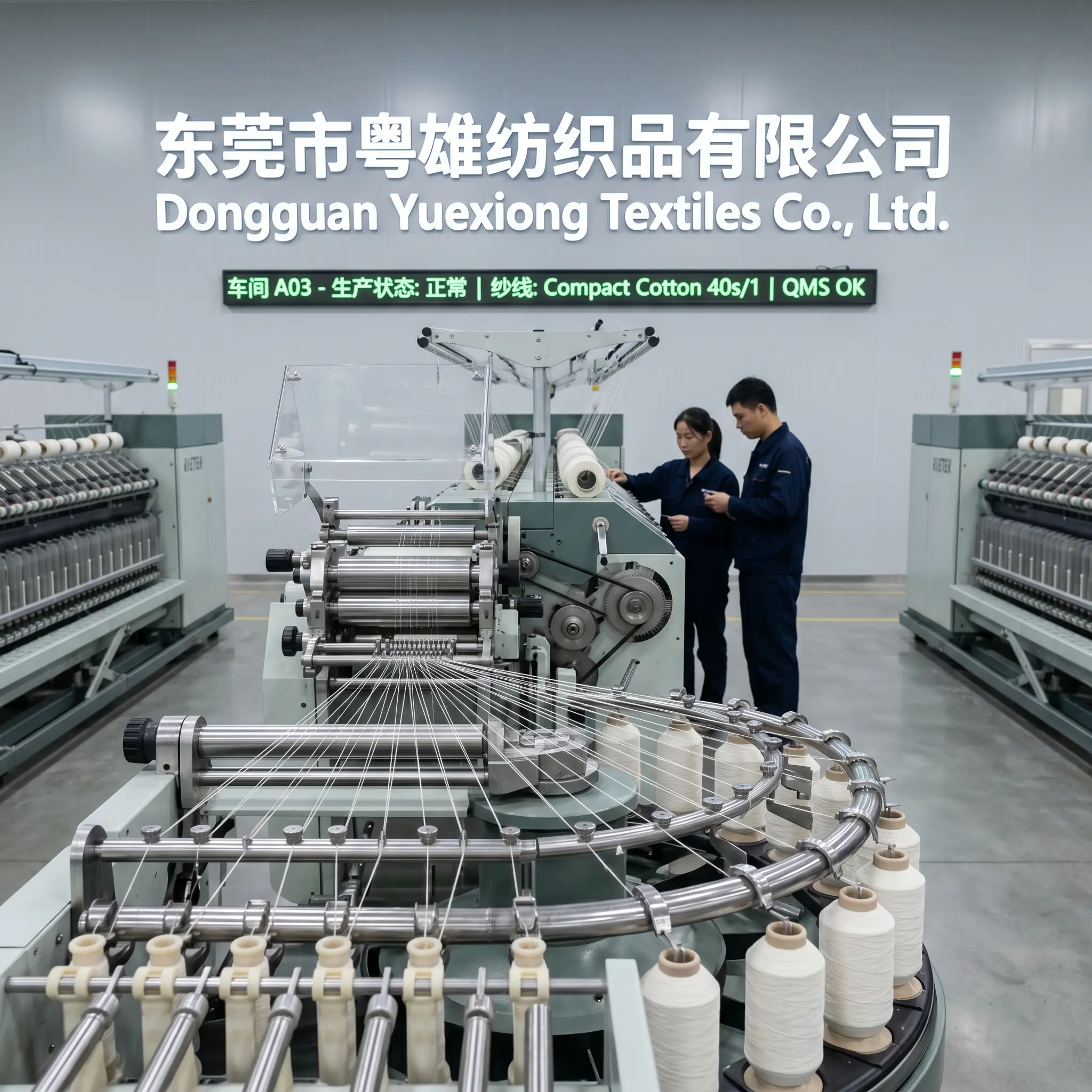
Production environment at Dongguan Yuexiong Textile Co., Ltd., the mill behind the MONALISHAMAGIC brand.
Validation is worthless if it happens at a scale the program cannot afford to repeat. The order of operations that keeps risk proportional is: hand-feel sample, fabric development, small pilot, then bulk.
- Hand-feel and fabric-development sampling. Sample support is available for antibacterial effect testing and product development, and small-batch customization is offered. Sample the count and base fiber you intend to buy, not the closest available substitute.
- Low minimum entry. The mill quotes a 5 KG minimum order, which is small enough to run a genuine hand-feel and laundering trial before committing to a production lot.
- Lead time planning. Standard lead time is quoted at 7–15 days, with monthly capacity of 1,000 tons and inspection provided before shipment. For a re-specification project, the practical value of that lead time is iteration speed: a sample cycle that closes in two weeks allows several rounds of correction before a season locks.
- OEM/ODM framing. The mill operates as an OEM/ODM supplier with customization on composition, colour, specification and functional parameters, supported by a 20-engineer R&D team and after-sales support covering performance and durability consultation, reorder assistance and colour matching.
Where This Specification Fits
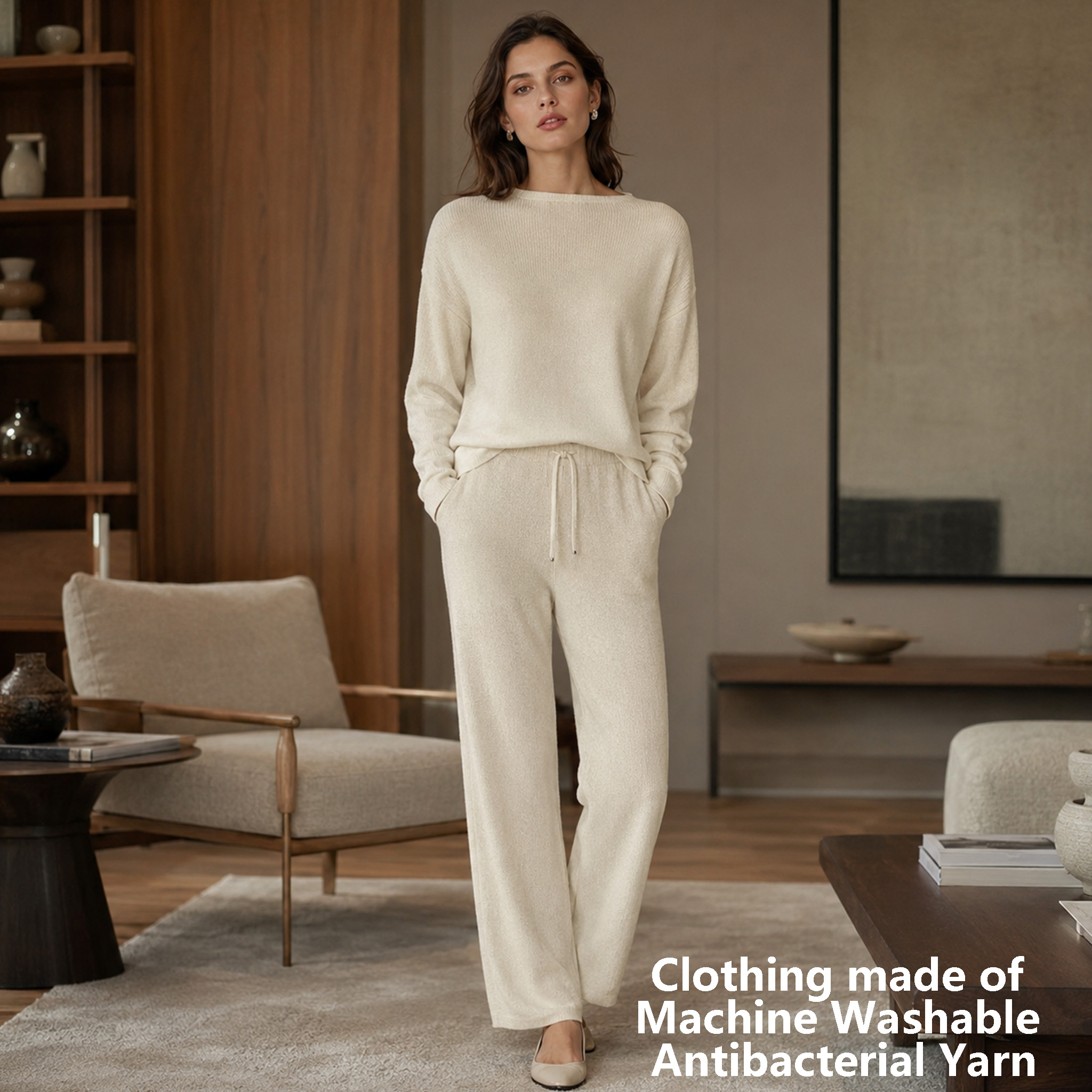
Knitwear and fashion apparel built on the washable antibacterial yarn route.
The yarn's documented application fields run across fashion apparel, knitwear and sweater manufacturing, children's clothing, sportswear, outdoor clothing, underwear, socks, hats, scarves and gloves, baby textile products, skin-friendly apparel, medical care textiles, health textile products, uniforms and workwear, home textiles, bedding and towels. The assigned topic focuses on three: knitwear, fashion apparel and home textiles — and each one stresses a different part of the specification.
- Knitwear. Hand feel is the commercial variable, so the base fiber and twist decisions dominate. Fine-gauge programs can draw on the upper end of the 0.5/1 NM to 200/2 NM count range; the wash-durability requirement should be written before the count is fixed.
- Fashion apparel. Colour is the commercial variable, which makes colour fastness and the dye route part of the same conversation as the antibacterial treatment rather than a separate brief.
- Home textiles. Laundering frequency and wash temperature tend to be higher and the claim horizon longer, so the test cycle — not the yarn alone — becomes the specification that decides whether the program is viable.
FAQ
Which test documents actually prove an antibacterial knit survives washing?
A document proves it only when it states the test method, the number of laundering cycles applied and the specimen tested. For YX-WASH-001, SGS, GTTC or third-party antibacterial and wash-resistance testing can be arranged according to buyer requirements, and the company states its products hold GRS, BCI and OEKO-TEX certification. A certificate naming the yarn without a stated cycle count does not describe the product as sold.
Can a wash-durable antibacterial yarn still feel soft?
Yes — softness is a specified variable here, not a by-product. The yarn's documented response effect is antibacterial protection with a soft hand feel and wearable comfort, and softness, twist, structure and base fiber are all customizable. The realistic constraint is that the balance is set during sampling, so the hand-feel target should be ranked against durability before the first sample is requested.
What yarn counts and base fibers can be specified?
Yarn count is customizable from 0.5/1 NM to 200/2 NM. Base fiber options documented for this yarn include cotton, linen, cashmere, wool, mohair, alpaca, Tencel, silk, paper yarn, raffia yarn, polyester, nylon, cotton blends, wool-cashmere blends, viscose blends, acrylic blends, fancy yarn and chenille.
What is the minimum order for a trial?
The quoted minimum is 5 KG, with small-batch customization available. That minimum is intended to support hand-feel and fabric development before a production commitment; price per kilogram is not published and is quoted against composition, count, treatment and colour.
Can we get a sample for our own wash testing before bulk?
Yes. Sample support is available for antibacterial effect testing and product development, and the mill provides inspection before shipment. The most useful request is a sample of the exact count, blend, colour route and treatment you intend to buy, so that your laundering trial and the bulk lot describe the same object.
What is the lead time, and how does reordering work?
Quoted lead time is 7–15 days, with monthly capacity of 1,000 tons and 1,000 tons annual output. After-sales support includes reorder assistance, sample reconfirmation, colour matching support and consultation on functional yarn performance and durability. For a re-specification project, the most efficient next step is to send the six-part requirement brief described above — claim horizon, laundering route, retained hand criteria, colour and surface limits, dimensional tolerance and acceptable evidence — and let the sample round answer the open questions.
Conclusion
An antibacterial knit that fails after washing usually fails at the specification stage, not at the spinning stage. The claim, the hand feel and the actual laundering cycle have to be written down together, and each of the four failure signatures — claim, surface, shape, hand — needs its own acceptance criterion before a yarn is chosen.
Machine Washable Antibacterial Yarn YX-WASH-001 gives a product team a construction designed for machine-washable textile applications, with the antibacterial treatment, base fiber, count from 0.5/1 NM to 200/2 NM, twist, structure and softness all adjustable in one place, backed by SGS, GTTC or third-party antibacterial and wash-resistance testing, a 5 KG trial minimum and a 7–15 day lead time. What it cannot do is decide your claim horizon — that number belongs to your market. Once it is written, the five-point validation set in this guide converts it into evidence.
For teams starting a sample round, the full product range, specifications and contact details are collected in the MONALISHAMAGIC product brochure (PDF), and technical questions on wash-durability requirements can be taken up directly with the mill's technical team.
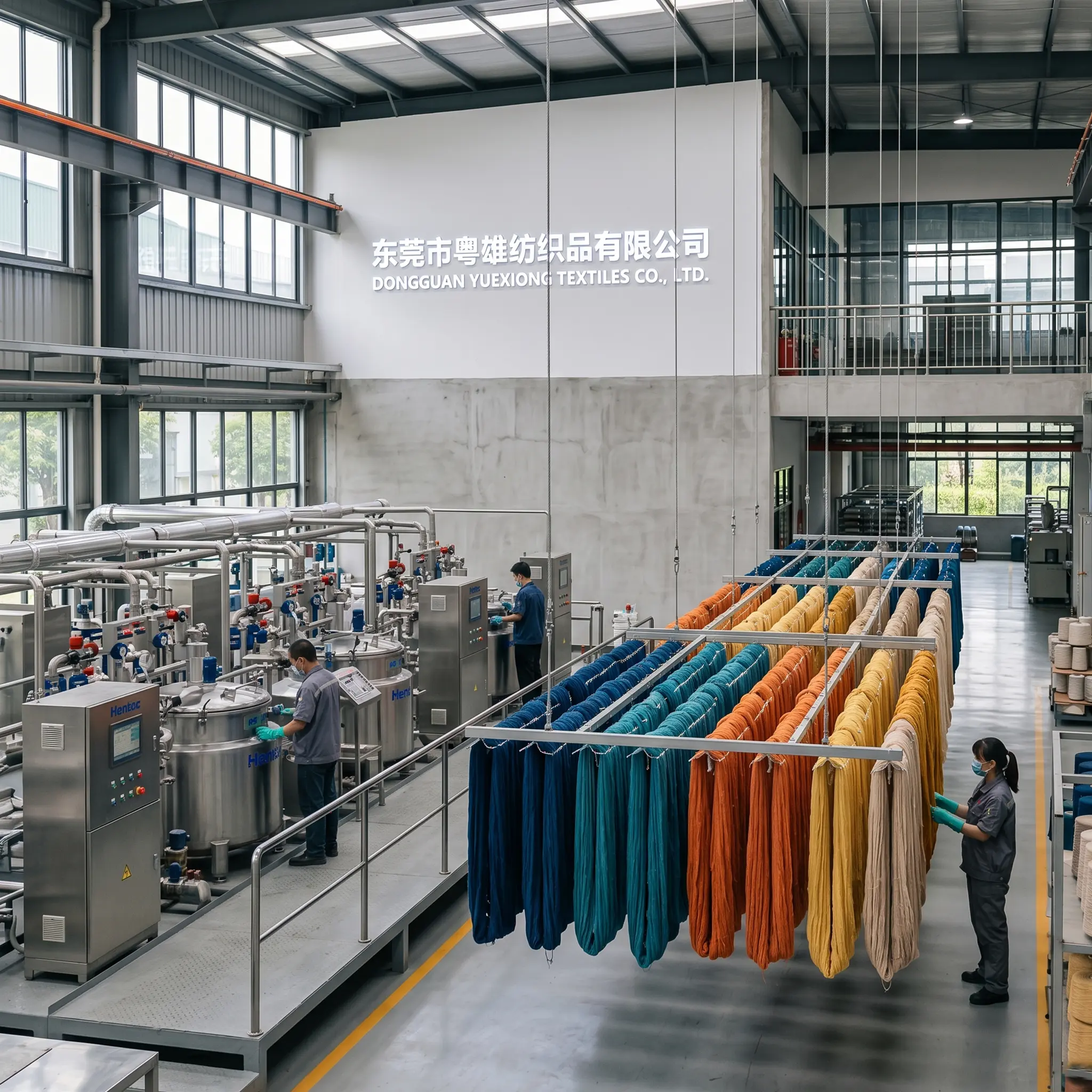
Sample requests and technical documentation for washable antibacterial programs are handled by the mill's team.
Have Questions or Need More Details?
Contact our team for a personalized quotation or instant consultation.
Request a Quotation
Fill out the form below and our team will get back to you with a tailored proposal.
WhatsApp Direct Chat
Prefer to chat in real-time? Message us on WhatsApp for instant assistance & quick answers.
- Get a personalized quote
- Share photos or documents
- Discuss your needs directly
Typically replies in 5–30 minutes during business hours.