
Functional Yarn Compliance Guide: Turning Market Requirements Into a Supplier Checklist
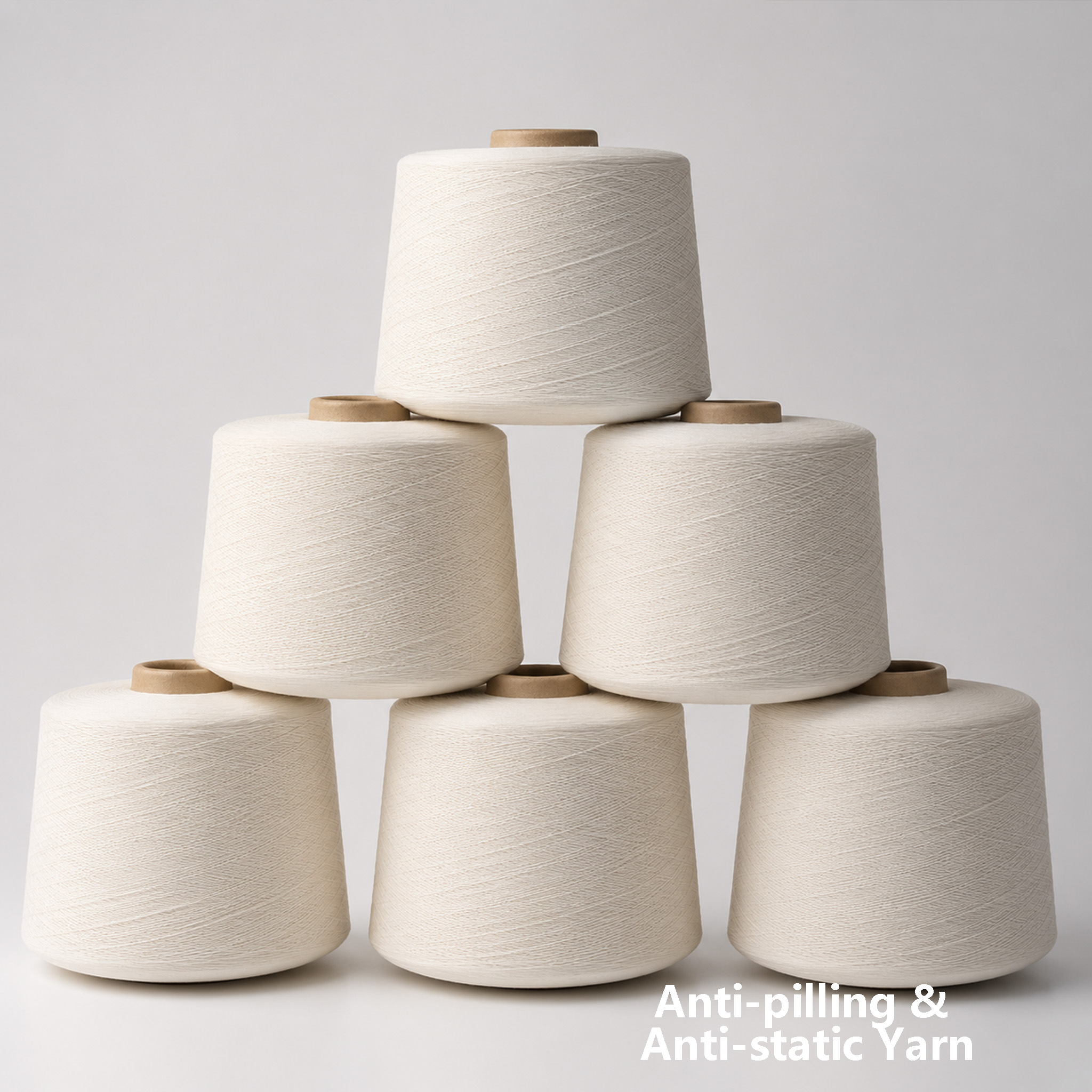
A functional yarn claim is only useful when the buyer can match it to a document, a scope, and a test result. The practical compliance task is not to collect logos; it is to turn each market or customer requirement into a written claim, identify the right evidence type, and check that the evidence covers the exact yarn, color, count, finish, and shipment date. This guide provides that supplier checklist for functional yarn sourcing before sampling and bulk orders.
The central distinction is simple: a certificate usually proves a management system, chain of custody, or product-content claim within a defined scope; a test report usually proves that a specific sample met a test method under stated conditions. Neither document replaces the other. Buyers who treat an FSC certificate as proof of anti-pilling performance, or a pilling test report as proof of recycled content, create avoidable approval risk.
Why functional yarn compliance is a claim-mapping problem
Functional yarn is a family of products rather than one material. The same supplier may offer FSC certified paper yarn, anti-pilling and anti-static yarn, waterproof antibacterial yarn, machine washable antibacterial yarn, far-infrared heating yarn, reflective yarn, luminous yarn, photochromic yarn, thermochromic yarn, and natural-fiber blends. Each claim triggers a different evidence path. A compliance file therefore needs a claim matrix, not a single certificate folder.
Destination-market buyers and brand customers often ask for different documents at different stages. At the research stage, they ask whether a certificate exists. At the evaluation stage, they ask whether the certificate covers the quoted product and whether the test report matches the sample that will be ordered. At the bulk stage, they ask whether the production lot still matches the approved sample and whether the certificate is still valid. The checklist in this guide follows that sequence.
Industry background: certificates, test reports, and buyer expectations
Textile compliance language mixes several document types. FSC is associated with forest-derived material and chain of custody. BCI is associated with Better Cotton chain of custody. GRS, OCS, and RCS are associated with recycled or organic content claims. OEKO-TEX is named in the company's certification and testing-support statements. SGS and Intertek are testing organizations whose reports are often requested as supporting evidence. GTTC is another testing route named in supplier testing-support statements. These labels are not interchangeable, and a laboratory name is not itself a certificate type.
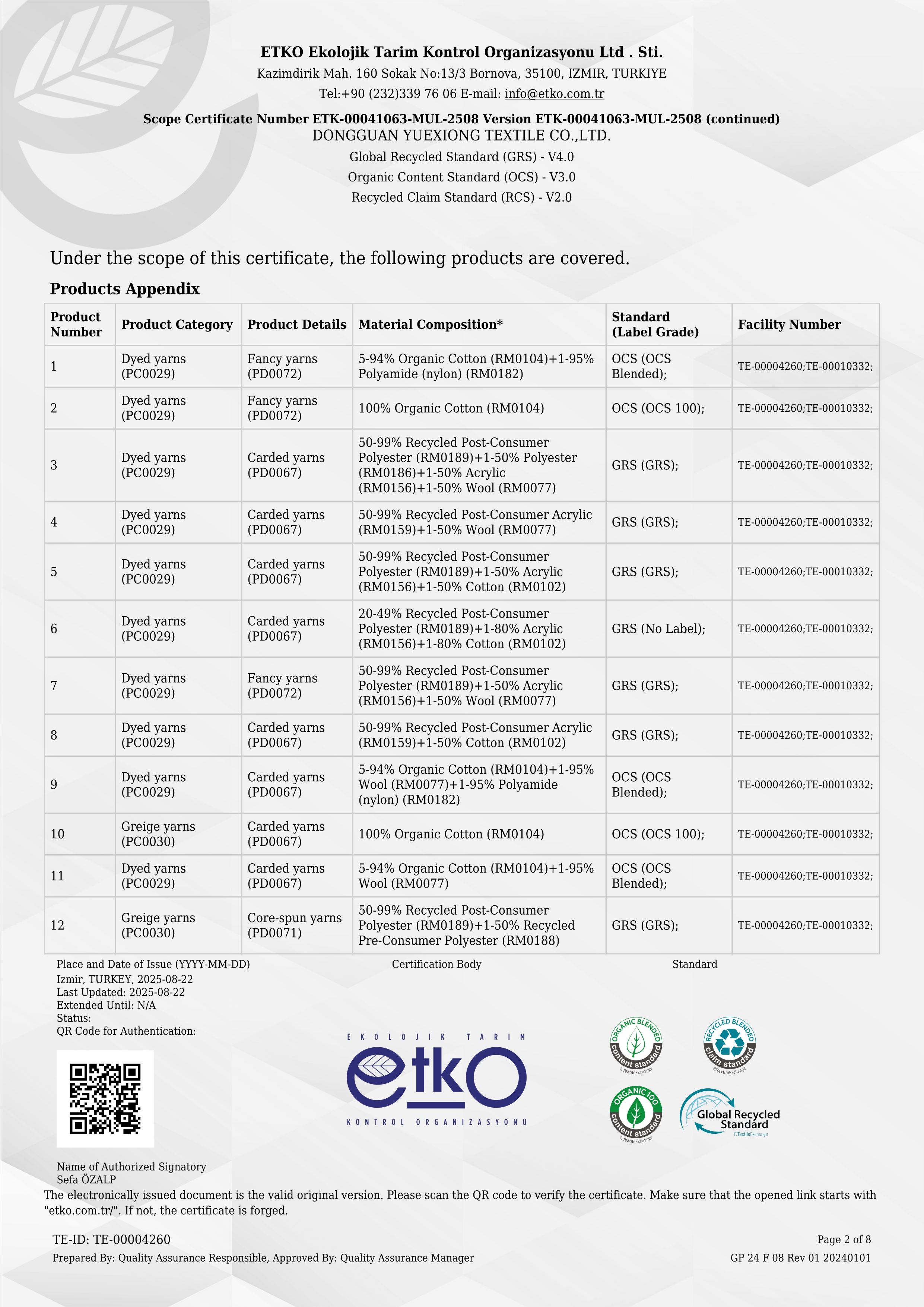
Dongguan Yuexiong Textile Co., Ltd. (MONALISHAMAGIC) is a textile manufacturer and vertically integrated yarn spinning mill. The company profile lists a founding year of 2016, a 2,000 sqm factory, 50 employees, 1,000 tons annual output, 20 engineers, a 70% export ratio, and global markets. It describes OEM/ODM production, specialty yarn development, and a portfolio that includes cashmere, organic cotton, recycled nylon, and functional yarns. The profile also states that the company uses proprietary patented waterless dyeing technology and that its products are certified by GRS, BCI, and OEKO-TEX. Buyers should still request the current certificate version for the exact product and shipment date, because certificates carry scope and validity conditions.
The company website is MONALISHAMAGIC. The patent record ZL 2023 1 1305729.5 covers a waterless dyeing preparation process for color-changing yarns and the yarns prepared therefrom, issued by CNIPA on 2024-04-16 and valid to 2043-10-10. That patent is relevant to process capability; it is not a substitute for a product-specific performance test report.
The four-part claim-to-evidence checklist
Use four questions for every claim. First, what exactly is being claimed in buyer language? Second, which document type can support that claim? Third, does the document scope cover the quoted product, material, facility, market, and period? Fourth, does the test report match the sample and test conditions that the buyer will approve? If any answer is missing, the claim is not ready for the compliance file.
1. Write the claim as a measurable requirement
Replace broad labels with specific wording. “FSC certified paper yarn” should become “paper yarn supplied under a valid FSC Chain of Custody certificate whose scope includes paper yarn and the relevant trading activity.” “Anti-pilling” should become “pilling resistance tested on the agreed fabric structure, yarn count, color, and finish, with a stated test method and result.” “Waterproof antibacterial” should become “water-repellent performance and antibacterial performance tested under named methods and acceptance criteria.” This step prevents a supplier from answering a different question than the one the buyer asked.
2. Separate certificates from test reports
Ask for the certificate when the claim concerns chain of custody, content, or a certified management system. Ask for a test report when the claim concerns measured performance, such as fiber composition, color fastness, pilling resistance, dimensional stability, water repellency, antibacterial performance, or washing durability. Some claims need both. For example, an FSC paper yarn claim needs the FSC certificate for content and chain of custody, plus any required performance tests for the finished fabric.
3. Check scope before accepting the document
Scope is where many compliance files fail. Check the certificate number, issuing body, standard version, product or material scope, facility or trading activity, issue date, and expiry date. Check whether the scope covers yarn, fabric, garment, trading, warehousing, or dyeing. A certificate for one activity does not automatically cover another. The FSC Chain of Custody certificate ESTS-COC-230318, for example, was issued by Extensive Standard Technical Services Co., Ltd. (ESTS) with a scope of trading of Rayon/synthetic fibres and paper yarn, under FSC-STD-40-004 and FSC-STD-50-001, issued 2024-09-13 and valid to 2029-09-12. That supports the FSC chain-of-custody claim within that scope; it does not prove pilling resistance or color fastness.
4. Match the test report to the sample and stage
A test report should identify the sample, the test method, the result, the laboratory, the report number, and the date. It should also describe the material or fabric tested, including fiber composition, yarn count, color, finish, and fabric structure where relevant. A report on a different count, color, or fabric structure may not represent the quoted product. The same logic applies to bulk approval: the approved sample, the test report, and the bulk shipment should be traceable to the same specification.
Claim-to-document comparison for common functional yarn requirements
The table below maps common buyer claims to the document to request and the limit of that document. It is a selection aid, not a claim that every product carries every certificate.
| Buyer claim | Document to request | What it can support | What it does not prove by itself |
|---|---|---|---|
| FSC certified paper yarn | FSC Chain of Custody certificate and transaction documents; check product scope and validity. Example: ESTS-COC-230318, scope includes paper yarn, valid to 2029-09-12. | Chain of custody for FSC-certified material within the stated scope. | Pilling, color fastness, dimensional stability, or waterproof performance. |
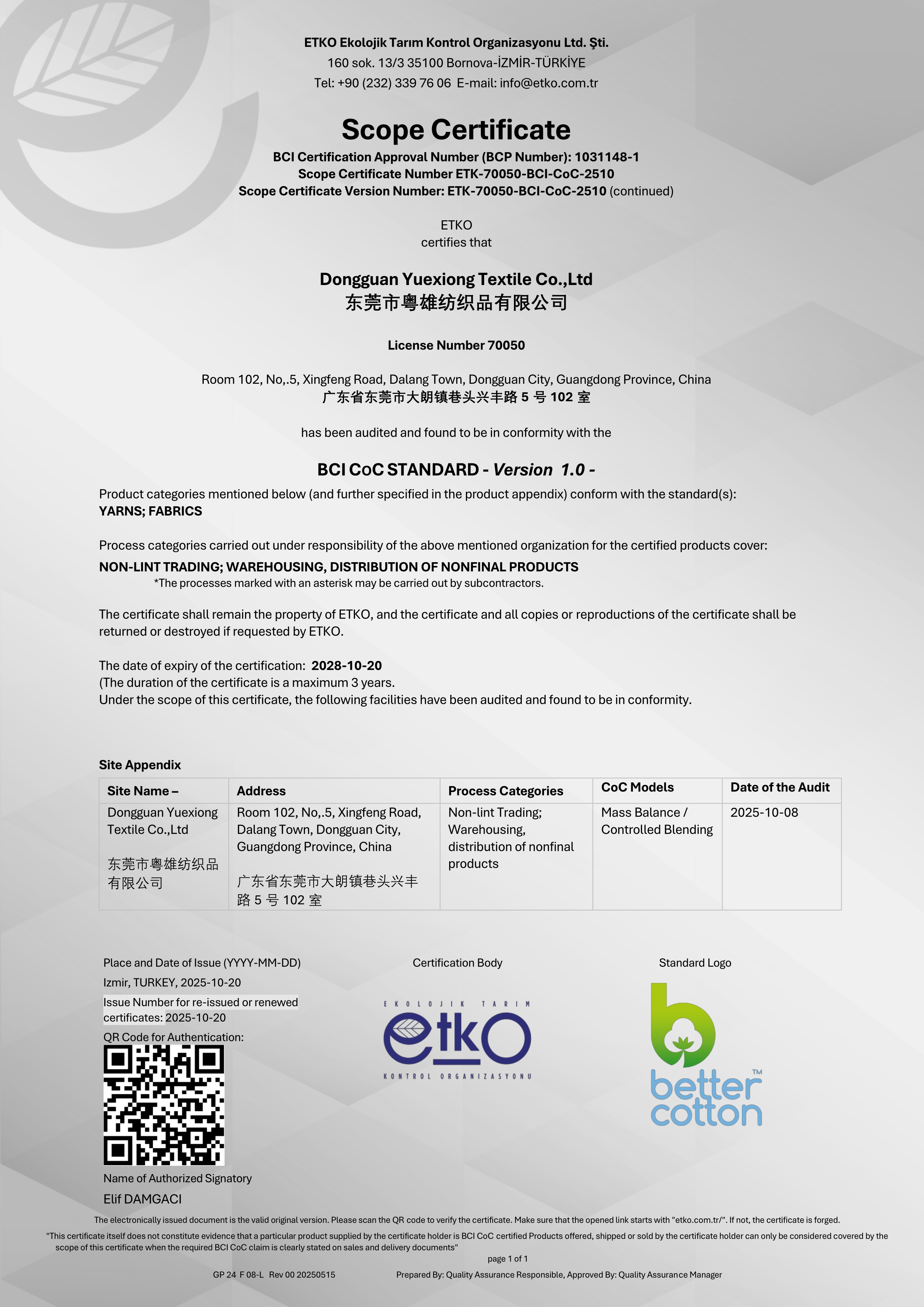
| BCI cotton content | BCI CoC certificate; example ETK-70050-BCI-CoC-2510, scope non-lint trading and warehousing of yarns and fabrics, issued 2025-10-20 and valid to 2028-10-20. | Chain of custody for BCI cotton within the stated scope. | Organic status, performance claims, or coverage of a different facility or product. |
| Recycled or organic content | Current GRS, OCS, or RCS certificate covering the exact material and activity; check standard version, scope, and expiry. | Content and chain-of-custody claim within the certificate scope. | Performance, durability, or suitability for a specific end use. |
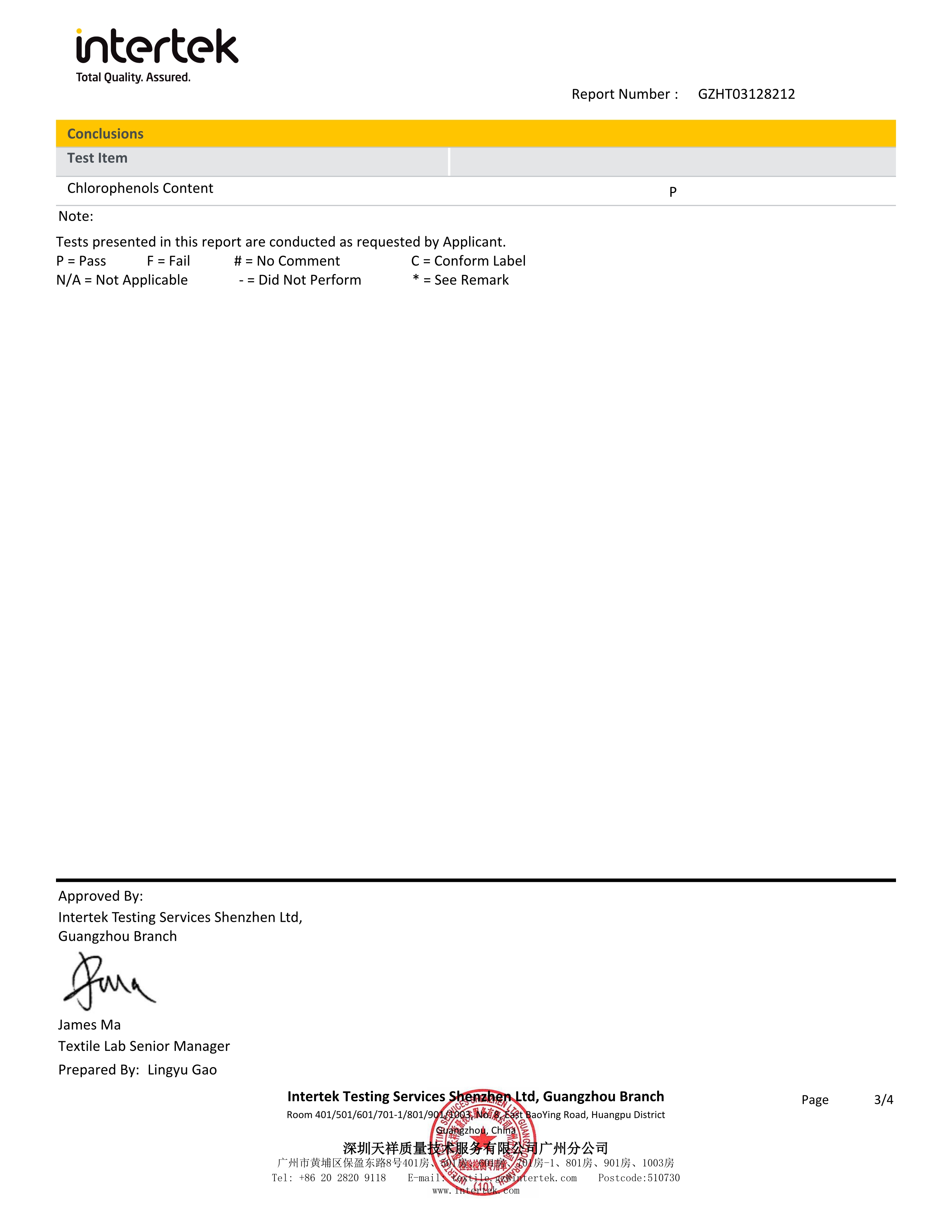
| Anti-pilling performance | Pilling resistance test report from SGS, GTTC, or a third-party laboratory on the agreed fabric and sample. | Tested pilling resistance for the sample under the reported method and conditions. | Zero pilling, identical results for every color or count, or performance after unlimited washes. |
| Waterproof antibacterial protection | Water-repellency and antibacterial test reports; define the test method, acceptance level, and wash cycles. | Tested water-repellent and antibacterial performance for the sample under stated conditions. | A universal waterproof grade, medical protection, or performance beyond the tested conditions. |
| Machine washable antibacterial yarn | Antibacterial and wash-resistance test reports; confirm the intended machine-wash program. | Tested antibacterial performance and wash durability for the sample. | Unlimited wash cycles or identical results across all detergents and temperatures. |
| Fiber composition, color fastness, dimensional stability | Test reports covering the agreed yarn or fabric, with sample description and test method. | Measured results for the tested sample. | Performance of a different blend, color, count, or fabric construction. |
Common interpretation gaps between certificates and test reports
A certificate is not a performance test. An FSC or BCI certificate can support a content or chain-of-custody claim, but it does not tell the buyer how the yarn will resist pilling, fading, shrinkage, or water. A test report is needed for those performance questions. Conversely, a pilling test report does not prove recycled content or responsible fiber sourcing.
A laboratory name is not a certificate type. Buyers often ask for “SGS” when they mean an independent test report. The useful request is more specific: the test method, the sample identity, the report number, the result, and the date. The same applies to GTTC or any third-party laboratory. The document must answer the buyer’s claim, not merely carry a recognizable logo.
“Waterproof” needs a definition. The Waterproof Antibacterial Yarn product documentation describes water-repellent finishing and a water-repellent surface effect that helps reduce water absorption and surface wetting in light rain, splashes, and daily outdoor environments. That is not the same as a universal waterproof rating for every end use. Buyers should state the intended exposure, test method, and acceptance level before sampling.
Antibacterial claims need test conditions. The product documentation describes antibacterial finishing that inhibits bacterial growth and helps keep textiles cleaner and fresher. It does not support a medical-device or pathogen-specific claim unless a specific test report supports that wording. Buyers should ask which organisms, methods, and wash cycles were tested, and whether the claim applies to the yarn or the finished fabric.
Expiry and renewal are part of the evidence. A certificate can be valid at issue and out of date at shipment. The buyer’s checklist should compare the certificate expiry date with the planned shipment date and request the current version when needed. A multi-standard certificate may also cover several standards under one number; check which standard supports which claim rather than treating the whole document as a blanket approval.
Scope can be narrower than the product name. A certificate may cover trading and warehousing but not dyeing, or a specific fiber but not a finished garment. The FSC record cited above covers trading of Rayon/synthetic fibres and paper yarn. That is useful for the paper-yarn chain of custody, but the buyer should still confirm that the quoted product and transaction fall within the certified scope. The same discipline applies to BCI, GRS, OCS, RCS, and OEKO-TEX documentation.
Step-by-step supplier checklist before sampling and bulk
- Build a claim matrix. List each customer or market requirement in one column, the buyer’s exact wording in the next, the required document or test in the third, the acceptance criterion in the fourth, and the owner and due date in the fifth. Keep the matrix with the sourcing file so that sampling and bulk approval use the same requirements.
- Classify each requirement. Mark whether it is a content claim, a chain-of-custody claim, a performance claim, a labeling claim, or a market-access document. This prevents a certificate from being offered for a performance question, or a test report from being offered for a content question.
- Request the full document, not a cropped image. Ask for the certificate or report number, issuing body, standard version, scope, issue date, expiry date, and all pages needed to read the sample description and results. A logo on a product page is not a compliance document.
- Verify the certificate scope. Check product, material, facility, activity, and market. Confirm that the certificate is current for the planned shipment date. If the certificate covers trading but not dyeing, or a fiber but not the finished fabric, record that limit in the claim matrix.
- Verify the test report sample. Compare the report’s sample description with the quoted yarn count, blend, color, finish, and fabric structure. Ask whether the test was performed on yarn, greige fabric, dyed fabric, or a finished garment. A result from a different stage may not represent the bulk product.
- Agree the test plan before sampling. Decide which tests will be performed, on which sample, by which laboratory or third-party route, and against which acceptance criteria. The product documentation lists testing support for fiber composition, color fastness, pilling resistance, shrinkage, dimensional stability, tensile strength, washing durability, water repellency, antibacterial performance, SGS, GTTC, OEKO-TEX, GRS, OCS, AATCC, GB/T, or third-party testing, depending on the product. The exact scope should be written into the sampling plan.
- Confirm commercial terms that affect compliance work. The capability information lists OEM/ODM production, customization on yarn composition, color, specification, and functional parameters, a monthly capacity of 1,000 tons, a lead time of 7-15 days, a MOQ of 5 KG, inspection before shipment, global export markets, and after-sales support that includes certification and compliance document supply such as GRS, BCI, and OEKO-TEX, sample reconfirmation, color matching, and reorder assistance. These are commercial inputs to the checklist; they do not replace the documents themselves.
- Approve a bulk-consistency record. Keep the approved sample, the final claim matrix, the certificate copies, the test reports, and the signed product specification together. At reorder, compare the new certificate validity, test report scope, and product specification with the approved record before releasing bulk production.
Use cases: matching the checklist to the yarn program
FSC certified paper yarn for summer knitwear and bags
For a paper-yarn program, start with the FSC Chain of Custody certificate and confirm that the scope includes paper yarn and the relevant trading activity. The Washi Yarn documentation includes FSC paper yarn options, 100% paper yarn, paper-cotton and paper-Tencel blends, counts from 0.5/1NM to 200/2NM, and applications such as summer knitwear, hats, bags, and home textiles. Add performance tests where the end use requires them, such as color fastness, shrinkage, pilling resistance, or dimensional stability. The FSC certificate supports the content claim; the performance tests support the use-case claim.
Anti-pilling and anti-static yarn for winter knitwear
For an anti-pilling claim, request a pilling resistance test report on the agreed fabric, not just a product description. The Anti-pilling & Anti-static Yarn documentation describes a low-pilling fiber structure and anti-static treatment that reduce fabric pilling and static cling, with testing support for pilling resistance, anti-static performance, washing durability, SGS, GTTC, or third-party testing. The buyer should confirm the test method, the sample color and count, and whether the result applies to the finished garment. Anti-pilling means reduced pilling tendency under the tested conditions, not a guarantee that the fabric will never pill.
Waterproof antibacterial yarn for outdoor and daily protection
For an outdoor program, separate water repellency from antibacterial performance. The Waterproof Antibacterial Yarn documentation describes water-repellent finishing, antibacterial finishing, and testing support for water repellency, antibacterial performance, washing durability, SGS, GTTC, AATCC, GB/T, or third-party testing. The buyer should define the exposure level, test method, and wash cycles, then confirm that the report covers the actual yarn or fabric. If the customer’s label says “waterproof,” the buyer should confirm that the tested performance supports that wording for the intended market.
Machine washable antibacterial yarn for repeated-wash programs
For uniforms, home textiles, or repeated-wash knit programs, request antibacterial and wash-resistance test reports together. The Machine Washable Antibacterial Yarn documentation states that it is designed for machine washable textile applications and that repeated machine washing depends on material, process, and testing requirements. The buyer should confirm the wash program, the number of cycles tested, and the antibacterial acceptance criteria. A machine-washable description is not a substitute for a wash-durability report.
Cotton-wool and natural-fiber blends with content claims
For a cotton-wool blend, the content claim and the performance claim should be separated. The Cotton-Wool Blended Yarn documentation lists composition options such as 50% cotton 50% wool, 70% cotton 30% wool, BCI cotton, organic cotton, recycled cotton, RWS wool, and non-mulesed wool, with testing support for fiber composition, color fastness, pilling resistance, shrinkage, dimensional stability, BCI, RWS, GRS, OCS, OEKO-TEX, SGS, GTTC, or third-party testing. The buyer should request the certificate that matches the specific fiber claim, then request performance tests for the finished fabric. A BCI certificate supports the cotton chain of custody; it does not by itself prove warmth, pilling resistance, or color fastness.
FAQ
Which document proves FSC certified paper yarn?
Request the FSC Chain of Custody certificate and check that its scope includes paper yarn and the relevant trading activity. The certificate record ESTS-COC-230318, issued by ESTS under FSC-STD-40-004 and FSC-STD-50-001, covers trading of Rayon/synthetic fibres and paper yarn and is valid to 2029-09-12. That certificate supports the chain-of-custody claim within its scope. It does not prove pilling resistance, color fastness, or waterproof performance, so separate test reports are needed for those claims.
How should a buyer verify anti-pilling performance before a bulk order?
Ask for a pilling resistance test report on the agreed fabric, with the sample description, test method, result, laboratory, and date. Confirm that the sample matches the quoted yarn count, blend, color, and finish. The Anti-pilling & Anti-static Yarn documentation lists pilling resistance and anti-static testing support through SGS, GTTC, or third-party testing. Treat the result as tested performance for that sample, not as a promise of zero pilling for every color or end use.
What is the difference between a GRS, OCS, or RCS certificate and a test report?
A GRS, OCS, or RCS certificate supports a content or chain-of-custody claim within its scope and validity period. A test report supports a measured performance result for a specific sample. The buyer should check the standard version, scope, and expiry date of the certificate, then check the sample identity and test method in the report. One document does not replace the other. If a certificate is near or past its expiry date at the planned shipment date, request the current version before approval.
Can MONALISHAMAGIC arrange SGS, GTTC, OEKO-TEX, GRS, OCS, or third-party testing?
The product documentation states that testing support for SGS, GTTC, OEKO-TEX, GRS, OCS, or third-party testing can be arranged according to buyer requirements, depending on the product. The capability information also lists certification and compliance document supply, including GRS, BCI, and OEKO-TEX, as part of after-sales support. The buyer should still define the exact test method, sample, acceptance criteria, and document scope in the purchase or sampling plan.
What sample and MOQ terms should a buyer plan for?
The product and capability information lists small-batch customization, a MOQ of 5 KG, sample support for hand-feel testing, fabric development, and product sampling, and OEM/ODM customization on yarn composition, color, specification, and functional parameters. Buyers should confirm the sample quantity, test sample size, and whether the sample will be produced on the same specification as the bulk order. The sample should be approved against the claim matrix, not only against visual hand-feel.
What lead time should buyers plan for compliance review and bulk supply?
The capability information lists a lead time of 7-15 days. Compliance review can add time for test scheduling, report review, certificate renewal, or sample iteration, depending on the test scope and the buyer’s documentation requirements. Buyers should therefore lock the claim matrix and test plan before sampling, then allow time for document review before bulk release. For a current sample, certificate checklist, or brochure, buyers can download the MONALISHAMAGIC product brochure or contact the company through its website.
Conclusion: the checklist is the control point
Functional yarn compliance becomes manageable when each market requirement is converted into a claim, a document type, a scope check, and a sample-specific test. Certificates support content and chain-of-custody claims; test reports support performance claims; neither is a universal approval. The buyer’s control point is the claim matrix, supported by current certificates, sample-matched test reports, agreed acceptance criteria, and a bulk-consistency record.
Before sampling, ask for the full document, check its scope and expiry, and compare the test sample with the quoted yarn. Before bulk, confirm that the certificate and test report still cover the shipment date, the product, and the agreed specification. That sequence turns a folder of logos into a supplier checklist that can be reviewed, repeated, and defended.

Have Questions or Need More Details?
Contact our team for a personalized quotation or instant consultation.
Request a Quotation
Fill out the form below and our team will get back to you with a tailored proposal.
WhatsApp Direct Chat
Prefer to chat in real-time? Message us on WhatsApp for instant assistance & quick answers.
- Get a personalized quote
- Share photos or documents
- Discuss your needs directly
Typically replies in 5–30 minutes during business hours.