
How to Specify Machine-Washable Antibacterial Yarn: Count, Finish, and Test Parameters
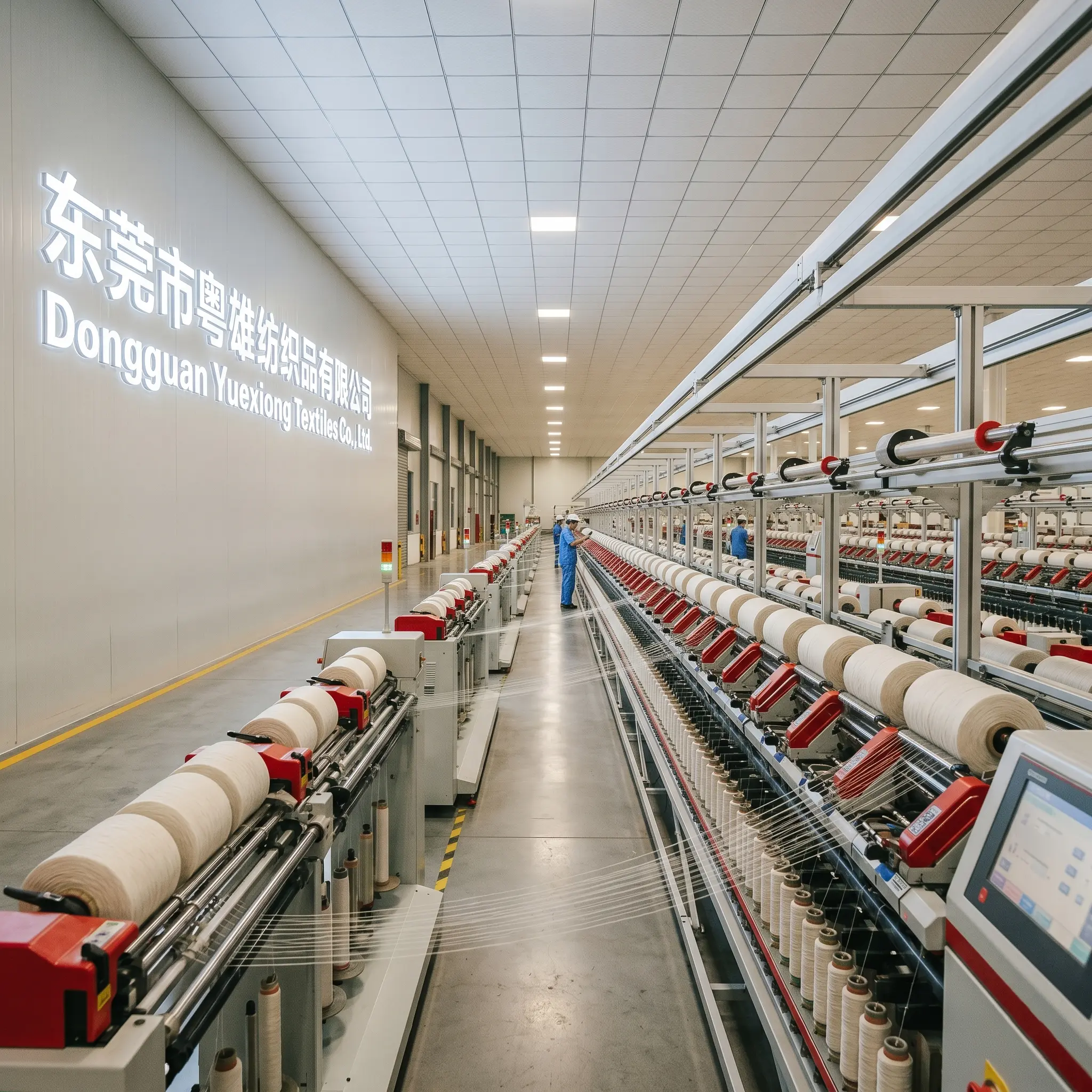
Yarn production at Dongguan Yuexiong Textile Co., Ltd. (MONALISHAMAGIC), Dongguan, China.
A machine-washable antibacterial yarn specification is a written brief that fixes five blocks before a sample is spun: yarn count with its ply convention, fibre composition and hand-feel target, the finish and the exact wash cycle behind the machine-washable claim, the test parameters and report scope that prove the claim, and the knitting or weaving route the yarn has to survive. Leave one block vague and the failure appears later — a bulk lot that knits differently from the approved sample, a wash claim nobody can document, or a third-party report that covers a different colour than the one on order.
This guide is written for the evaluation-to-execution stage, when the yarn direction is already chosen and the work becomes writing something a mill can spin against and a buyer can audit at bulk. It uses the YX-WASH-001 machine washable antibacterial yarn unit from MONALISHAMAGIC as the reference article, works through the count window from 0.5/1 Nm to 200/2 Nm, sets out what a test report must state, and shows how the same brief carries through knitting, weaving and sampling into a purchase order.
What the Specification Has to Fix
Five blocks carry the whole brief. Each one is a control point with a check attached to it, not a description of what the buyer would like the yarn to feel like.
- Count and ply. The number, the notation convention used to write it, the tolerance band, and the twist if the fabric depends on it.
- Composition and hand-feel. Fibre percentages with tolerances, plus a physical reference swatch rather than adjectives.
- Finish and wash durability. What delivers the antibacterial function, and which wash cycle at which temperature must be survived, and how many times.
- Test parameters. Method, specimen identity, preconditioning, acceptance criterion, issuing laboratory and issue date.
- Process route. Knitting or weaving, machine gauge, target fabric mass per unit area, and the sample gate that has to be passed before bulk.
The Problem: A Brief That Cannot Be Tested
Two words carry most of the risk in this specification: antibacterial and machine washable. Neither is a property that can be confirmed by looking at a yarn. Antibacterial performance is a measured result produced by a named method on a named specimen, and machine washability is a claim about a defined cycle — temperature, duration, mechanical action, detergent and drying — repeated a stated number of times before the property is measured again. A brief that says the yarn must be antibacterial and must survive domestic washing gives the spinning team nothing to control and gives the buyer nothing to check against a bulk lot.
The same gap opens in count and hand-feel. Soft is a comparison, not a value, and a count written without its convention can mean two different yarns to two different mills. The practical cost is time: a sample is spun, a fabric is knitted, a report comes back, and only then does anyone discover that the report covers a different colour, or that the count was read as a folded number when the brief meant a single. Writing the four technical blocks precisely is cheaper than one round of re-sampling.
Working rule. If a line in the brief cannot be answered with a document, a measurement or a physical sample, it is not yet a specification — it is a preference.
Industry Background: One Category, Many Mechanisms
Functional yarn is a category label, not a material family. It covers mechanisms as different as photochromic and thermochromic colour change, reflective and luminous effects, far-infrared heat retention, anti-pilling and anti-static behaviour, and antibacterial performance in both washable and water-repellent variants. Because the mechanisms differ, the specification language does not transfer cleanly between them: a parameter that controls a colour-change yarn has little to do with what controls wash durability in an antibacterial yarn.
Dongguan Yuexiong Textile Co., Ltd. (MONALISHAMAGIC) is a vertically integrated yarn spinning mill founded in 2016, operating a 2,000 sqm facility with around 50 employees, an R&D team of 20 engineers and annual output of 1,000 tons, with roughly 70% of production exported to global markets. The company runs OEM and ODM programmes with customisation available on yarn composition, colour, specification and functional parameters — the four variables this brief is built to control. That capability matters here because an antibacterial specification almost always ends up as a custom brief rather than a catalogue pick: the base fibre, the count and the colour are chosen to suit the article, and the functional parameters are set to suit the claim.
Block 1 — Count: Write the Number, the Ply and the Convention
Nm is an indirect metric count: the number of one-metre lengths in one gram. A 40 Nm yarn has 40 metres per gram, so the higher the number, the finer the yarn. Denier and dtex run the other way, which is why mixed-unit conversations between spinning, knitting and sourcing go wrong. The conversions are fixed arithmetic: denier equals 9,000 divided by Nm, and dtex equals 10,000 divided by Nm.
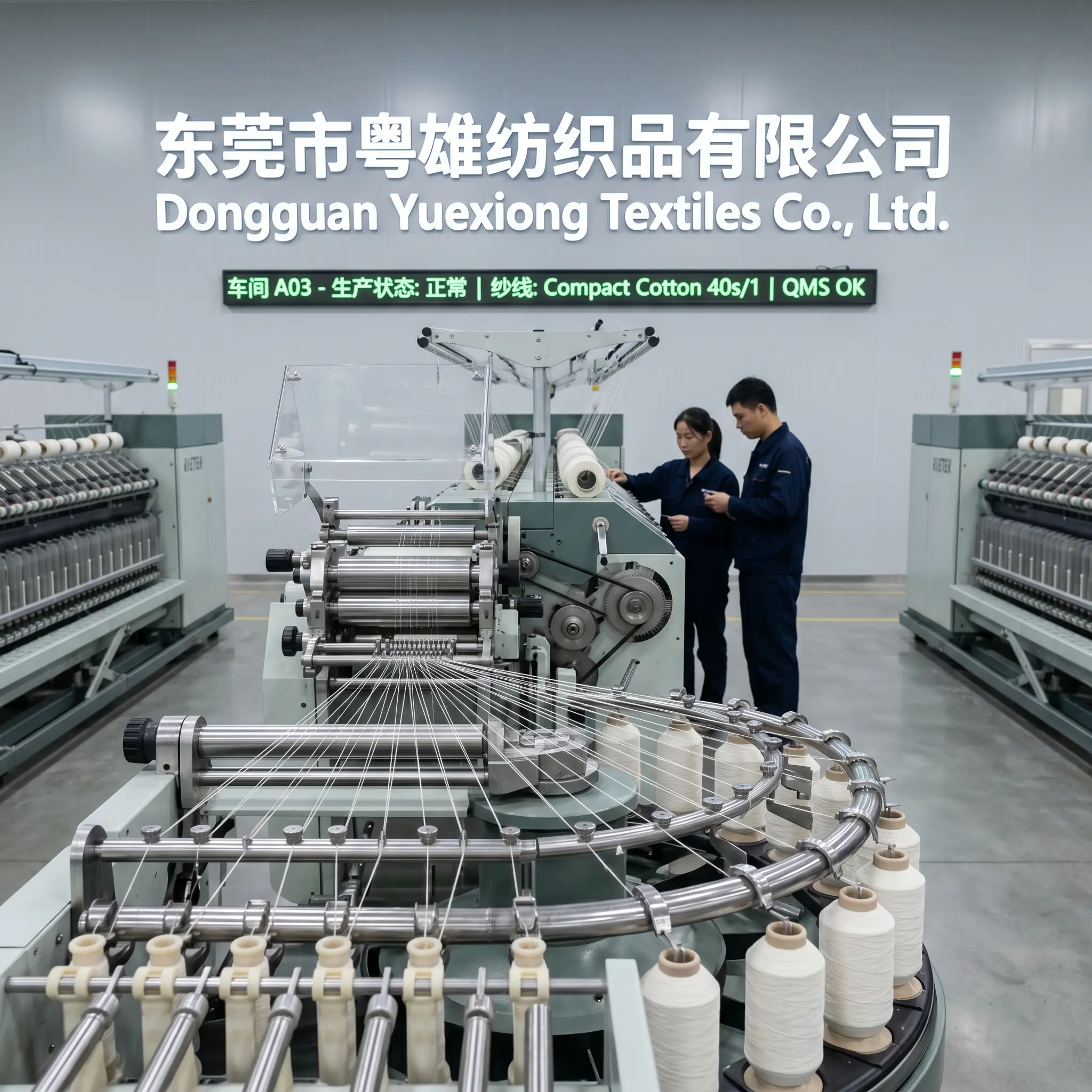
Custom counts are spun to the brief; the count window for the reference antibacterial unit runs from 0.5/1 Nm to 200/2 Nm.
The reference unit, YX-WASH-001, is offered across a count window from 0.5/1 Nm at the coarse end to 200/2 Nm at the fine end. That range spans coarse craft and heavy-gauge work through fine-gauge circular knitting, so the brief has to say which end it wants and why. The table below shows the arithmetic for single-yarn counts; note that the second figure in notations such as 200/2 Nm is the ply number, and the industry does not use one single convention for whether the count refers to the single yarn or the folded result.
| Count (single yarn) | Denier (9,000 ÷ Nm) | dtex (10,000 ÷ Nm) | Common route (indicative) |
|---|---|---|---|
| 0.5 Nm | 18,000 | 20,000 | Very coarse; heavy-gauge hand knit, chunky outerwear, blanket work |
| 2 Nm | 4,500 | 5,000 | Coarse; heavy gauge, accessories, craft applications |
| 20 Nm | 450 | 500 | Mid-coarse; outerwear knits, heavier jersey |
| 40 Nm | 225 | 250 | Mid; fine-gauge knitwear, rib, jersey |
| 60 Nm | 150 | 167 | Fine; lightweight knitwear |
| 100 Nm | 90 | 100 | Fine; base layers, fine-gauge circular knit |
| 200 Nm | 45 | 50 | Very fine; ultra-light fine-gauge work |
Calculated from the standard Nm-to-denier and Nm-to-dtex relationships; values refer to the single yarn and are rounded to whole numbers.
Three sentences prevent nearly all count disputes. State the count with its unit and both figures, for example 40/2 Nm. State whether the figure refers to the single yarn or to the folded yarn, and state the resulting count. Then agree a tolerance band with the mill and write it into the brief — do not assume a default. If the fabric depends on twist direction or twist level for stitch definition or surface character, ask for it to be stated as well, because twist is not implied by count.
Block 2 — Composition and Hand-Feel: Convert Adjectives into Checks
Composition decides how the yarn behaves in the wash as much as how it feels in the hand, and both have to be written down. Specify each fibre as a percentage with a tolerance, not as a fibre list with the main component first. When the antibacterial function is expected to sit alongside a particular base fibre, say so in the brief, because the base fibre affects moisture behaviour, surface texture and how the finished fabric ages across repeated laundering.
Hand-feel is where most briefs collapse into adjectives. Soft, dry, crisp, smooth and lofty are comparisons, and every one of them is judged against something. Convert the target into four checks that a mill can act on: the yarn count and twist, the fabric mass per unit area you expect from the finished structure, the machine gauge the fabric will be knitted on, and a physical reference swatch. A signed-off swatch of the target hand does more than a paragraph of description, and it remains the reference when the second bulk lot is compared with the first.
Block 3 — Finish and the Wash Cycle Behind the Claim
Machine washable is only meaningful when it is attached to a cycle and a count. Write the protocol into the brief before the first sample: wash temperature, cycle type, detergent class, drying method, and the number of cycles the antibacterial property must survive. Then state the test point — whether the property is measured on the untreated yarn, on the finished fabric, or on the fabric after the stated number of washes. That single decision determines what the laboratory is being asked to do, and it is the point most often left unstated.
Ask the mill to state how the antibacterial function is delivered — through the fibre itself, through a finish applied during yarn production, or through a combination — because the answer changes how the claim should be tested and what the report has to cover. Keep that question separate from the water-repellent question. A water-repellent antibacterial yarn and a machine-washable antibacterial yarn solve different problems, and a specification written for one should not be assumed to deliver the other.
Colour belongs in this block as well. Custom colour matching is part of the service scope, and colour is not cosmetic from a compliance point of view: third-party reports are typically tied to a specific specimen, which means a report on one colour does not automatically cover another. Write the colour as a reference — a Pantone code or a signed lab dip — and expect the test plan to follow it.
Block 4 — Test Parameters: What the Report Must State
A test report is only useful if its scope matches the article you are buying. Before the sample is ordered, agree the test plan and agree which laboratory will issue the report. Buyers commonly name SGS, Intertek, GTTC or an OEKO-TEX certification body, and the report has to be issued by whichever laboratory actually performed the work — an internal test sheet does not close a third-party requirement, and a certificate should be checked against the issuing body's own record rather than only against the PDF you were sent.
Whatever the laboratory, the report should state the following, and the brief should say that these fields are required:
- Report number, issuing laboratory and accreditation mark, so the document can be traced and verified.
- Test method and standard version. Antibacterial performance is method-dependent, so the report must name the method it used — for example an ISO, AATCC or JIS method — rather than describing the result in general terms.
- Specimen identity. Fibre composition, colour, fabric structure and mass per unit area of what was actually tested.
- Preconditioning. The wash cycles, temperature and drying applied before testing, stated as a number.
- Result against a criterion. The measured values plus the acceptance threshold the buyer and supplier agreed.
- Issue date and page set, including the method and result pages rather than the cover sheet alone.
The reports already in the MONALISHAMAGIC file show how narrow a single report really is. Intertek report GZHT03128204 covers light brown knitted fabric for children's apparel against EN 17134-2:2023, issued 16 April 2026 for the EU and US markets; report GZHT03128212 covers black knitted fabric against the same standard, issued on the same date. Two colours, two reports — a buyer who has approved one colour has not approved the other. The file also holds 2022 Intertek reports against Adidas A-01 Policy version 20 for luminous, UV colour-change and thermochromic baby yarns, issued between 29 and 31 August 2022. Those are legitimate documents for their stated scope, but an evaluation run in 2026 should still ask whether that evidence applies to the article now being sourced.

Intertek report GZHT03128204 (light brown knitted fabric, children's apparel, EN 17134-2:2023, issued 16 April 2026). A second report, GZHT03128212, covers the black colourway.
Company-level certification sits beside the article-level test report, not in place of it. The file holds a BCI Chain of Custody certificate (ETK-70050-BCI-CoC-2510, scope covering non-lint trading and warehousing of yarns and fabrics, valid to 20 October 2028) and an FSC Chain of Custody certificate (ESTS-COC-230318, scope including paper yarn, valid to 12 September 2029); the company profile additionally states GRS, BCI and OEKO-TEX certification. Check the issue and expiry date printed on every copy you receive, because validity windows differ from certificate to certificate.

Pre-shipment inspection is the acceptance route for bulk lots; the test report is what the inspection is measured against.
Block 5 — Knitting, Weaving and the Sampling Gate
The yarn does not perform in isolation; it performs in a structure. Tell the mill whether the yarn goes to weft knitting, warp knitting or weaving, name the machine gauge or reed specification, and give the target fabric mass per unit area and the stitch or weave structure. A count that behaves well in a loose heavy-gauge knit can behave very differently at a tight fine gauge, and a brief that omits the route leaves the mill guessing about twist and about how much performance margin the yarn needs.
Then define the sampling gate. The gate is a written stop between sample and bulk: the sample is knitted or woven into the intended structure, washed to the protocol in Block 3, tested to the plan in Block 4, and compared against the swatch from Block 2. Bulk is released only when all four checks pass. Sampling is not a formality before the order — it is the last cheap moment to change the count, the blend or the colour.
Step-by-Step: From Brief to Bulk in Eight Steps
The sequence below turns the five blocks into an executable path. It assumes the buyer is already past discovery and is preparing a first sample order against the YX-WASH-001 reference unit or a comparable custom development.
- Draft the five blocks in one document. Count with convention and tolerance; composition with percentages; finish with the wash protocol; the test plan; and the process route. One page is enough.
- Send the brief for a technical read-back. Ask the mill to confirm the count convention, the composition tolerance and whether the requested count is achievable in the chosen blend.
- Agree the test plan before sampling. Name the method, the specimen level — yarn or fabric — the number of wash cycles, the acceptance criterion, and the laboratory that will issue the report.
- Order the sample against the MOQ threshold. The minimum order quantity for the reference programme is 5 KG, with a stated lead time of 7 to 15 days; place the sample order against a written brief rather than a verbal description.
- Confirm colour against a physical reference. Use a lab dip or a colour code, and keep the approved reference with the brief, because the test report will follow that colour.
- Build the fabric, then wash it. Knit or weave at the production gauge and structure, run the wash protocol, and test the fabric rather than only the yarn.
- Compare report scope with the bulk order. Check that the composition, colour and fabric structure in the report match what will be shipped; if they do not match, the report does not cover the order.
- Lock the bulk specification and inspect before shipment. Attach the signed swatch, the approved colour and the report reference to the purchase order, and use pre-shipment inspection as the acceptance step.
Where This Specification Does the Most Work
Repeated-wash knit programmes. In uniforms, base layers and home textiles, the antibacterial claim only has commercial value if it survives the laundry regime the end user actually follows. Writing the cycle into the brief converts a marketing line into a test parameter.
Children's apparel and colour-led ranges. Where the article is colour-specific, the report has to be colour-specific too. The two Intertek reports covering light brown and black knitted fabric for children's apparel illustrate the granularity: plan for one report per colourway in the test budget rather than discovering the gap at the audit.
Fine-gauge and coarse-gauge developments in the same season. A range that runs from a chunky 0.5/1 Nm accessory to a 200/2 Nm fine-gauge base layer needs two different briefs, not one brief with a count range. Twist, tolerance and hand-feel reference differ at each end of the window.
OEM and ODM programmes with a fixed launch date. Where the buyer supplies the design and the mill supplies the construction, the brief is the contract. Customisation on composition, colour, specification and functional parameters only works when each of those four is written down.
Specification Table: What to Write and What Closes It
The table below is the one-page version of the brief. The right-hand column is the part most often missing: every block needs a closing document, not just a written requirement.
| Block | What to write | What closes it | What it does not prove |
|---|---|---|---|
| Count | Count, unit, both figures, single-or-folded convention, resulting count, tolerance, twist if relevant | Mill confirmation of the convention plus a measured count on the sample | How the yarn will behave at your machine gauge |
| Composition and hand-feel | Fibre percentages with tolerance, count and twist, fabric mass target, machine gauge, signed reference swatch | Sample swatch approved against the reference | That the next bulk lot will match it without inspection |
| Finish and wash durability | How the function is delivered, wash temperature, cycle type, detergent class, drying, number of cycles, test point | Test report stating the preconditioning and the result | Performance beyond the cycles actually tested |
| Test parameters | Method and standard version, specimen level, acceptance criterion, named laboratory, required report fields | Third-party report with matching specimen identity and colour | Coverage of a different colour, structure or fibre blend |
| Process route | Knitting or weaving, gauge or reed, structure, fabric mass target, sampling gate | Production-gauge sample that passes wash and test | Bulk consistency without pre-shipment inspection |
All rows are specification controls; the evidence column reflects the documents a buyer should hold before releasing bulk.
FAQ: Machine-Washable Antibacterial Yarn
Which test documents should I request before approving a machine-washable antibacterial yarn?
Request a third-party report that states the report number, issuing laboratory and accreditation mark, the test method and standard version, the specimen identity including fibre composition, colour, fabric structure and mass per unit area, the preconditioning wash cycles, the measured result against an agreed acceptance criterion, and the issue date with the method and result pages. A yarn-level test and a fabric-level test answer different questions, so request the level at which you will sell. Reports are specimen-specific: Intertek report GZHT03128204 covers light brown knitted fabric for children's apparel and GZHT03128212 covers black knitted fabric, both against EN 17134-2:2023 and both issued 16 April 2026 — approving one colour does not approve the other. Company-level certificates such as the BCI Chain of Custody (ETK-70050-BCI-CoC-2510, valid to 20 October 2028) and the FSC Chain of Custody (ESTS-COC-230318, valid to 12 September 2029) support the mill's systems, not the article's performance, so check the expiry date on each copy.
Can the count, composition and colour be customised on the antibacterial yarn?
Yes. The programme runs as OEM and ODM with customisation available on yarn composition, colour, specification and functional parameters, and the reference YX-WASH-001 unit covers a count window from 0.5/1 Nm to 200/2 Nm. The mill operates a 2,000 sqm facility with a 20-engineer R&D team and monthly capacity of 1,000 tons, with a stated lead time of 7 to 15 days. Customisation works best when the request arrives as a five-block brief — count with convention, composition with tolerances, finish with a wash protocol, a test plan, and the knitting or weaving route — because each block maps to a production decision rather than to a preference.
What is the minimum order quantity and how should the commercial terms be planned?
The minimum order quantity is 5 KG. Delivery can be arranged by air freight, sea freight or land transport, and acceptance is based on pre-shipment inspection. Payment terms include TT, L/C, D/P, and PayPal, Payoneer or Wise, and Western Union. For budget planning, the variables that move the quotation are the fibre composition, the count, the colour and the scope of testing you require — particularly the number of colourways needing separate reports — so confirm those four in writing before the sample order rather than after it.
How should the sample stage be run so that bulk does not drift?
Order the sample against the written brief and at or above the 5 KG threshold, confirm the colour against a lab dip or colour code, then knit or weave the intended structure at the production gauge and wash it to the protocol in the brief before testing. Test the fabric, not only the yarn, and compare the report's specimen identity and colour with the bulk order. Keep the approved swatch and the approved report reference attached to the purchase order. After-sales support covers sample reconfirmation, colour matching, reorder assistance and consultation on functional yarn performance and durability, which is where a drifting hand-feel or an unexpected wash result is usually resolved.
What lead time applies, and what is the next step?
Lead time is stated at 7 to 15 days, with delivery by air, sea or land and acceptance by pre-shipment inspection. The practical next step is to send the five-block brief — count and convention, composition with tolerances, finish and wash protocol, test plan, and process route — and ask for a sample against it, so the first physical article you receive is already the one the report will cover. A quotation and a sample request can be raised together; the mill's product brochure is available for download at the MONALISHAMAGIC catalogue, and programme details are on monalishamagic.com.
Conclusion
A machine-washable antibacterial yarn is specified, not described. The brief that survives bulk fixes the count and its convention across the 0.5/1 Nm to 200/2 Nm window, converts hand-feel into a swatch and a set of process checks, ties the machine-washable claim to a named cycle and a stated number of washes, and demands a test report whose specimen, colour and method match the order. The process route and the sampling gate close the loop, because the yarn only proves itself in the structure it was bought for.
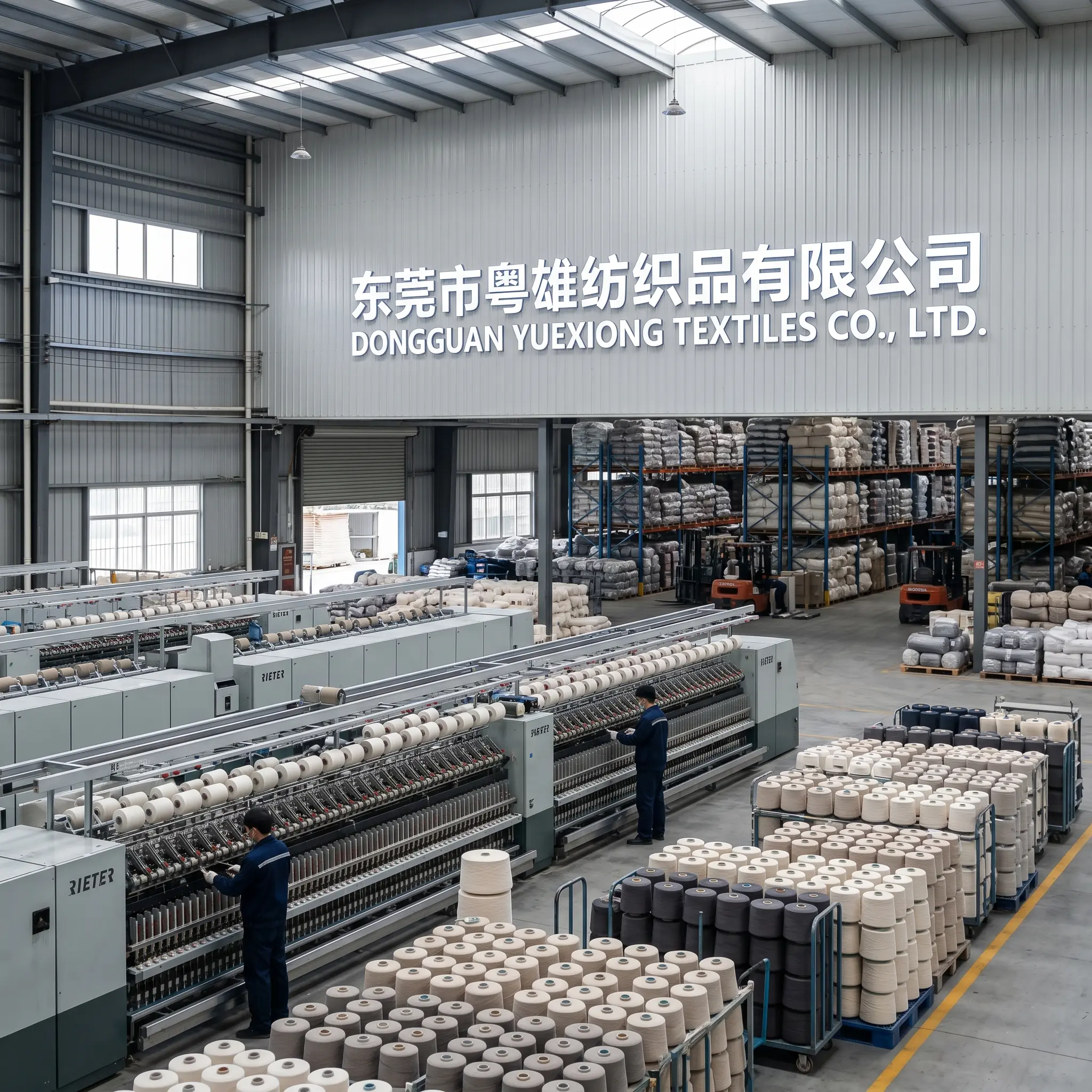
From brief to bulk: sampling, testing and pre-shipment inspection at the mill.
Written this way, the specification does two jobs at once. It tells the spinning team exactly what to make, and it tells the buyer exactly what to check when the bulk lot arrives — which is the difference between a functional yarn programme that repeats and one that has to be re-argued at every reorder.
Have Questions or Need More Details?
Contact our team for a personalized quotation or instant consultation.
Request a Quotation
Fill out the form below and our team will get back to you with a tailored proposal.
WhatsApp Direct Chat
Prefer to chat in real-time? Message us on WhatsApp for instant assistance & quick answers.
- Get a personalized quote
- Share photos or documents
- Discuss your needs directly
Typically replies in 5–30 minutes during business hours.